Goldenseed are an enthusiastic and knowledgeable group of growers, breeders and seed retailers offering an unrivalled service "please see last months Testimonials" dedicated to the premise that happy customers come back for more. This way we keep our prices low and our seedstocks fresh. Seeds from the Worlds top breeders come in sealed original packaging direct to your door at the click of a mouse, with customer service online via the website, or by email at mail@goldenglow.info

We are constantly striving, at Goldenseed, to extend the range of varieties on offer and have a section devoted to independent breeder's seeds from the cutting edge of cannabis culture, as well as stocking a wide range of Dutch and World seeds chosen for their reliability and vigour. GOVERNMENT WARNING "Marijuana use can cause complex thoughts leading to better ideas of how to live your life. Caution, free thinking has been routinely reported with continued use"

"If policy on drugs is in future to be pragmatic not moralistic, driven by ethics not dogma, then the current prohibitionist stance will have to be swept away as both unworkable and immoral, to be replaced with an evidence-based unified system (specifically including tobacco and alcohol) aimed at minimisation of harms to society."

dea

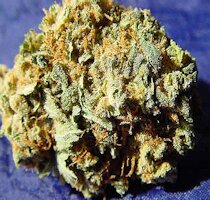
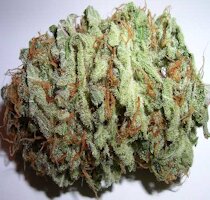
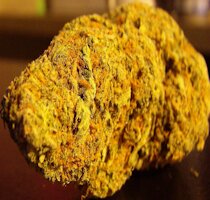
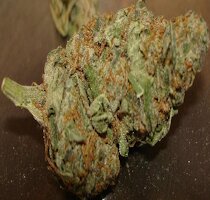
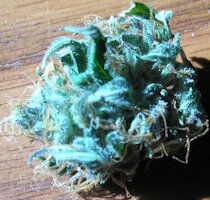
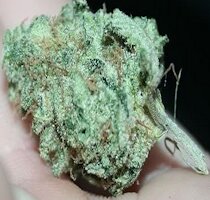
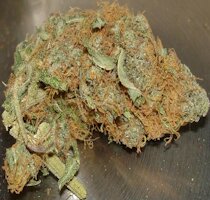
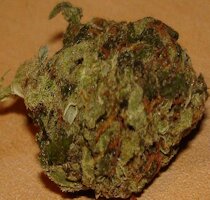
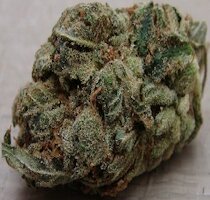
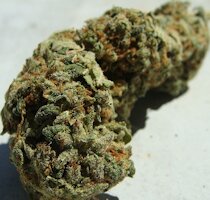
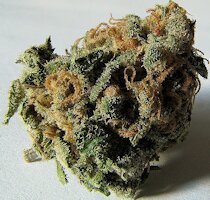
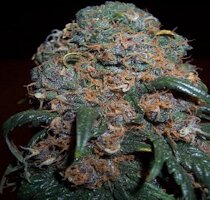
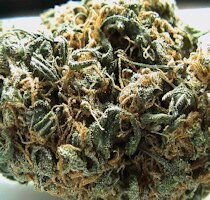
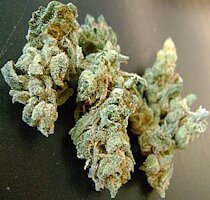
cannabis buds from goldenseed marijuana budds from goldenseed cannabis buds from goldenseed cannabis buds from golden seed
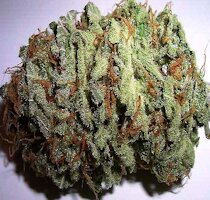
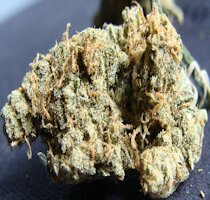
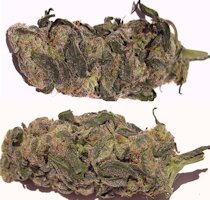
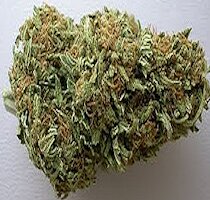
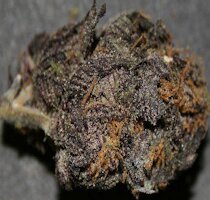
cannabis buds from goldenseed cannabis buds from goldenseed cannabis buds from goldenseed cannabis buds from goldenseed
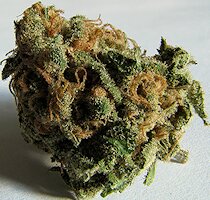
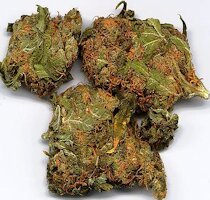
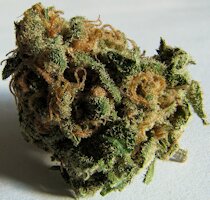
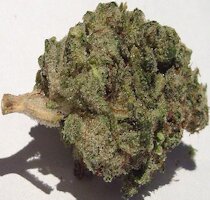
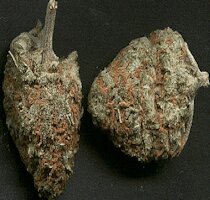
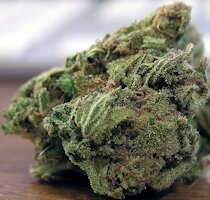
cannabis buds from goldsenseed cannabis buds from goldenseed cannabis buds from goldenseed cannabis buds from goldenseed
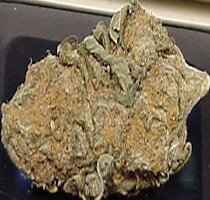
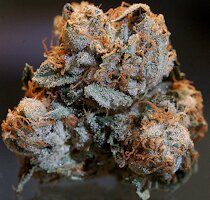
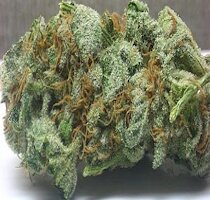
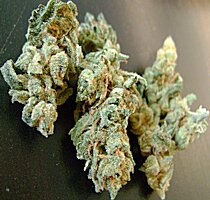
cannabis buds from goldenseed cannabis buds from goldenseed cannabis buds from goldenseed cannabis buds from goldenseed
ABOUT USABOUT US
cannabis buds from goldenseed cannabis buds from goldenseed cannabis buds from goldenseed cannabis buds from goldenseed

HIGGSBOSONMARIJUANASEEDS.COM

GOLDENSEED JACK FROST NOW AVAILABLE IN FEMINIZED SEED


The development of JackFrost, now in it’s 14th year has been a quest for the perfect plant for connoisseurs. She burst on the scene in 2004, becoming an internet sensation by being available on ebay! In a mad four month period, over 400 sales to 5 continents and 46 out of 51 states, generating a worldwide fanbase who continue to grow JackFrost and provide positive feedback.

            This year, the happy hippies at Goldenseed are pleased to announce another important development  in the JackFrost saga. In response to the global feedback, Agricolas has flexed his genetic manipulator, and feminised the most robust indica phenotype yet exhibited by JackFrost. This pheno owes much of it’s branchy habit to a triploid breeding programme, and often the stems are oval, or square, instead of round.

            She grows fast but not tall, especially when topped at around 40 centimetres, and often displays 8 or 10 colas, and finishes at around 1 metre tall  of fabulous gold to reddish purple. She is always stable, always short and dense, always robust, and always frosty enough for finger hash, JackFrost deserves a place in your garden

Please email for cost and availabily mail@goldenglow.info


FEMME FETALE

Made of all natural ingredients
95% of plants will be determined female
Forces nutrients into the plant to prevent nutrient lockout
Works as a nutrient booster and a floral spray & cuts down on the cost of your nutrient bill
Ten years researched
Two years feild tested
Made in the USA
Completely biodegradable
Non- toxic
Non- pollutant

MADE FROM ALL NATURAL INGREDIENTS

95% of Plants will be determined FEMALE
Use distilled or RO water only
*2 drops per cup
*soak seeds for 24 hours
*dry seeds & plant
*feed with 3 drops per 1 gallons
thru vegetation
(can also be used in flowering)


For New Seeds


    1. Put 2 drops Femme Fatale per one cup distilled or RO water to soak seeds
    2. Soak seeds for 24 hours,
    3. Remove and let dry.
    4. Plant
For Weekly Feeding and Floral spray: 
Per one gallon of distilled or RO water add 3 drops Femme Fatale and your nutrients BUT CUT NUTRIENTS BY 60%
and use once a week like regular nutrient feeding. Be sure to cut nutrients by  the 60% due to the lack of nutrient lockout and the products force feeding quality

Please email for cost and availabily mail@goldenglow.info


Is President Obama Responsible for the Latest Attacks on Medical Marijuana?

Stop the Drug War...November 13th 2011


As controversy over the federal government’s escalating nationwide assault on medical marijuana continues to swell, some federal officials are trying to shield the President from the political fallout.


WASHINGTON -- U.S. attorneys have a message for California's medical marijuana advocates: Don't blame Barack Obama. After it was announced that the crackdown on medical pot establishments in the Golden State was a collective decision by the four U.S. attorneys in California and not the result of any directive from Washington, spokeswoman Lauren Horwood emphasized that the administration never even green-lighted the ramped-up enforcement actions.

The only D.C.-based official with whom California U.S. attorneys coordinated, Horwood said, was Deputy Attorney General James Cole, who was chosen by Attorney General Eric Holder, an Obama appointee. [Huffington Post]

This is amazing. Literally, we are being told by presidentially-appointed officials not to blame the president when they do things we find disgusting.  I don’t recall ever being handed a ballot with the name Lauren Horwood on it, and the same goes for James Cole, Eric Holder and every other federal prosecutor presently presiding over this massive new war on medical marijuana patients and providers.

When the president’s own appointees defy his campaign promises and dishonor the values of the American public, the president himself is so obviously, thoroughly, and undeniably at fault that it seems silly to argue the point further. 

After all, any effort to sugarcoat this mess is indicative of an increasing awareness at DOJ that their approach to medical marijuana is becoming a bit of a political fiasco. Deflecting criticism from the president is a smart strategy for avoiding a scenario in which mounting public outcry forces Obama to revisit the issue. The lesson here for advocates is to apply more pressure on the president, not less. 


The New York Times Spotlights Study of
Marijuana for Veterans with PTSD
MAPS JULY 21st 2011


Dear Eugene/Goldenseed,

For 25 years, MAPS and our members have been working to end the decades-old stigma on psychedelic and medical marijuana research. Now we're national news, and the whole world is watching.

MAPS' proposed study of marijuana for veterans with posttraumatic stress disorder (PTSD) made the headlines yesterday when The New York Times announced that "Marijuana May Be Studied for Combat Disorder."

With so many veterans returning from Iraq and Afghanistan and suffering from anxiety, nightmares, and sleepless nights—and with few effective therapies available—the need for research into alternative treatments is more pressing than ever.

As MAPS Executive Director Rick Doblin, Ph.D., told The New York Times, "These are people whom we put in harm's way, and we have a moral obligation to help them."

Donate Make a Contribution

The proposed study would compare the effectiveness of five different strains of marijuana (smoked or vaporized) in 50 veterans with chronic PTSD who have not responded to other treatments.

Many veterans already know that marijuana can relieve some of the physical and psychological pain of war in ways that conventional medicines cannot. According to one injured Army veteran from Texas who recently returned from an 18-month deployment in Iraq, "I have seen it with my own eyes. It works for a lot of the guys coming home."

The proposed study was also featured on such military news sites as USNavySeals.com and Stars and Stripes, as well as other (perhaps less likely) sources such as the Partnership for a Drug-Free America.

The US Food and Drug Administration approved the study protocol in April, but it remains on hold while the National Institute on Drug Abuse and the Public Health Service decide whether to let us purchase marijuana for the study.

We hope these headlines will help these agencies realize they haven't been doing enough to develop more effective treatments for PTSD—and to take action by allowing us to purchase the marijuana we need.

You can learn much more about MAPS' medical marijuana research and connect with the key players at Cartographie Psychedelica, our 25th Anniversary conference and celebration from December 8-12 in Oakland, CA.

By making a contribution to MAPS today, you will be part of a growing community of scientists, patients, doctors, government regulators, soldiers, and others who are unafraid to take a careful, honest look at the risks and benefits of psychedelics and marijuana.


Sincerely,

Brad Burge
MAPS Director of Communications


Historic Bill to End Federal Marijuana Prohibition Introduced
Stop the Drug War
July 8th 2011


by Phillip Smith, June 23, 2011, 05:38pm, (Issue #690)

Led by Rep. Barney Frank (D-MA) and Rep. Ron Paul (R-TX) a bipartisan group of US representatives last Thursday introduced the first bill ever to legalize marijuana at the federal level. The bill would leave it to the states to decide whether to legalize it at the state level. If the bill were to become law, marijuana would then be treated like alcohol, where states decide whether to ban it and/or what restrictions to place on it.

[Update: The bill has been slammed by a key Republican committee chair and the Obama administration. See the end of the article for more.]

Other cosponsors of the bill include Rep. John Conyers (D-MI), Rep. Steve Cohen (D-TN), Rep. Jared Polis (D-CO), and Rep. Barbara Lee (D-CA). The legislation would limit the federal government's role in marijuana enforcement to cross-border or interstate smuggling, allowing people to legally grow, use or sell marijuana in states where it is legal.

The bill does not reschedule marijuana, which is currently Schedule I, the most serious classification under the Controlled Substances Act; it removes it from the act altogether.Cinnamon Cannabis seeds from Goldenseed

"We are introducing a bill today that is very straightforward," said sponsor Rep. Barney Frank (D-MA) at a Capitol Hill press conference Thursday afternoon. "We do not believe the federal government ought to be involved in prosecuting adults for smoking marijuana. That is something the states can handle. We have this problem where those states that want to reform their marijuana laws are prevented from doing so by the federal government. Under this bill, the federal government will concentrate its prosecutorial resources on other things and respect any decision by a state to make marijuana legal," the veteran congressman said.

"We're very excited about promoting a new, sensible approach to marijuana," said Rep. Polis. "We can set up a proper regulatory system, as Colorado has done. It would be wonderful for the federal government to let states experiment. Our current failed drug policy hasn't worked -- marijuana is widely available. By regulating the market, we can protect minors and remove the criminal element so we can focus law enforcement resources on keeping people safe in their communities."

"This has long been an issue of freedom for me," Rep. Cohen told the press conference. "The people are way ahead of the legislators in knowing what the priorities of law enforcement ought to be. The federal government shouldn't be spending its time and money on marijuana, but on crack, meth, heroin, and cocaine. It ought to be up to the states and regulated like alcohol. It should be a matter of individual choice in a country that prides itself on its liberties and freedoms."

The timing for the introduction of the bill is exquisite. Just days earlier, people marked the 40th anniversary of President Richard Nixon's declaration of the war on drugs with protests and vigils around the country. Earlier this month, the Global Commission on Drug Policy released its report calling for a radical shift in how we deal with illegal drugs, including calling for the legal regulation of marijuana.

The introduction of the bill also comes as activists in at least four states -- California, Colorado, Oregon, and Washington -- are working to put marijuana legalization initiatives on the ballot for 2012. In the case of Washington, there are now two competing legalization initiatives, one aimed at 2011 and one at 2012.

And it comes as legalization becomes an increasingly hot topic in state legislatures. In the past year at least five state legislatures have considered legalizing marijuana, including California, Maine, Massachusetts, Rhode Island, and Washington.

It also comes as the battle between the federal government and states with medical marijuana laws is heating up. Despite the famous Justice Department memo of October 2009, which directed US attorneys to not focus prosecutorial resources on producers and providers in compliance with state laws, the Obama administration is conducting raids at a higher rate than the Bush administration, and US attorneys have recently been on a threat offensive, warning state elected officials their employees could be at risk if they approve the regulation and distribution of medical marijuana.

But while the timing is good, Frank was quick to caution that the bill was unlikely to pass Congress this session. "I don't expect it to pass right away, but given this Congress, I don't expect much good legislation to pass at all," he said. "I think we're making good progress, and the public is ahead of the politicians on this. There is an educational process going on."

Still, that dose of political realism didn't stop advocates, some of whom have been working on the issue for decades, from feeling just a little bit giddy. After all, it is an historic occasion for reformers.

"Adults who use marijuana responsibly should not be treated like criminals," said Allen St. Pierre, executive director of NORML. "Marijuana smoking is relatively harmless, is not an act of moral turpitude, and should not be treated as a crime. As a marijuana consumer myself, I've never seen my responsible use of marijuana as a crime."

Noting some 22 million arrests of otherwise law-abiding pot smokers since the 1960s, St. Pierre called for the end of pot prohibition. "Policymakers should recognize the benefits of legally controlling and taxing marijuana," he said. "We need to stop arresting millions of people who use marijuana."

"We're so proud to be standing with these members of Congress in announcing this bill to treat alcohol similarly to marijuana," said Aaron Houston, executive director of Students for Sensible Drug Policy. "A state-based approach to marijuana should be appealing to Republicans. Most people don't know that for decades after the repeal of Prohibition, many states continued to ban alcohol. With this bill, states could continue to ban marijuana, or they could regulate it if they like. This is also an issue that drives young people to the polls, and that's a huge opportunity for politicians."

"This bill is actually the ultimate bill we've been looking for at the federal level," said Rob Kampia, executive director of the Marijuana Policy Project. "If and when it passes, I expect to close our offices in DC and concentrate on working at the state level. This bill would address some of the stuff we've been hearing about from federal prosecutors threatening state governors and legislators about medical marijuana. If this passes, all the huffing and puffing form US attorneys will evaporate into thin air," he added. "And this bill will have a positive impact on ballot initiatives in California and Colorado in 2012. In the past, opponents said these initiatives wouldn't do anything because the federal government wouldn't touch the issue. Now, we can say the federal government is looking at the issue, and some of the most credible members of Congress are cosponsors."

"Last week marked the 40th anniversary of the failed war on drugs, so this is very timely, and it comes on the heels of the report by the Global Commission," said Bill Piper, national affairs director for the Drug Policy Alliance. "This is a major step toward restoring some sanity and science to our nation's drug policies. There is a growth in recognition among both voters and elected officials that marijuana legalization is not a question of if, but when. The reality is that the war on marijuana is unsustainable -- we're heading toward a perfect storm for this."

Now, marijuana legalization is before Congress for the first time since it was outlawed in 1937. While passage this session is extremely unlikely, this is indeed a step forward.

Update:  After this article was first published Thursday afternoon, reaction from a key congressional committee chair and the White House Office on National Drug Control Policy (ONDCP) made it clear that "extremely unlikely" was optimistic.

The bill would have to pass through the House Judiciary Committee, but committee chair Rep. Lamar Smith told the Associated Press there was no way that was going to happen.

"Marijuana use and distribution is prohibited under federal law because it has a high potential for abuse and does not have an accepted medical use in the US," Smith said. "The Food and Drug Administration has not approved smoked marijuana for any condition or disease."

Then he bizarrely claimed legalizing marijuana in the US would help Mexican drug cartels. "Decriminalizing marijuana will only lead to millions more Americans becoming addicted to drugs and greater profits for drug cartels who fund violence along the US-Mexico border. Allowing states to determine their own marijuana policy flies in the face of Supreme Court precedent," he threw in for good measure.

Echoing Smith, ONDCP told the Los Angeles Times legalizing weed was a non-starter. "Our concern with marijuana is not borne out of any culture war or drug war mentality, but out of what the science tells us about the drug's effects. The facts are that marijuana potency has tripled in the past 20 years and teens are using the drug at earlier ages," it said in a statement.

"The earlier a person begins to use drugs, the more likely they are to progress to more serious abuse and addiction --- reflecting the harmful, long-lasting effects drugs can have on the developing brain. Legalization remains a nonstarter in the Obama administration because research shows that marijuana use is associated with voluntary treatment admissions, fatal drugged driving accidents and emergency room admissions," the statement said.

If not this year, maybe next year. If not this Congress, maybe the next one. If not this administration, maybe the next one. There are many obstacles on the path to legalization, but now we are at least on the path.
Washington, DC
United States


Cops Say Forty Years of War on Drugs is Enough
Stop the Drug War
June 16th 2011

This week marks the 40th anniversary of America's contemporary war on drugs, and the country's largest anti-prohibitionist law enforcement organization is commemorating -- not celebrating -- the occasion with the release of report detailing the damage done. Members of Law Enforcement Against Prohibition (LEAP) hand-delivered a copy of the report, Ending the Drug War: A Dream Deferred, to the Office of National Drug Control Policy (the drug czar's office) Tuesday after holding a press conference in Washington, DC.

[Editor's Note: This is merely the first commemoration of 40 years of drug war. The Drug Policy Alliance is sponsoring dozens of rallies and memorials in cities across the country on Friday, June 17. Look for our reporting on those events as they happen.]

On June 17, 1971, President Richard Nixon (R) declared "war on drugs," and thousands of deaths, millions of arrests, and billions of tax dollars later, drug prohibition remains in place -- the Obama administration's declaration two years ago that it had ended the drug war in favor of a public health-centered approach notwithstanding. Ending the Drug War details how the war on drugs continues unabated, despite the recent administrations' less warlike rhetoric, and the ways it has hurt rather than helped drug users and society at large.

"When President Nixon declared the 'drug war' in 1971, we arrested fewer than half a million people for drug offenses that year. Today, the number has skyrocketed to almost two million drug arrests a year," said former Baltimore narcotics officer and LEAP executive director Neill Franklin. "We jail more of our own citizens than any other country in the world does, including those run by the worst dictators and totalitarian regimes. Is this how President Obama thinks we can 'win the future'?"

The report shows that despite the drug czar's nice talk about ending the drug war, Obama administration spending priorities remain highly skewed toward law enforcement and interdiction -- and it's getting worse, not better. In 2004, the federal drug budget was 55% for supply reduction (policing) and 45% for demand reduction (treatment, prevention). In the 2012 Obama budget, supply reduction has increased to 60%, while demand reduction has shrunk to 40%.

The report also demonstrates through arrest figures that on the street level, the drug war continues to be vigorously waged. In 2001, there were almost 1.6 million drug arrests; a decade later, there were slightly more than 1.6 million. Granted, there is a slight decline from the all-time high of nearly 1.9 million in 2006, but the drug war juggernaut continues chugging away.

"I was a police officer for 34 years, the last six as chief of police in Seattle," retired law enforcement veteran Norm Stamper told the press conference. "At one point in my career, I had an epiphany. I came to the appreciation that police officers could be doing better things with their time and that we were causing more harm than good with this drug war. My position is that we need to end prohibition, which is the organizing mechanism behind the drug war. We need to replace that system guaranteed to invite violence and corruption and replace it with a regulatory model," he said.


LEAP slams the Obama administration for its forked-tongue approach to medical marijuana as well in the report. The administration has talked a good game on medical marijuana, but its actions speak louder than its words. While Attorney General Holder's famous 2009 memo advised federal prosecutors not to pick on medical marijuana providers in compliance with state laws, federal medical marijuana raids have not only continued, but they are happening at a faster rate than during the Bush administration. There were some 200 federal medical marijuana raids during eight years of Bush, while there have been about 100 under 2 1/2 years of Obama, LEAP noted.

And LEAP points to the horrendous prohibition-related violence in Mexico as yet another example of the damage the drug war has done. The harder Mexico and the US fight the Mexican drug war, the higher the death toll, with no apparent impact on the flow of drugs north or the flow of guns and cash south, the report points out.

Sean Dunagan, a recently retired, 13-year DEA veteran with postings in Guatemala City and Monterrey, Mexico, told the press conference his experiences south of the border had brought him around to LEAP's view.

"It became increasingly apparent that the prohibitionist model just made things worse by turning a multi-billion dollar industry over to criminal organizations," he said. "There is such a profit motive with the trade in illegal drugs that it is funding a de facto civil war in Mexico. Prohibition has demonstrably failed and it is time to look at policy alternatives that address the problem of addiction without destroying our societies the way the drug war has done."

Ending drug prohibition would not make Mexico's feared cartels magically vanish, LEAP members conceded under questioning, but it would certainly help reduce their power.

"Those of us who advocate ending prohibition are not proposing some sort of nirvana with no police and no crime, but a strategy based in reality that recognizes what police can accomplish in cooperation with the rest of society," said former House Judiciary Crime subcommittee counsel Eric Sterling. "The post-prohibition environment will require enforcement as in every legal industry. The enormous power that the criminal organizations have will diminish, but those groups are not going to simply walk away. The difference between us and the prohibitionists is that we are not making empty promises like a drug-free America or proposing thoughtless approaches like zero tolerance," he told the press conference.

Drug prohibition has also generated crime and gang problems in the US, the report charged, along with unnecessary confrontations between police and citizens leading to the deaths of drug users, police, and innocent bystanders alike. The report notes that while Mexico can provide a count of its drug war deaths, the US cannot -- except this year, with the Drug War Chronicle's running tally of 2011 deaths due to US domestic drug law enforcement operations, which the report cited. As of this week, the toll stands at four law enforcement officers and 26 civilians killed.

It was the needless deaths of police officers that inspired retired Maryland State Police captain and University of Maryland law professor Leigh Maddox to switch sides in the drug war debate, she said.


"My journey to my current position came over many years and after seeing many friends killed in the line of duty because of our failed drug policies," she told the Washington press conference. "This is an abomination and needs to change."

While the report was largely critical of the Obama administration's approach to drug policy, it also saluted the administration for heading in the right direction on a number of fronts. It cited the reduction in the sentencing disparity for crack and powder cocaine offenses and the lifting of the federal ban on needle exchange funding as areas where the administration deserves kudos.

Forty years of drug prohibition is more than enough. Police are getting this. When will politicians figure it out?
Washington, DC
United States


TAKE ACTION!

JUNE 13TH 2011

ALERT: Support New Medical Marijuana Bills in Congress
Support New Medical Marijuana Bills in Congress

Take Action!

Three New Bills Would Protect Medical Marijuana Patients and Businesses Nationwide
 

On May 25, 2011, a bipartisan group of US Representatives introduced three new medical marijuana bills. H.R. 1983 would exempt people complying with state medical marijuana laws from federal arrest and prosecution. H.R. 1984 would protect banks accepting deposits made by medical marijuana dispensaries. And H.R. 1985 would allow the dispensaries to deduct business expenses on their federal taxes like any other business, putting an end to dozens of industry IRS audits already underway.

Please use our web form to contact your US Representative and your two US Senators in support of these important bills. Please follow-up by calling their offices too -- if you don't know their numbers (or aren't sure who they are), you can reach them by calling the Congressional Switchboard at (202) 224-3121. And please use our tell-a-friend form to spread the word.

Visit STOP THE DRUG WAR for more information on these bills, and sign up for our email list or paste http://stopthedrugwar.org/taxonomy/term/6 in your RSS reader to follow the news about medical marijuana.

Thank you for taking action!


MAPS' mission is to treat conditions for which conventional medicines provide limited relief, such as PTSD & anxiety associated with life-threatening illnesses, by developing psychedelics & marijuana into prescription medicines.


First LSD Study in 35 Years Treats Last Subject:

MAPS E-Mail Newsletter
June 9, 2011
Dear Gene/Goldenseed,

Summer is fast approaching. The days are getting longer, the breeze is getting warmer, and the only thing that's growing faster than the roses in my garden is MAPS' clinical research program.

In the past month, new studies of MDMA-assisted psychotherapy for PTSD were approved by government agencies in both Israel and the United States. We also finalized the data for our Swiss study of MDMA-assisted psychotherapy for PTSD, Health Canada completed its inspection of our Vancouver study facilities, and we began planning for a study of ibogaine treatment for addiction in New Zealand.

MAPS is now planning or conducting research in six countries and on four continents. As a worldwide leader in psychedelic psychotherapy research, we have a responsibility to ensure the clarity, consistency, and reliability of our treatment approach.

Donate Make a Contribution

Setting standards for treatment, developing training manuals, and making research tools accessible to researchers around the world are all part of how MAPS is helping bring psychedelic healing to those who need it most.

On May 26, the last subject was treated in our Swiss study of LSD-assisted psychotherapy for anxiety due to life-threatening illness—the first clinical LSD study in over 35 years.

Psychiatrist and lead investigator Peter Gasser, M.D., indicated in a letter to friends and colleagues that he was deeply moved by the changes he witnessed in his subjects after undergoing treatment with LSD-assisted psychotherapy. He believes that the treatment helped some of them overcome the sense of isolation and despair that often comes with confronting death.

One subject reported that she wanted to clap "the warm buttocks of a cow" once more before she died as a symbol of reconnecting to something solid, familiar, and full of life. "In the second LSD session, she was dancing and singing in the treatment room, something she always wanted to do but never dared to do in her whole life."

It's still too early to report the final results of this study, but the fact that not a single subject had a serious negative reaction to the treatment is a major accomplishment that opens the door to future LSD psychotherapy research.

In this edition of the MAPS E-mail Newsletter, learn how we're expanding our research program, internationalizing our efforts, and planning for the future of psychedelic medicine.

None of our accomplishments would have been possible without our members. We need your support more than ever.

Sincerely,

Brad Burge, M.A.
MAPS Director of Communications

    MDMA Research News:

  1. Israeli Ministry of Health Approves MDMA/PTSD Study
  2. FDA Approves New MDMA/PTSD Relapse Study
  3. Data Finalized for Swiss MDMA/PTSD Study
  4. Health Canada Completes Pharmacy Inspection for Canadian MDMA/PTSD Study
  5. First Subject Unblinded in US MDMA/PTSD Veterans Study
  6. Training Manual Completed for Independent Raters in MDMA/PTSD Studies
  7. PTSD Diagnostic Scale Translated for Middle East MDMA/PTSD Studies
  8. Other Research News:

  9. Last Subject Treated in Swiss Study of LSD-Assisted Psychotherapy for End-of-Life Anxiety
  10. New Study of Ibogaine Treatment for Addiction Planned for New Zealand
  11. UK Researchers Seek Participants for Drug Experience Survey
  12. Fundraising News:

  13. Wellcome Trust Considers Accepting Grant Application for UK MDMA/PTSD Study; May Convene Advisory Meeting
  14. Media:

  15. Psychiatric Times: Does MDMA Have a Role in Clinical Psychiatry?
  16. American Botanical Council: FDA Accepts Protocol for Study on Marijuana and PTSD
  17. Cell: Cannabinoid System Offers New Therapeutic Possibilities and Challenges
  18. Events:

  19. Details Announced for MAPS Canada Benefit Events This Fall
  20. MAPS Discusses Psychedelic Research and Education with Student Activists
  21. European Ayahuasca Research Symposium Convenes in Amsterdam June 17
  22. Special MAPS Discount for 2011 Science and Nonduality Conference This October
  23. Speakers Announced for Horizons Psychedelics Conference in NYC

MDMA Research News

1. Israeli Ministry of Health Approves MDMA/PTSD Study

On June 1, 2011, Israel's Ministry of Health approved our Israeli study of MDMA-assisted psychotherapy for PTSD. This approval indicates that the Ministry was satisfied with our response to their April 28 request for additional information. Now that the study has the full approval of Israeli regulatory bodies, we have begun preparing to submit the protocol to the US FDA, which must prospectively approve the study before we can start enrolling subjects since it is being conducted under a US Investigational New Drug application. The study initiation will take place in approximately one month, during which time we will finalize the study insurance documents and contracts with the study site. Training materials containing the measures to be used in the study have been provided to the investigators and independent raters, and we continue working with clinical research organization Antaea Medical Services, Ltd., to prepare the remaining documents and forms.

2. FDA Approves New MDMA/PTSD Relapse Study

On May 24, 2011, the FDA approved our study of MDMA-assisted psychotherapy for up to three subjects whose PTSD symptoms returned after participating in our flagship Phase 2 clinical trial of MDMA-assisted psychotherapy for PTSD. After participating in our initial study, subjects were interviewed using the Clinician Administered PTSD Scale (CAPS), a diagnostic tool used by psychiatrists and researchers to assess the severity of PTSD symptoms. At the two-month follow-up after treatment, over 80% of subjects no longer met the diagnostic criteria for PTSD. In the long-term follow-up (conducted an average of 41 months after treatment) we found that CAPS scores had declined even further, demonstrating that benefits persisted over time. For several of these subjects, however, some symptoms did eventually return. The new study will be limited to these subjects, and is intended to determine whether a single additional open-label MDMA-assisted psychotherapy session can be effective for eliminating these relapse symptoms.

The FDA approval came just one week after the agency received our protocol submission on May 17—the fastest turnaround we have ever seen for an FDA protocol approval. This expediency could be attributable to the fact that the risks of treatment are low: Eligible subjects have already been through treatment and been shown to tolerate MDMA in a clinical context.

3. Data Finalized for Swiss MDMA/PTSD Study

On June 1, 2011, MAPS' clinical research team completed their quality inspection of the database for our Swiss study of MDMA-assisted psychotherapy for PTSD. The database has been closed and locked (with a 0.04% error rate, far below the 0.5% required to pass), officially concluding the data collection phase of the study. With the final data set ready, the research team can now begin analyzing the data and assisting the investigator in preparing a manuscript to be published in a peer-reviewed scientific journal. The article will be co-authored by Clinical Investigator Peter Oehen, M.D., and Ulrich Schneider, M.D., former president of the International Society for Traumatic Stress Studies. The locked database will also be used for our final report to the US FDA.

4. Health Canada Completes Pharmacy Inspection for Canadian MDMA/PTSD Study

On May 10, 2011, officials from Health Canada completed their inspection of the Vancouver pharmacy that will be used to store the MDMA capsules to be used in our upcoming Canadian study of MDMA-assisted psychotherapy for PTSD. According to Canadian regulations, the pharmacy must have adequate security and accountability before we can be granted a license to import MDMA from Switzerland in Canada. Health Canada has told us to expect the results of the inspection before the end of June. Once the import license has been approved, we will submit the final study documents to Health Canada and schedule the study initiation. We have now been working for about two years (since Health Canada approved the protocol) to obtain the import permits for the study, and we are hoping to start this study soon.

5. First Subject Unblinded in US MDMA/PTSD Veterans Study

On May 20, 2011, the first subject was unblinded in our ongoing US Phase 2 study of MDMA-assisted psychotherapy for PTSD in veterans of war. Now that the research team knows which dose of MDMA the subject received (low, medium, or high), they can determine whether the subject is eligible to participate in Stage 2 of the study or continue on to the long-term follow-up portion of the study. Stage 2 involves giving the subject an additional MDMA-assisted psychotherapy session, and is reserved for those subjects who received either low ("active placebo") or medium dose of MDMA in Stage 1 in order to provide all subjects with the same opportunity to experience the effects of a full dose. If the subject received a full dose of MDMA, they will advance to the long-term follow-up portion of the study in which treatment effects (if any) are evaluated 12 months following treatment by the re-administration of the Clinician Administered PTSD Scale (CAPS). This study is our first to compare the safety and effectiveness of three (rather than two) different doses of MDMA in combination with psychotherapy. All MAPS MDMA/PTSD studies with the exception of our completed Phase 2 pilot study have used active placebos in order to effectively maintain the study blind.

6. Training Manual Completed for Independent Raters in MDMA/PTSD Studies

The increasing number and global reach of MAPS' MDMA-assisted psychotherapy studies means that maintaining consistency of therapeutic approach across study sites is essential. In light of this challenge, MAPS has created a training manual for the blinded independent raters involved in our studies of MDMA-assisted psychotherapy for PTSD. The purpose of this manual and its accompanying video tutorials is to provide instruction in the reliable administration of the Clinician Administered PTSD Scale (CAPS), the primary outcome variable in our studies used to evaluate the severity of PTSD symptoms before and after treatment with MDMA-assisted psychotherapy.

The CAPS was one of the first diagnostic interviews developed specifically for PTSD. Because of the flexibility of the CAPS interview format, there can be differences between how interviewers use it to evaluate PTSD symptoms. By standardizing how these interviews are conducted and scored, we will obtain more consistent data and in doing so enable our research staff to conduct meta-analyses and compare data across sites—of major importance when conducting international clinical trials.

The manual will enable our independent raters to (1) identify symptoms of PTSD, (2) understand the history and purpose of the CAPS, (3) become familiar with the features of the CAPS, (4) become familiar with techniques in completing the CAPS interview, (5) understand the benefits and limitations of using the CAPS for assessing the effects of exposure to traumatic events, and (6) score the CAPS interview reliably and effectively. Based on training materials provided by the US Veterans Administration, the manual was collaboratively developed by MAPS Lead Clinical Research Associate Berra Yazar-Klosinski, Ph.D., MAPS Research and Information Specialist L. (Ilsa) Jerome, Ph.D., and MAPS Clinical Program Manager Amy Emerson. Videos of real CAPS interviews will be used to assess the effectiveness of the training manual.

7. PTSD Diagnostic Scale Translated for Middle East MDMA/PTSD Studies

With our Israeli study approved and our Jordanian study awaiting final government approval, we have been working hard to make our research tools accessible to clinical researchers in the Middle East. One of these tools is the Clinician Administered PTSD Scale (CAPS), which is the primary measure used by our researchers to determine the severity of PTSD symptoms before and after treatment. MAPS has now completed the translation of the CAPS into both Hebrew and Arabic, and we are working on back-translations which will verify the accuracy and consistency of the translations. By sharing these translations freely with the Veteran Administration's National Center for PTSD, and with researchers throughout Israel and the Arab world, MAPS is promoting the development of effective PTSD treatments by fostering collaborations between international research teams and across different cultures.

Other Research News

8. Last Subject Treated in Swiss Study of LSD-Assisted Psychotherapy for End-of-Life Anxiety

On May 26, 2011, the 12th and final subject was treated in MAPS' Swiss study of LSD-assisted psychotherapy for anxiety associated with advanced-stage illness. Once we collect follow-up data from this subject in July, we will have completed the first clinical LSD study in a patient population in over 35 years, representing a major milestone in the renaissance of psychedelic research. In 30 treatment sessions, not a single subject experienced severe negative reactions (serious adverse events, or SAEs) such as psychotic experiences, suicidal crises, flashbacks, or severe anxieties (bad trips). According to Clinical Investigator Peter Gasser, M.D., all 12 patients reported benefits from the treatment—however, it is too early to say whether the results will be statistically significant. Regardless of statistical significance, however, the preliminary results indicate that the risk of administering LSD in carefully controlled clinical settings is acceptably low, and that there is a promising future for LSD research. You can also read more about the historical significance of this study in David Jay Brown's May 27 article, "Landmark Clinical LSD Study Nears Completion."

9. New Study of Ibogaine Treatment for Addiction Planned for New Zealand

MAPS has agreed to donate $15,000 to a new observational study of ibogaine treatment for addiction to take place in New Zealand, under the direction of Principal Investigator Geoff Noller, Ph.D., Research Fellow in Psychological Medicine at the University of Otago, NZ. This will be an investigator-sponsored study conducted with assistance from MAPS, and has been made possible by a generous $25,000 grant for ibogaine research from Matt and Kristi Bowden of Stargate International. This study will complement our ongoing ibogaine research program in Mexico, to which the remaining $10,000 of the Bowdens' donation will be allocated. Like our other observational ibogaine studies, this research will investigate the long-term effects of ibogaine therapy at independent treatment centers, perhaps up to three different New Zealand clinics. This data may be used to make a case for a possible future clinical study and to evaluate differences in treatment approach and effectiveness between clinics. We are expecting to submit study documents to a New Zealand ethics committee this summer, and anticipate initiating the study in late Summer or early Fall.

10. UK Researchers Seek Participants for Drug Experience Survey

A psychedelic research team at Imperial College London directed by Robin Carhart-Harris, Ph.D., and associated with David Nutt, M.D., is conducting a new study about individual experiences with specific drugs. You are eligible for this survey only if you have had at least one previous experience with all of the following drugs: cannabis, alcohol, ketamine, magic mushrooms, and amphetamines. The survey is available online.

Fundraising News

11. Wellcome Trust Considers Accepting Grant Application for UK MDMA/PTSD Study; May Convene Advisory Meeting

On May 19, 2011, British psychiatrist and psychopharmacologist David Nutt, M.D., met with officials from the Wellcome Trust, the philanthropic organization that is considering whether to allow us to submit a grant request for a proposed MAPS-sponsored UK study of MDMA-assisted psychotherapy for PTSD. In this meeting, Wellcome officials explained that the study, which would be coordinated by Dr. Nutt, would need to have a significant neuroscience component in order to be eligible for funding. They also expressed concerns about how UK psychology and PTSD researchers would view Wellcome Trust support of the study. In order to gauge how such support would be received, Wellcome is considering holding a small meeting later this year of UK and perhaps also international experts to discuss the potential of drug-assisted psychotherapy. This is a promising move, since it indicates that the foundation is taking our proposal seriously. However, it also highlights Wellcome's ongoing concerns about their reputation in the research community. We will be invited to submit a grant application only if they determine that supporting psychedelic psychotherapy research is more of a "reputational opportunity" than a "reputational risk."

Media

12. Psychiatric Times: Does MDMA Have a Role in Clinical Psychiatry?

On May 6, 2011, MAPS Clinical Investigator Michael Mithoefer, M.D., published an article in the Psychiatric Times about the current state of research into the therapeutic potential of MDMA. Dr. Mithoefer describes the history of MDMA's use in psychiatry, the most recent results from MAPS' studies of MDMA-assisted psychotherapy for PTSD, the risks and benefits of MDMA for therapy, and the mechanisms by which MDMA is believed to help people confront trauma and overcome anxiety. Dr. Mithoefer's extensive experience administering MDMA-assisted psychotherapy to PTSD sufferers suggests to him that "MDMA may find an important place in the future of psychopharmacology."

13. American Botanical Council: FDA Accepts Protocol for Study on Marijuana and PTSD

The latest edition of the American Botanical Council's quarterly peer-reviewed journal HerbalGram (Volume 8, Number 6, June 2011) contains a thorough and well-researched article on the FDA's April 28, 2011, approval of MAPS' planned study of smoked and/or vaporized marijuana for PTSD in 50 veterans of war. The article presents a nuanced summary of the background, rationale, design, and outlook for what could become the first controlled clinical trial of the therapeutic potential of marijuana for PTSD. "I wasn't surprised with FDA's favorable review since I have come over the last two decades to respect the FDA's willingness to put science over politics," explains MAPS Founder and Executive Director Rick Doblin, Ph.D. "Still, it's breathtaking every time FDA gives us permission for a new precedent." Now that the FDA has given the study its stamp of approval, it falls to the National Institute on Drug Abuse/Public Health Service to conduct their own redundant and politically-motivated review process (existing for marijuana but not for research on any other drug) to decide whether to allow us to purchase the marijuana we need for the study at cost from NIDA.

14. Cell: Cannabinoid System Offers New Therapeutic Possibilities and Challenges

The most recent edition of Cell Chemistry and Biology (Volume 18, Issue 5, May 2011) includes a feature article by Chandra Shekhar entitled "Mixed Signals: Cannabinoid System Offers New Therapeutic Possibilities As Well As Challenges" on the history, promise, and challenge of MAPS' medical marijuana research. The article briefly outlines the history of cannabis research, and explains how the marijuana plant has been the key to one of the most significant medical discoveries of the last century: the endocannabinoid system. While private companies and government agencies have invested a great deal in developing medicines based on isolated and synthetic versions of the active chemicals in the marijuana plant, research on the safety and effectiveness of the marijuana plant itself still lags behind. The article explains how naturally-occurring cannabinoids help regulate some of the most important biological functions, and how modern researchers—including MAPS—are trying to learn which delivery systems and which cannabinoid combinations work best for which conditions.

Events

15. Details Announced for MAPS Canada Benefit Events This Fall

On September 13, 2011, MAPS Canada will host a benefit event in Victoria, BC, for our Canadian study of MDMA-assisted psychotherapy for subjects with chronic, treatment-resistant PTSD and for MAPS Canada's study of ayahuasca treatment for addiction. "Out of Mind: The Therapeutic Applications of Psychedelics to Treat PTSD and Addiction" will take place Tuesday, September 13, from 7:30-9 PM at Alix Goolden Hall, located at 907 Pandora Avenue in Victoria, BC. Hosted by Philippe Lucas, M.A. (research affiliate at the Center for Addictions Research and member of the Victoria City Council and the Board of Directors of MAPS Canada), speakers will include Rick Doblin, Ph.D. (MAPS Founder and Executive Director) and Gabor Mate, M.D. (physician and author of In the Realm of Hungry Ghosts: Close Encounters with Addiction). Advance tickets ($20) will be available starting in July at locations to be announced, and will also be available at the door ($25; $10 for students with valid identification). Event sponsors include the Center for Addictions Research of British Columbia (CARBC), Indoor Jungle, Sacred Herb, Sunset Room, and the Beyond Prohibition Foundation. The event will also be streamed live online, so stay tuned for more information. All proceeds will go toward MAPS Canada's research into the therapeutic applications of MDMA-assisted psychotherapy and ayahuasca.

Additional details about our September 18 fundraising event in Vancouver, BC, are forthcoming. Also keep an eye out for more information about our upcoming events in the Pacific Northwest, happening on September 20 in Portland, OR, and September 21 in Seattle, WA.

16. MAPS Discusses Psychedelic Research and Education with Student Activists

On Monday, May 23, MAPS Development Associate Brian Brown delivered a presentation to Students for a Sensible Drug Policy (SSDP) at Kalamazoo College, Michigan. The presentation covered the history of MDMA, including its discovery by Alexander Shulgin, its dissemination in the field of psychotherapy, the social circumstances that made it illegal in 1985, and the founding of MAPS one year later. The presentation emphasized the MDMA-assisted psychotherapy protocol that MAPS has designed for treating PTSD, outlined MAPS' efforts to develop marijuana and psychedelics into prescription drugs, discussed MAPS' perspective on psychedelics' role in social change, reviewed recent media coverage of MAPS and psychedelic psychotherapy. During his visit, Brown encouraged students to educate themselves, share their knowledge, and engage local government and media to look closely—with facts, not fear—at the potential for psychedelics in medicine. MAPS thanks Kalamazoo College and SSDP for their generous honorarium, which will be used to support MAPS' psychedelic and medical marijuana research and educational projects.

17. European Ayahuasca Research Symposium Convenes in Amsterdam June 17

On June 17, 2011, an international group of scholars and scientists will convene in Amsterdam for the European Ayahuasca Research Symposium, a one-day lecture series exploring the current state of research into the medical, therapeutic, and spiritual uses of ayahuasca. Ayahuasca is a psychedelic brew made from plants native to the Amazon Basin. Long used as part of shamanic ceremonies, over the last few decades ayahuasca has been gaining increasing recognition as a ceremonial rite, a neuroscientific tool, and as a potential treatment for addiction. The symposium is presented by the OPEN Foundation and co-sponsored by MAPS, COGnITO, and the Núcleo de Estudos Interdisciplinares sobre Psicoactivos (NEIP). See the EARS website for program details as well as time and location information.

18. Special MAPS Discount for 2011 Science and Nonduality Conference This October

On October 19-23, 2011, the Science and Nonduality Conference will take place at the Embassy Suites and Marin Center in San Rafael, CA. SAND 2011 will gather together over 60 of the world's leading scientists, spiritual leaders, authors, and teachers to explore the concept of "time" through the integrated perspectives of modern science, ancient tradition, art, philosophy, and experience. MAPS will be sponsoring a panel at the conference where scientists and other members of the MAPS community will discuss the conference theme from the perspective of psychedelic research. Speakers will include Stanislav Grof, John Hagelin, Richard Rohr, Gangaji, David Peat, Zoketsu Norman Fischer, Michael Harner, Rabbi David A. Cooper, Fred Alan Wolf, and many others.

MAPS supporters can also take advantage of a special offer: Receive $45 off registration simply by entering the coupon code MAPS when ordering your tickets. To learn more, visit the Science and Nonduality website.

19. Speakers Announced for Horizons Psychedelics Conference in NYC

Speakers have now been announced for Horizons: Perspectives on Psychedelics, an interdisciplinary conference taking place on October 14-16, 2011, at Judson Memorial Church in the heart of Greenwich Village in New York City. "Horizons" is an annual conference (now in its fifth year) the goal of which is to open a fresh dialogue on the role of psychedelics in medicine, culture, history, spirituality, and creativity. Speakers will include ethnopharmacologist Dennis McKenna, Ph.D., MAPS Lead Clinical Research Associate Berra Yazar-Klosinski, Ph.D., Institute of Transpersonal Psychology co-founder James Fadiman, Ph.D., and more. Tickets are on sale now. Like last year, MAPS will be hosting another benefit party on Saturday night, October 15, to coincide with Horizons, with further details to be announced soon.


MAPS 1215 Mission Street, Santa Cruz, CA 95060-9989 tel: 831-429-MDMA (6362) fax: 831-429-6370
Share   MAPS Website Join MAPS


Arizona Governor Moves to Block Medical Marijuana Dispensaries
Stop-the-Drug-War
June 6th 2011


Arizona Gov. Jan Brewer (R) announced at a Tuesday afternoon press conference that she has instructed the state attorney general to file a federal lawsuit to seek clarification of the legality of the state's medical marijuana law. That means that the dispensary licensing portion of the program will most likely be put on hold pending a "declaratory judgment" sought by the governor.

Under the Arizona law, most patients would have to rely on a system of licensed dispensaries to obtain their medicine. They or their caregivers cannot grow their own unless they live more than 25 miles from a dispensary.

Brewer said she was prompted to act because of a threatening letter sent by US Attorney Dennis Burke. In that May 2 letter, Burke warned Department of Health Services Director Will Humble that the state's medical marijuana law conflicted with the federal Controlled Substances Act.

"Growing, distributing and possessing marijuana, in any capacity, other than as a federally authorized research program is a violation of federal law," Burke wrote. "Compliance with Arizona laws and regulations does not provide a safe harbor, nor immunity from federal prosecution."Gov Jan Brewer Arizona

Brewer said Tuesday that Burke's letter made her fear for state employees who would be issuing dispensary licenses and patient and caregiver registration cards.

"I just cannot sit on the sidelines and allow the federal government to put my state employees at risk," Brewer said. "That letter really muddied the waters... I intend to get answers because peoples' lives and careers are at stake."

Brewer's move comes little more than a month after the program went into effect, and 3,600 patients have already registered, but the dispensary portion of the program is not fully up and running yet.

"We are moving in the direction" of ordering the Department of Health Services not to issue dispensary permits, Brewer said.

A Brewer spokesman, Matthew Benson, told the Arizona Republic later Tuesday that the governor's advice to the department on dispensary permits was "imminent, in the next few days."

Brewer, who opposed last November's initiative making medical marijuana the law of the land, said she was not trying to overturn the election results, nor was she defending the medical marijuana law.

"We will not take a substantive position, either to thwart the will of voters or to try to impose our own policy views," Horne said. "We are simply saying to the federal court, 'We need a resolution of these competing pressures.'"

The Marijuana Policy Project (MPP), which helped draft the medical marijuana initiative, wasn't buying it. "We are deeply frustrated by this announcement," said MPP executive director Rob Kampia. "The law Gov. Brewer wants enjoined established an extremely well thought-out and conservative medical marijuana system. The law was drafted so that a very limited number of nonprofit dispensaries would serve the needs of patients who would be registered with the state. Governor Brewer is trying to disrupt this orderly system and replace it with relative chaos," he said.

"Patients would not purchase their medicine at state-regulated dispensaries, Kampia continued. "Instead, they or their caregivers would grow marijuana in homes across the state. Some will even be forced to find their medicine on the streets. We cannot think of a single individual -- aside from possibly illegal drug dealers -- who would benefit from Gov. Brewer's actions today. She has done a disservice to her state and its citizens."

Brewer is only the latest politician to use threatening letters from federal prosecutors as a reason to back away from medical marijuana dispensaries. Earlier this month, Rhode Island Gov. Lincoln Chafee halted the state's dispensary program after getting a letter from the feds, and Washington Gov. Chris Gregoire gutted a dispensary bill that had reached her desk citing the same reasons.


Dear Goldenseed,

The drug reform movement faces challenges and opportunities. A lot of the news is good:

  • States continue to enact medical marijuana laws, most recently Delaware, the 16th medical marijuana state; Vermont, a new medical marijuana dispensary state; and Maryland, with a new necessity defense bill that will study medical marijuana dispensaries.
  • Nationwide support for legalizing marijuana is nearing 50 percent, and Congress will take up a legalization bill this year.
  • States including Georgia, Oklahoma, Florida, Kentucky, Delaware, Ohio and many others are reducing drug sentences or considering it.

But the forces of prohibition aren't sitting still:

Please take a moment to support our organization with a generous donation. Your support will enable us to continue our publishing that informs, supports and builds the movement; to continue and expand our work with coalitions lobbying for drug policy reform, sentencing reform and ending collateral consequences of drug convictions; and to put plans in place supporting marijuana legalization initiatives coming up in as many as four states.

James, the future depends on you. As Congressman Jared Polis told reformers at a recent gathering, this is an important battle to fight for the country, but victory is not a foregone conclusion: Which way things will go depends on the actions that you take today.

Thank you for supporting our organization and joining our call to end the failed and unjust drug war.

Sincerely,

David Borden, Executive Director
StoptheDrugWar.org
P.O. Box 18402, Washington, DC 20036
http://stopthedrugwar.org


Scientist Files Final Brief in 10-Year
Fight with DEA to Grow Marijuana for Research
MAPS March 9th 2011

Dear Eugene/Goldenseed,
Donate Make a Contribution

For nearly a decade, MAPS has been challenging the federal government's monopoly on marijuana for research by supporting one scientist's efforts to start his own marijuana farm. Yesterday, that scientist and his lawyers at the American Civil Liberties Union and Washington, D.C., law firm Jenner & Block submitted their final brief in their marathon lawsuit against the Drug Enforcement Administration.

Right now, a lab at the University of Mississippi is the only facility in the U.S. with a license to grow marijuana for research. Any scientist who proposes a study of marijuana must purchase it from this lab, whether they're interested in its risks or in its medical uses. Unfortunately, the National Institute on Drug Abuse—which funds the lab and therefore decides which studies get marijuana and which do not—only supports research into the potential harms of marijuana. That makes it practically impossible to do the research with the greatest potential for helping actual patients.

The only way to change the situation is to end NIDA's monopoly, which is exactly what MAPS and Professor Lyle Craker, Director of the Medicinal Plant Program at the University of Massachusetts-Amherst, have been trying to do for nearly ten years. We're expecting the FDA to allow us to proceed with our proposed study of the safety and effectiveness of smoked and/or vaporized marijuana for PTSD in war veterans, and NIDA (and its parent agency the Public Health Service) are the only ones standing in its way.

Read the MAPS press release announcing the latest developments in the case.

Also, keep an eye out for the March MAPS E-mail Newsletter. It's just around the corner.

Thanks to your contributions, MAPS is showing the world the need for careful, honest research into both the risks and the benefits of psychedelics and marijuana—in the clinic, in the lab, and in the courts.


Tenaciously,

Brad Burge
MAPS Communication and Education Associate


Marijuana Reform Bills Move in the States
Stop the Drug War
March 6th 2011


Times are changing. Ten states decriminalized the possession of marijuana in a sudden burst in the 1970s, just before the dark, "just say no" years of the Reagan era, but after that, it was more than two decades before another state decriminalized when Nevada joined the list in 2001. Then Massachusetts voters added the Bay State to the list in 2008, and California came on board last year.

Driven by budgetary imperatives and increasing awareness of the absurdity of pot prohibition, what had been a trickle of interest in at the least down-grading the severity of pot punishments now threatens to become a torrent. At least nine state legislatures are contemplating marijuana decriminalization bills this year (a tenth, Virginia's, already defeated it this year), while California is pondering a bill to reduce cultivation penalties, and legislatures in two states, Massachusetts and Washington, are considering outright legalization.

It's unlikely that all -- or even most -- of the bills will pass, but prospects are good in several states. In other states, progress will be measured by winning a hearing or a committee vote, and will be viewed as laying the ground work for a longer-term legislative strategy.

"That these bills are popping up shows that popular support has been increasing for both taxing and regulating marijuana and other reforms," said Karen O'Keefe, director of state affairs for the Marijuana Policy Project (MPP). "Gallup and other polls show steady increases in support," she added.

"States are also interested inStop the drug War decriminalization because of their budget crunches," O'Keefe noted. "They can't afford to lock up people for marijuana possession. There has been an explosion in these bills. The states can do this to save money and not punish people so severely for something that is less harmful than alcohol."

Here are the states where decriminalization bills have been introduced (thanks to NORML and its "Take Action" web page):

In Arizona, House Bill 2228 would make adult possession of up to two ounces a petty offense punishable by a $100 fine. Under current law, possession of that amount is potentially a felony. The bill has been referred to the House Rules Committee, where no action has been taken.

In California, Rep. Tom Ammiano (D-San Francisco) is not reintroducing his legalization bill, but has introduced Assembly Bill 1017, which would keep marijuana growers out of prison by reducing the offense from a felony to a misdemeanor. It is not exactly decriminalization of cultivation, but it is a step in that direction.

In Connecticut, Gov. Dan Malloy (D) is backing Senate Bill 163, which decriminalizes adult possession of up to an ounce, making it a civil infraction punishable only by a fine. Currently, possession is a misdemeanor worth up to a year in jail and a $1,000 fine. It has been referred to the Senate Judiciary Committee.

In Hawaii, Senate Bill 1460 would decriminalize adult possession of up to an ounce, making it punishable by no more than a $100 fine. The law currently mandates a misdemeanor with up to 30 days in jail and a $1000 fine. A similar measure passed the Senate last year, and this bill is moving in that direction, too. It has already been approved by the Senate Joint Committee on Judiciary and Labor and the Senate Committee on Health and awaits a Senate floor vote.

In Illinois, House Bill 100 would decriminalize the adult possession of up to an ounce with a fine of $500 for first-time offenders. Current law makes it a misdemeanor punishable by up to a year in jail and a $2,500 fine. The bill has been referred to the House Judiciary II -- Criminal Law Committee.

In Maryland, House Bill 606 would decriminalize the adult possession of up to an ounce by making it a civil offense punishable only by a $100 fine, with no criminal record. The bill has been endorsed by the Maryland Black Caucus and had a hearing before the House Judiciary Committee on February 22. The committee has yet to take action on the bill.

In Rhode Island, House Bill 5031 would decriminalize the adult possession of up to an ounce by making it a civil offense with a maximum $150 fine and no criminal record. Under current law, it is a misdemeanor punishable by up to a year in jail and a $500 fine.

In Texas, House Bill 548 would decriminalize the adult possession of up to an ounce by making it a Class C misdemeanor punishable by a maximum $500 fine and no criminal record. The offense is currently a Class B misdemeanor punishable by 180 days in jail and a $2,000 fine. It was set for a hearing in the House Criminal Jurisprudence Committee Tuesday.

In Vermont, a decriminalization bill is yet to be filed, but is expected shortly. Gov. Peter Shumlin (D) has endorsed the notion. The bill is expected to reduce the penalty for pot possession from a misdemeanor punishable by up to six months in jail and a $500 fine to a fine only civil infraction.

In Virginia, House Bill 1443, which sought to reduce penalties for first-time pot possession offenders, was killed in January by the House Courts of Justice Criminal Subcommittee. It would have reduced the current $500 criminal fine to a civil penalty and removed the possible 30-day jail sentence.

And then there are the legalization bills:

In Massachusetts, House Bill 1371 would legalize and regulate the possession, production, and distribution of marijuana for adults 21 and over. The bill would impose licensing requirements and excise taxes on the commercial, for-profit retail sale of marijuana. It has been referred to the Joint Committee on the Judiciary.

In Washington, House Bill 1550 would legalize and regulate marijuana distribution, with pot being sold through the existing state liquor store system. The bill had a hearing before the House Public Safety and Emergency Preparedness Committee February 8, and has picked up the endorsement of the Seattle Times, the state's largest newspaper, and the Seattle city prosecutor, but has yet to have a committee vote.

MPP is most directly involved in Rhode Island and Vermont, said O'Keefe, and, not surprisingly, she said she
thought those two states had the best chances of passing decriminalization bills this year. She also said chances were good in Hawaii.

"In Vermont, the new governor is a vocal proponent of decriminalization, so that has increased our chances there, and in Rhode Island, about half the House has signed onto the decriminalization bill. They will have a hearing there on March 16," said O'Keefe. "Things are looking good in Rhode Island," she added.

"In Hawaii, the Senate last year passed decriminalization, but the governor was hostile," said O'Keefe. "This year, the new governor is favorable, or at least not hostile. We expect a floor vote there soon."

"The bill is moving nicely in the Senate," said Pam Lichty of the Drug Policy Forum of Hawaii. "It passed unanimously and unamended out of its last committee and awaits a floor vote. It will likely pass there," she said.

"But prospects are dicier in the House," Lichty continued. "There are some new and/or conservative committee chairs who will likely get the referrals. If it reaches Gov. Ambercrombie's desk, he will probably sign it, but that's a big if."

While the Drug Policy Alliance and the A Better Way Foundation are working for reform in Connecticut, the decriminalization bill came from a governor who has also been influenced by the ongoing Campaign for Restorative Justice and who said on the campaign trail that he planned to introduce the bill.

"I talked with Malloy when I was running for governor, and he said he was going to do just what he did with the bill," said Cliff Thornton of Efficacy, who has also been a long-time reformer there. But marijuana decriminalization is only a half-step, Thornton said, and one that allows Malloy to look reformist on drug policy without addressing the fundamental problem: prohibition.

"The decriminalization bill in Connecticut is seen by many as a great bill proposed by Gov. Dan Malloy, but for seasoned reformers like myself, it doesn't go far enough," said Thornton. "My main problems with the bill are that it leaves the criminal black market intact, there's little reason for people who do not use illegal substances to support the bill, and it supports the lie that there's something wrong about illegal drug use," said Thornton.

The Massachusetts legalization bill is "not going to pass this year," said Bill Downing of MassCann. "If it got out of committee, it would be a great surprise to all of us, but stranger things have happened."

Patience is a virtue, said Downing. "We're trying to advance the conversation, and we want to use that conversation to produce legislative language that makes sense to everybody," he said.

Things are looking a little better in Washington. "We had a great hearing on the cannabis regulation bill last month and educated a lot of people," said Rep. Roger Goodman (D-Kirkland), a cosponsor of the bill. "It's another step in the process of reform."

Goodman said he had prepared an amendment to the bill that would make its implementation effective upon the changing of federal law, either through rescheduling or amending the Controlled Substances Act. "That would deal with the chair's objections and get it out of committee," he said. "If we delay implementation under federal law changes, we can do it. We will then have a system in place."

And then there's California. While Rep. Ammiano broke ground last year when his legalization bill became the first to ever win a legislative committee vote, he's leaving legalization to others this year. "We will not be reintroducing the legalization bill, but have introduced a bill decriminalizing cultivation, and we are potentially looking at the possibility of statewide regulation of marijuana," said Ammiano spokesman Quintin Mecke.

California will likely have another marijuana initiative on the 2012 ballot, said Mecke, and Ammiano will leave it up to the voters. "We talked to our allies, and there didn’t seem to be any strategic rationalization for reintroducing the bill," he said. "It will be decided at the ballot box one more time in 2012."

While California waits for the voters to decide, in state houses across the country, legislatures are beginning to move on marijuana reform. Whether we end up four successful decriminalization bills or three, or even one or two, each bill is a step in the right direction. And even bills that don't make it into law this year lay the groundwork for next year and the year after. The times are indeed changing.


New York City Still America's Marijuana Arrest Capital
Stop the Drug War
Febuary 17th 2011


The New York City Police Department arrested nearly 140 people a day for low-level marijuana possession offenses in 2010, according to recently released figures from the New York Division of Criminal Justice. Arrests totaled 50,383 last year, accounting for more than 6% of all small-time pot busts nationwide.

While for the past 20 years, New York City has had high marijuana possession arrest rates, last year was the sixth year in a row that the numbers increased. Last year's arrest totals marked a 69% increase over the 29,752 pot possession arrests in 2005. Since Mayor Michael Bloomberg took office in 2002, more than 350,000 people have been arrested for misdemeanor pot possession in the Big Apple.

The dramatic increase in arrests comes even as marijuana usage rates have declined from the 1980 peak, according to US government data. The arrests suggest that the NYPD has quietly made small-time pot busts its top law enforcement priority.

Although the Drug Policy Alliance (DPA) put out a press release with the numbers a week ago, and the story received some play in New York City media, neither Mayor Bloomberg nor the NYPD have deigned to comment.

"New York has made more marijuana arrests under Bloomberg than any mayor in New York City history," said Dr. Harry Levine, a sociology professor at Queens College and a leading scholar of marijuana arrest patterns. "Bloomberg's police have arrested more people for marijuana than Mayors Koch, Dinkins, and Giuliani combined. These arrests cost tens of millions of dollars every year, and introduce tens of thousands of young people into our broken criminal justice system."Afghani Kuch from Goldenseed

The high marijuana possession arrest numbers are particularly shocking because New York state decriminalized marijuana possession back in the 1977. What typically happens is that someone is stopped by the NYPD -- they stopped 575,000 people in 2009 and frisked more than 325,000 of them -- and the police demand that they empty their pockets. When they comply, and a bag of weed emerges, they are then charged not with simple marijuana possession, which is a violation under state law, but with possession "in public view," which is a misdemeanor.

In a stop and frisk, police are allowed to pat down a person to determine whether they are carrying a weapon, but they are not allowed to search inside pockets or bags without probable cause. By complying with a police officer's command to "empty your pockets," the subject is effectively consenting to a search. The better course of action is to say, "Officer, I'm sorry, but I do not consent to any searches." Then, if the officer does search without consent, he could only charge the subject with the violation -- not the misdemeanor "in public view" possession -- and such a charge could be challenged in court.

"Police will intimidate people to get them to take the marijuana out of their pockets, then, once it's in public view, it's an arrestable offense," said the New York native Noah Mamber, of the Marijuana Policy Project. "It's not fair."

Although these offenders are typically sentenced only to a fine, the city gets its pound of flesh first. People busted for pot possession are handcuffed, taken to a police station, booked, and held in jail for 24 hours or more before being arraigned.

The NYPD's "stop and frisk and bust" policy appears to be aimed disproportionately at the city's minority residents and its youth. A whopping 86% of those arrested were black or Latino, even though research consistently shows that young whites use at a higher rate, and 70% of those arrested were under the age of 30.

"The NYPD and Mayor Bloomberg are waging a war on young Blacks and Latinos in New York," said Kyung Ji Rhee, director of the Institute for Juvenile Justice Reforms and Alternatives (IJJRA). "These 50,000 arrests for small amounts of marijuana can have devastating consequences for New Yorkers and their families, including: permanent criminal records, loss of financial aid, possible loss of child custody, loss of public housing and a host of other collateral damage. It's not a coincidence that the neighborhoods with high marijuana arrests are the same neighborhoods with high stop-and-frisks and high juvenile arrests."

"The NYPD's marijuana enforcement practices are racially biased, unjust, and costly," said Gabriel Sayegh, DPA's New York state director. "The mayor can end these arrests immediately by simply ordering Police Commissioner Ray Kelly and the NYPD to follow the legislative intent of the 1977 decriminalization law. What the Legislature found in 1977 holds true today: Arrests for small amounts of marijuana are inappropriate and wasteful."

"There is no sane reason New York City should have a higher per capita marijuana possession arrest rate than South Carolina or Georgia or Oklahoma," said Allen St. Pierre, executive director of the National Organization for the Reform of Marijuana Laws. (NORML). "The really vexing part is that the numbers have gone up when they should be going down and that they racial disparity numbers are still at about nine to one. This really seems to belie New York City otherwise progressive attitudes on social issues. Ironically, it's safer to be a cannabis consumer in Buffalo or Schenectady than in Greenwich Village, because police in those cities respect the intent of the law."

The policy is really "a left-handed jobs program for New York City police," St. Pierre continued. "Police in the city can't negotiate increased wages and salaries, but they seem to have an agreement with the mayor's office that they can achieve pay increases by arresting cannabis consumers and then getting overtime. Harry Levine calls it 'dollars for collars.'"

"This is nothing surprising," sighed Morgan Fox, MPP director of communications. "New York City has been an epicenter of marijuana arrests for years, and the racial disparities are no surprise either.

New York City needs to change its low-down ways, said Fox. "They either need to amend the law so it is completely and truly decriminalized, or they could just tax and regulate it similar to alcohol," he argued.

DPA and the IJJRA are working on it on a couple of different levels. The two groups have launched a training program called "Know Your Rights, Build Your Future," which will hold training sessions across the city to educate New Yorkers about their rights and the law. They are also calling on the city council to hold hearings to learn more about the human and fiscal costs of the arrests and to demand greater accountability from the NYPD.

In the mean time, New York City pot smokers need to watch out -- especially if they're young, non-white, or in the outer boroughs. And they would be well-served to educate themselves about what their rights are and how to effectively exercise them.
New York , NY
United States


Montana Medical Marijuana Hearing Draws Crowd
Stop The Drug War
Febuary 15th 2011


More than a hundred people crowded into the Montana state capitol in Helena Friday for a hearing on a bill designed to rein in and regulate the state's free-wheeling medical marijuana industry. The hearing was on HB 68, a bill introduced by Rep. Diane Sands (D-Missoula) on behalf of an interim legislative committee that spent the off-season trying to come up with a workable regulatory framework.

The bill would create a tiered licensing and registration system for patients and providers, require cardholders to pay a license fee, and give local governments the authority to regulate the industry. It would also require that chronic pain patients -- the largest category -- be approved by two physicians, and it would ban people with felony records from being patients or providers. Recommending doctors would have to have a Montana office and no ties to the medical marijuana industry.

The legislature decided last summer to try to get a handle on the industry as medical marijuana exploded in the state. The number of patients ballooned from 7,000 at the beginning of the year to 27,000 at year's end, dispensaries began popping up around the state, and "cannabis caravans" led by one envelope-pushing medical marijuana activist/entrepreneur crisscrossed the Big Sky Country with affiliated doctors handing out recommendations after allegedly perfunctory exams, some done over the Internet.Goldenseed Lemo0n Skunk cannabis Plant 'nice'

HB 68 is the result of the legislative interim committee's efforts and, not surprisingly, not everybody is happy. Strange bedfellows have found each other, with some elements of the medical marijuana community agreeing with law enforcement that the bill should be supported, while other elements of the community, who want to block the bill, find themselves in an odd alliance with anti-medical marijuana groups, who also want to block the bill, but because they want to repeal medical marijuana entirely.

"The complete lack of regulation in this area has created both the perception that medical marijuana is out of control and the complete inability by our normal systems and institutions to rein in all the bad actors out there," said Sen. Sands. "We need clarification and regulations provided in this bill."

Montana law enforcement representatives spoke in general support of the bill. "We realize that House Bill 68 is not a perfect bill by any means, but it goes a long ways towards helping take care of the mess that we're currently in in Montana," said Mark Long, chief of the Montana Narcotics Bureau, who added that the lack of controls was making the state "a national embarrassment."

Law enforcement appreciates the bill setting a "clear bright line about what's legal and what's not," said Jim Smith, speaking for the Montana Sheriffs and Peace Officers and Montana County Attorney Associations.

The bill also won support from Tom Daubert, one of the author's of the state's 2004 initiative and currently head of Patients and Families United, despite what he said were some serious flaws. He urged the committee to keep working on the bill to improve it. "I believe the opportunity for near-consensus solutions is extraordinarily good," he said.

But a number of patients and providers voiced objections to different provisions of the proposed legislation. Drawing repeated condemnation were the no-felon and two-doctor requirements.

"Health care is health care and it should not be connected with anything in the law enforcement industry unless you've got your prescription and you're selling it on the street," said patient and grower Sarah Baugh. "That's when law enforcement needs to become involved. Medical necessity should not be related to one's criminal transgressions, nor should safe health care be a last resort."

"Y'all don't have a right to regulate who gets medical care and who doesn't! That's ridiculous," yelled one opponent in apparent reference to the no-felon provision.

"The dual diagnosis for chronic pain patients is unnecessarily punitive for a certain medical condition," said Doug Chyatte of Montanans for Responsible Legislation. "It doesn't address the problem of exploitation or abuse that we've seen over the past year."

"The two doctor deal has to be thrown out because so many of these people are on Medicaid, Medicare, like I am, and there ain't no way we can afford $300 dollars to go see a doctor," said patient and caregiver  Ken Lindeman.

No vote on the bill was taken.

HB 68 isn't the only medical marijuana bill before the legislature this year. Another one introduced by Sen. Sands on behalf of the interim committee would make medical marijuana subject to the state's clean air law, there is a competing bill to tax and regulate, and there is also a bill to repeal the 2004 initiative vote itself. But HB 68 is the one with the biggest push behind it.
Helena, MT
United States


Mexico Drug War Update
Stop the Drug War
January 27th 2010


Mexican drug trafficking organizations make billions each year smuggling drugs into the United States, profiting enormously from the prohibitionist drug policies of the US government. Since Mexican president Felipe Calderon took office in December 2006 and called the armed forces into the fight against the so-called cartels, prohibition-related violence has killed more than 30,000 people, including more than 9,000 this year. The increasing militarization of the drug war and the arrest of dozens of high-profile drug traffickers have failed to stem the flow of drugs -- or the violence -- whatsoever. The Merida initiative, which provides $1.4 billion over three years for the US to assist the Mexican government with training, equipment and intelligence, has so far failed to make a difference. Here are a few of the latest developments in Mexico's drug war:

Mexico Drug war still not working, I wonder why


Friday, December 10

In Michoacan, authorities killed Nazario "El Chayo" Moreno, the head of La Familia Michoacana (LFM). Moreno, 40, also known as "the Craziest One", was killed during large scale fighting which took place after authorities attempted to raid a party between thrown by LFM. Fighting spread to at least 12 other cities of the state, and many major highways were blocked by vehicles which had been hijacked by gunmen. Casualty figures are still unclear, but at least five police officers and three gunmen were killed.

Saturday, December 11

In Ciudad Juarez, at least 14 people were murdered in a 24-hour period. The incidents include at two mass shooting in which a total of eight people were killed. No arrests have been made in those incidents.

In the town of Tecalitan, near Guadalajara, 13 people were gunned down at a party in honor of Virgin of Guadalupe. At least 30 people were wounded in the attack, in which gunmen used automatic weapons and fragmentation grenades.

Sunday, December 12

In Ciudad Juarez, at least ten people were murdered in several incidents in the city. Among the dead was a 14-year old boy who was shot along with two others by a group of heavily armed gunmen.

Monday, December 13

In Chihuahua, a Sinaloa cartel boss was arrested and his brother was shot dead in the town of Delicias during an operation conducted by 800 military and police personnel. Enrique Lopez was believed to be a local commander for the Sinaloa Cartel, led by Joaquin "El Chapo" Guzman.

Tuesday, December 14

In Ciudad Juarez, the death toll for 2010 surpassed 3,000 on Tuesday afternoon. Among the incidents on Tuesday was a triple homicide of three people shot dead on the street. Another Ciudad Juarez newspaper is reporting that the death toll is close to 3,100, although the total number -- including those who have disappeared -- is likely much higher. October was the most violent month, with 400 confirmed homicides, followed by August with 380 and June with 342.

Wednesday, December 15

Near Rio Rico, Arizona, a border patrol agent was shot and killed after encountering several suspects in the desert. Four suspects are in custody and at least one remains on the run. It is unclear whether the men were drug traffickers or not.

Total Body Count for the Week: 147

Total Body Count for the Year: 9,654


' It's Colorado's turn '


Dear Gene----As you've probably read or heard, Proposition 19 -- the California initiative to make marijuana legal and regulate it like alcohol -- failed at the polls, 54-46.  Although the outcome is unfortunate, the overall impact of the Prop. 19 campaign was a huge boost to the marijuana policy reform movement.  It mobilized thousands of activists, unearthed a variety of supportive organizations, and -- perhaps most importantly -- established marijuana policy as a major political issue for years to come. 

Now it's Colorado's turn.  We're playing to win in 2012, and we're getting started now.  The campaign for legalization in Colorado begins today and will not end until we become the first -- or one of the first -- in the nation to establish a legal marijuana market for all adults.  

SAFER has been working with the leaders of several organizations on plans for a statewide initiative in Colorado, and we will soon introduce a measure that would legalize marijuana and regulate it in a manner similar to alcohol.  Over the past five years we have built a large coalition of organizations, elected officials, and citizens across the state, and now that the 2010 election is over, we are moving full-steam ahead with a plan to organize, mobilize, and energize our coalition and potential voters across Colorado.

CLICK HERE or visit http://tinyurl.com/2w2p8uz to be a part of the forthcoming effort in Colorado and hear of ways to get involved in the campaign.  Then forward this alert to anyone you know in Colorado who you think might be interested.  The more support we can build early on, the better off we will be come time to get the formal campaign up and running.

According to a 9 News/Denver Post poll released last week, 46 percent of likely 2010 voters would have supported such a measure, while just 43 percent would have opposed it.  The poll echoes previous and recent internal polls showing support for regulating marijuana around 50 percent among 2010 likely voters.  And with two years to continue educating voters, the 2012 electorate should be even more favorably inclined toward supporting such a measure.

As you can see, Colorado is well-positioned to become the first state in the nation to move forward with broader marijuana policy reform.  And with your help and support, we can do it in 2012.


WIKI LEAKS LOGO

WikiLeaks

"Could become as important a journalistic tool as the Freedom of Information Act." - Time Magazine

WikiLeaks is a non-profit media organization dedicated to bringing important news and information to the public. We provide an innovative, secure and anonymous way for independent sources around the world to leak information to our journalists. We publish material of ethical, political and historical significance while keeping the identity of our sources anonymous, thus providing a universal way for the revealing of suppressed and censored injustices.

WikiLeaks relies on its supporters in order to stay strong. Please keep us at the forefront of anti-censorship and support us today. You can also read more about WikiLeaks, our mission and objectives.


WikiLeaks has sustained and triumphed against legal and political attacks designed to silence our publishing organisation, our journalists and our anonymous sources. The broader principles on which our work is based are the defence of freedom of speech and media publishing, the improvement of our common historical record and the support of the rights of all people to create new history. We derive these principles from the Universal Declaration of Human Rights. In particular, Article 19 inspires the work of our journalists and other volunteers. It states that everyone has the right to freedom of opinion and expression; this right includes freedom to hold opinions without interference and to seek, receive and impart information and ideas through any media and regardless of frontiers. We agree, and we seek to uphold this and the other Articles of the Declaration.


US Elections 2010: California rejects legal marijuana
BBC News
November 3rd 2010


Voters in California have rejected a ballot proposition that would have made it the first US state to legalise marijuana for personal use. With one-fifth of precincts counted, projections by CNN suggested 56% had voted against Proposition 19.
Adults would have been able to possess up to 28g (1oz) of cannabis, and local authorities would also have been able to permit commercial growing.
The legalisation would have put the state at odds with federal drug laws. Proposition 19 was the highest-profile of the 160 ballot measures being decided in 37 states in Tuesday's mid-term elections. Other measures dealt with abortion, tax cuts and health care reform.

'Tremendous victory' Growing and selling marijuana for medicinal purposes has been legal in California since a similar vote in 1996. Since then, 14 other states and Washington DC have followed suit.
Supporters of Proposition 19 had argued that ending the prosecution of people with small quantities of cannabis would have freed up police to tackle violent crime and helped combat powerful drug cartels.

They also argued that it would have allowed the state to regulate the cultivation and distribution of the drug, and profit from its taxation. A recent report estimated California's crop to be worth about $14bn (£8.7bn).
But opponents - including every major newspaper, both the Democratic and Republican parties, and the two leading candidates for state governor - said it was a badly-written law that would cause chaos.
And last month, US Attorney General Eric Holder warned he would "vigorously enforce" federal drug laws if Proposition 19 passed.

After the first results of Tuesday's ballot came in, Richard Lee, a leading proponent of Proposition 19, said: "The fact that millions of Californians voted to legalise marijuana is a tremendous victory."
"We have broken the glass ceiling. Proposition 19 has changed the terms of the debate and that was a major strategic goal."
"With limited resources this time around we were able to build an enormously powerful coalition.... This coalition will only continue to grow in size and strength as we prepare for 2012."

In other ballot measures on Tuesday, voters in Massachusetts rejected a chance to lower the state sales tax from 6.25% to 3%.
Oklahomans meanwhile supported making English their state's "common and unifying language", requiring that people have a government-issued photo ID in order to vote, and prohibiting state courts from considering international law or Islamic law when deciding cases.
In Washington state, voters rejected a proposal by Bill Gates's father to bring in personal income tax for those earning over $200,000 (£125,000). Microsoft chief executive Steve Ballmer was a leading opponent.


California Chamber of Commerce in Anti-Prop 19 Radio Attack Ad Campaign
Stop the Drug War
October 28th 2010


The California Chamber of Commerce has begun a $250,000 radio ad campaign against Proposition 19, the tax and regulate marijuana legalization initiative. The first ads hit the airwaves last Friday, the business group announced in a statement.

Here is the Prop 19 language that has the Chamber so bestirred: "No person shall be punished, fined, discriminated against, or be denied any right or privilege for lawfully engaging in any conduct permitted by this Act or authorized pursuant to Section 11301 of this Act. Provided however, that the existing right of an employer to address consumption that actually impairs job performance by an employee shall not be affected."

The Chamber wants employers to continue to be able to fire workers for failing a drug test for marijuana, even though such test do not measure actual impairment, but only the presence of metabolites in the body. Those metabolites can remain for days or even weeks after the psychoactive effects of marijuana have worn off.

"Imagine coming out of surgery and the nurse caring for you was high or having to work harder on your job because a co-worker shows up high on pot," intones a woman's voice in the ad. "It could happen in California if Proposition 19 passes. Prop 19 would do more than simply legalize marijuana.  Prop 19 is worded so broadly is would hurt California's economy, raise business costs and make it harder to create jobs."

The Chamber has prepared a legal analysis that argues that Prop 19 would create a "protected class" of pot-smoking workers, and "expose workers to increased risk of injury, jeopardize federally funded projects and jobs, and add more liabilities and costs to already overburdened employers." 

"The employer impacts and workplace safety concerns highlighted in CalChamber’s legal analysis have been prominently featured in the many statewide editorials opposing Proposition 19," said Allan Zaremberg, president and CEO of the California Chamber of Commerce. "We want to be sure we reinforce the facts with voters so they understand that this measure will undermine the ability of employers to ensure a safe work environment and create higher costs for those who provide and create jobs."

In addition to the Reefer Madness-style fear-mongering already cited, the Chamber ad falsely claims that "employees would be able to come to work high, and employers wouldn’t be able to punish an employee for being high until after a workplace accident," when the initiative clearly states they can sanction actual impairment.

It's the final stretch in the campaign, and big business has begun the mud-slinging.


Justice Dept. to Enforce Marijuana Laws Regardless of Prop 19 Vote
Stop the Drug War
October 22nd 2010


US Attorney General Eric Holder said Friday in Los Angeles that the federal government will enforce its marijuana laws in California even if voters there decide in November to legalize marijuana by approving Proposition 19, the tax and regulate marijuana legalization initiative.

The comments came during a joint press conference with Prop 19 foes, including Los Angeles District Attorney Steve Cooley and Los Angeles County Sheriff Lee Baca, as well as former heads of the DEA and Immigration and Customs Enforcement. Cooley, US_Attorney_General Eric_Holder.who is running for state attorney general, has said he believes all medical marijuana dispensaries are illegal.

According to the Associated Press, Holder Wednesday wrote a letter written to former heads of the DEA saying the Justice Department strongly opposes Prop 19 and remains committed to enforcing the Controlled Substances Act all across the country. 

"We will vigorously enforce the CSA against those individuals and organizations that possess, manufacture or distribute marijuana for recreational use, even if such activities are permitted under state law," Holder wrote. Legalizing marijuana would be a "significant impediment" to the federal government's effort to target drug traffickers and would "significantly undermine" safety in California communities, the attorney general said.

Prop 19 would legalize the possession of up to an ounce of marijuana by adults over 21. It would also allow them to grow up to 25 square feet of marijuana and possess the resulting harvest. And it would allow cities and counties to permit, regulate, and tax commercial marijuana sales and cultivation.

The Holder Justice Department last year said it would not interfere with medical marijuana in states where it is legal, but the department is apparently drawing the line at legalizing recreational use. Whether the DEA could actually arrest three million California pot smokers remains to be seen.

Holder's Los Angeles press conference and release of the letter to former DEA heads did not go unchallenged. The Prop 19 campaign, the Marijuana Policy Project (MPP), and the Drug Policy Alliance all issued responses Friday morning.

"As we saw with the repeal of alcohol prohibition, it takes action from the states to push the federal government to change its policies," said former San Jose police chief Joe McNamara on behalf of the campaign. "Passing Proposition 19 in California will undoubtedly kick start a national conversation about changing our country's obviously failed marijuana prohibition policies. If the federal government wants to keep fighting the nation’s failed 'war on marijuana' while were in the midst of a sagging economic recovery and two wars it just proves that the establishment politicians' priorities are wrongly focused on maintaining the status quo," he said. "As will be shown on November 2, Californians are not going to let politicians in Washington, DC tell them how to vote."

"The truth is that the use of marijuana -- a substance far less harmful than alcohol or tobacco -- is widespread in this country and nothing the government can do will ever stop that," said Steve Fox, MPP's director of government relations. "The only question is how we structure the market for marijuana so that it is best for society. Will we have marijuana sold in licensed, tax-paying and regulated stores or will we continue to have it sold in a completely unregulated market that makes it more available to teens? Will we impose standards so that purchasers know the quality and purity of the marijuana they are buying or will we keep it in a far less safe unregulated market? Will we have the profits from the sale of marijuana go to legitimate taxpaying American business owners or will they go to underground dealers and cartels who will pay no taxes and defend their interests through violence?"

Saying that Holder and law enforcement opponents of Prop 19 are motivated by "arrogance, prejudice, and self interest," Fox accused them of putting their own job security ahead of the health and safety of the American people. "Attorney General Holder is not looking out for the health and safety of the American people. He is nothing more than the lead advocate for a never-ending taxpayer-funded jobs program for law enforcement officials in this country. If you look at the opposition to marijuana policy reform in this country, it is driven almost entirely by people whose jobs are dependent on arresting and prosecuting individuals for marijuana-related offenses. The only other prominent group is elected officials who ignorantly turn a blind eye to alcohol-fueled violence in our communities in order to pretend they are 'tough on crime' by going after marijuana users who simply want to enjoy a substance less harmful than alcohol in peace."

"The Attorney General’s posturing notwithstanding, this is 1996 all over again," said Steve Gutwillig, California director for the Drug Policy Alliance. "Naysayers said then that the passage of Proposition 215, California’s medical marijuana law, would be a symbolic gesture at most because the federal government would continue to criminalize all marijuana use. Today more than 80 million Americans live in 14 states and the District of Columbia that have functioning medical marijuana laws. All that happened without a single change in federal law," he noted.

"The reality is that the federal government has neither the resources nor the political will to undertake sole -- or even primary -- enforcement responsibility for low level marijuana offenses in California.  Well over 95% of all marijuana arrests in this country are made by state and local law enforcement. The federal government may criminalize marijuana, but it can’t force states to do so, and it can’t require states to enforce federal law," Gutwillig said. 


Los Angeles, CA
United States


Facebook Billionaires, Dr. Bronner's Kick in on Prop 19
Phillip Smith Stop the Drug War
October 15th 2010


The campaign to pass California's Proposition 19, the tax and regulate marijuana legalization initiative, is seeing some good-sized late donations, including contributions from Facebook co-founders Dustin Moskovitz and Sean Parker. Meanwhile, Dr. Bronner's Magic Soaps heir David Bronner has kicked in tens of thousands more for a get out the vote effort in the campaign's final weeks. And they're not the only ones making sizeable late donations.

Prop 19 would legalize the possession of up to an ounce of pot by adults 21 or older. It would also allow adults to grow up to 25 square feet of marijuana and possess the harvested results. It would give cities and counties the local option to allow, tax, and regulate commercial marijuana sales and cultivation.

The initiative holds a four-point lead in the Talking Points Memo Polltracker average of the 13 polls taken on it so far this year. Prop 19 has 47.4% in the poll average to 43.2% against, with less than 10% undecided. Only three of the 13 polls have shown it losing, but with support under 50%, voter turnout and the undecideds will be critical in achieving victory.

Moskovitz has now contributed a total of $70,000 to Prop 19, while Parker has given $100,000 to a pro-Prop 19 fund controlled by the Drug Policy Alliance (DPA). David Bronner is giving $75,000 to Students for Sensible Drug Policy (SSDP) for a tour of college campuses designed to energize student turnout, and Washington, DC, activist and entrepreneur Adam Eidinger of Capitol Hemp Clothing and Accessories kicked in another $25,000 for the campus tour.

Those aren’t the only big contributions to the cash-strapped campaign, which, despite having raised more than $2.1 million so far, only had $67,000 in the bank as of September 30. But according to late filing reports, in the first few days of this month the campaign got $20,000 from Oakland cannabis entrepreneur Jeff Willcox, a $50,000 donation from Tiburon retiree Stephen Silberstein, $5,000 from Prescription Vending Machines, Inc., and $75,000 from Encino TV producer Kevin Bright. Not counting the Bronner, Eidinger, Parker, and Moskovitz donations, Prop 19 has raised $180,000 so far this month.

"More than any other initiative out there, Prop 19 will stabilize our national security and bolster our state economy," said Moskovitz in a statement explaining his support. "It will alleviate unnecessary overcrowding of nonviolent offenders in our state jails, which in turn will help California residents."

"These donations mean that these guys get it," said Stephen Gutwillig, DPA California director, referring to the Facebook cofounders. "They are members of a generation that has a consensus that the drug war is a massive failure and will never work. These donors have the means to do something about it. We're really thrilled that they're stepping up in the middle of this crucial campaign that is a bellwether in the struggle to create an exit strategy from this disastrous war on marijuana," he said. "Sean Parker and Dustin Moskovitz are pivotal to this work in this election cycle, and we hope in years to come."

DPA will use the money for get out the vote efforts, said Gutwillig. "We'll be focusing on getting young and black and Latino voters to the polls," he explained. "We don't have enough money to mount a TV ad persuasion campaign aimed at undecided voters -- that takes millions of dollars in California. But this is enough money to participate in getting reform-minded voters to the polls, reminding them that Prop 19 is on the ballot and making sure they vote between now and November 2."

If the pro-Prop 19 forces don't have the money for a TV ad campaign, they can take some solace in knowing that the opposition doesn't, either -- at least not yet. The main opposition group, Public Safety First, reported only $54,000 in the bank as of September 30. But the Prop 19 forces are waiting for -- not hoping for -- the other shoe to drop. A late, well-funded negative ad campaign in 2008 helped to defeat a sentencing reform initiative that had been leading in the polls up to that point.

"I'm calling up businesses like ours that I know are socially and environmentally conscious with a simple message, 'Just Say Now;' now is the time to step up support," said Bronner. "Prop 19 will free up police for fighting real crimes and stop renegade cannabis cultivation by gangs that are destroying our national parks. Cannabis prohibition, not the herb itself, has been ruining productive and upstanding citizens' lives with courts and jails for decades," he said.

"I was hoping to trigger more giving with our donation, and the Facebook guys helped, too," said Bronner. "This is just such an important moment; there is so much at stake. It's about being able to promote and get our message across. It's about cannabis, but it's also about freedom," he said.

"This has been pretty under-funded," said Bronner. "Richard Lee put in enough money to get on the ballot, and now it comes to getting out the youth vote. SSDP is well-positioned to drive that and already had a game plan. We're just powering that up," he said.

Late last week, Bronner and SSDP announced the "Sound the Alarm to Vote Yes on Prop 19" tour of California college campuses, complete with Dr. Bronner's promotional fire truck, now known as the "Yes We Cannabis Fire Truck." The tour kicked off in San Diego last weekend, and will crisscross the state in the three weeks until Election Day -- this weekend it will be in the Bay Area for SSDP's regional conference in San Francisco.

"Young voters are the primary victims of the drug war and logically the largest group of supporters of Prop 19," said SSDP executive director Aaron Houston. "We plan to register thousands of students in the next 10 days and help many first time voters develop plans for Election Day. Meshing good old fashioned one-on-one on college campuses with mobile alert technology sums up our strategy to turn out young voters," he added.

SSDP had already planned a get out the vote effort in conjunction with Firedoglake's Just Say Now campaign, but will now expand that effort thanks to the Bronner and Eidinger donations. "We are ramping up our outreach to even more students thanks to the surprise support," Houston said.

It's just three weeks from Election Day. The race is tight. The final push is on, the energy level is high, and late donations can help make the difference.


The Time is NOW -- Support CA Prop 19!


Dear reformer:

The time is now. Polls show California's marijuana legalization initiative, Proposition 19, several points in the lead, but with voter turnout in this midterm election year being key -- see our latest report. There are important medical marijuana initiatives in Arizona, Oregon and South Dakota too. Whether you live in one of these states or not, there are ways that you can help:

Voter Registration. If you live in California, Oregon or South Dakota, but are not yet registered to vote, there is still time to register and be able to vote on one of these initiatives. And voting is important wherever you live, not just the initiative states -- see our election coverage archive for a sense of just how much. If you are not yet registered to vote, please visit our online 50-state voter registration tool to print out a form that you can mail or deliver to your election office. California and South Dakota have a registration deadline of October 18th, and Oregon's is October 12th! Please send this link to all your friends too.http://stopthedrugwar.org/files/yeson19button.jpg

Get Out the Vote Phone Calling. StoptheDrugWar.org has partnered with the "Just Say Now" campaign to enable any of our supporters who have telephones to do get out the vote work supporting Prop 19 or the other initiatives. Just take the following steps:

  • Click here to sign up. You can use your Facebook or Twitter account, or register with an email address and password.
  • Visit the StoptheDrugWar.org group page and click the "join" link in the center of the page.
  • Watch the training video. (Video also appears below.)
  • Visit the phonebank dashboard page, where you can click through to phone bank for any of those four states (between noon and 11:59pm EST). Select a state. Begin phone calling. (Make sure you've watched the training video.)
  • Invite more people to join the effort.

Canvassing. If you live in one of the initiative states or can get there, you may be able to canvas door to door, you can put a sign up in your yard, there are other ways to help. Visit the campaigns' web sites to sign up: Arizona, California, Oregon, South Dakota. If you do canvassing in California, consider doing so as a StoptheDrugWar.org volunteer -- along with the campaign's materials, you would also bring email signup sheets recruiting for both our newsletter and the campaign (downloadable here).

Endorse the Initiative. If you are a prominent individual or a respected member of your community, your endorsement might be useful to the campaign. Please download the Prop 19 campaign's endorsement packet here -- bring it to other people whose names you think might help too. Send the last page of the packet (the endorsement form) to StoptheDrugWar.org's efax number, 1-202-355-0298. (We will forward it to the campaign, but we also want to know if you heard about it from us.) If you don't have access to a fax machine, mail it as soon as possible to the address listed on the form, or use the web page listed on the form to submit your endorsement.

THANK YOU FOR TAKING ACTION -- THE TIME IS NOW -- WE ARE ALL CALIFORNIANS!

Sincerely,

David Borden, Executive Director
StoptheDrugWar.org
P.O. Box 18402
Washington, DC 20036

P.S. Please visit our web site to make a donation of any size you can afford. Your support is what makes all of our work possible.


Former Spanish Drug Czar Says Legalize Drugs
Stop The Drug War
October 1st 2010


In a blistering op-ed last Wednesday in Spain's most important newspaper, El País, the country's former drug czar, Araceli Manjón-Cabeza, called for an end to drug prohibition. Manjòn-Cabeza's call for legalization comes just a week after former Spanish Prime Minister Felipe González also called for drug legalization.

Manjón-Cabeza is the former director general of Spain's National Drug Plan, a former judge in the criminal chamber of the Audiencia Nacional, Spain's equivalent of the Supreme Court, and is currently professor of criminal law at Complutense University in Madrid

"Prohibitionism, installed in the United States at the beginning of the 20th Century, and imposed by that country on the rest of the planet, has failed," Manjòn-Cabeza wrote. "There are multiple law enforcement and public health reasons that recommend legalization."Spanish drug czar

Citing a list of pro-legalization luminaries ranging from economist Milton Friedman to novelist Mario Vargas Llosa, author Paulo Coehlo, and Latin American ex-presidents Henrique Cardoso, Ernesto Zedillo, and Cesar Gaviria, and the 17,000 people who have signed the Vienna Declaration calling for science- and evidence-based drug policies, Manjón-Cabeza argues that the bloodshed in Mexico as "the clearest proof" of the futility of drug prohibition.

"Mexico provides the clearest, but not the only, proof of the failure and unbearable costs of continuing [drug prohibition]," she wrote. "Since 2006, President Calderon's war on drugs has provoked two wars -- one unleashed among the drug traffickers and one by the state against organized crime -- and 30,000 dead (900 were minors under age 17)."

While drug use might go up temporarily under legalization, that must be weighed against other "beneficial effects," she wrote: "Quality control for the substances, which would prevent the ills associated with consumption of illegal poisons that exist today; reductions in price, which would drastically reduce the indices of drug-induced delinquency; delivering consumers from especially unhealthy and dangerous markets, in order to lead them to a legal and controlled market."

But there is more, Manjón-Cabeza wrote: "It would deprive organized crime of its favorite and most profitable activity, deprive it of part of its ability to corrupt public and private wills and infiltrate the licit economy, it would dispense with the legal exceptionality demanded by the persecution and repression of the drug trade, which, at times, brings us to the limit of what the state of law is able to support; it would make vanish the pretext of the United States that an effective struggle against the drug trade justifies its intervention in the affairs of other countries punished by that whip."

Many so-called "drug problems" are really the "children of prohibition," Manjón-Cabeza wrote. The US's prohibitionist crusade beginning a century ago was not inspired by public health concerns, but by "racist motives... economic motives... political motives," including "finding one of the pretexts -- others have been communism and Islamic terrorism -- to legitimize the intervention of a great power in the evolution of other countries."

She ends her op-ed thusly: "Launching whatever legalizing option inspires vertigo, overthrowing prohibition won't be easy, but maintaining global drug prohibition is madness."

One more voice in the growing anti-prohibitionist chorus. And a highly respected one at that.


Cops Say Yes to California Marijuana Legalization Measure
by Phillip Smith Stop the Drug War
September 18th 2010


It was a law enforcement trifecta in support of California's Proposition 19 Monday, with a phalanx of police, prosecutors, and judges coming out in support of the marijuana legalization initiative in a pair of early morning press conferences in Oakland and Los Angeles and a teleconference later in the day for those unable to attend the live events. The endorsements come with Prop 19 in a very tight race and Election Day just seven weeks away.

While, unsurprisingly, a large number of California law enforcement officials have come out in opposition to Prop 19, Monday's events were designed to show that law enforcement opposition to marijuana legalization is by no means monolithic. Organizers of the events also released a letter endorsing Prop 19 signed by dozens of current and former law enforcement officials.

"As police officers, judges, prosecutors, corrections officials and others who have labored to enforce the laws that seek to prohibit cannabis (marijuana) use, and who have witnessed the abysmal failure of this current criminalization approach, we stand together in calling for new laws that will effectively control and tax cannabis," the letter read. "As criminal justice professionals, we have seen with our own eyes that keeping cannabis illegal damages public safety -- for cannabis consumers and non-consumers alike. We've also seen that prohibition sometimes has tragic consequences for the law enforcers charged with putting their lives on the line to enforce it. The only groups that benefit from continuing to keep marijuana illegal are the violent gangs and cartels that control its distribution and reap immense profits from it through the black market. If California's voters make the sensible decision to effectively control and tax cannabis this November, it will eliminate illegal marijuana distribution networks, just as ending alcohol prohibition put a stop to violent and corrupting gangsters' control of beer, wine and liquor sales."

The same themes were legalise cannabis californiareprised in the three press conferences Monday. "I was with the LAPD when Nixon declared the 'War on Drugs' over 40 years ago and was one of the 'generals' on the front lines who helped implement that same failed drug policy that is still in effect today," said Stephen Downing, a retired deputy chief of police with the LAPD who is now a speaker with the group Law Enforcement Against Prohibition (LEAP). "During my career, I not only saw the ineffectiveness of our marijuana laws up close but also witnessed the harm our prohibition approach inflicts on public safety. By keeping marijuana illegal, we aren't preventing anyone from using it. The only results are billions of tax-free dollars being funneled into the pockets of bloodthirsty drug cartels and gangs who control the illegal market."

Former LAPD sergeant and Los Angeles County deputy district attorney William John Cox added, "This November, Californians finally have a chance to flip the equation and put drug cartels out of business, while restoring public respect for the criminal laws and their enforcement by passing Proposition 19 to control and regulate marijuana."

"This is a very, very good opportunity to increase safety on our streets and highways, get officers out of drug law enforcement and back on patrol," said LEAP executive director Neill Franklin, a now retired 34-year law enforcement veteran. "In addition, it will give up more cops on the streets to focus on drunk and drugged driving. All of our police officers are trained in drug recognition,and this is an opportunity to get more cops out stopping vehicles and checking for those who are driving impaired."

Former San Jose police Chief Joseph McNamara, now a research fellow at Stanford University's Hoover Institute, also took to the podium in support of Prop 19. "I've been studying drugs for years," he said, relating how he rose through the ranks of the NYPD before becoming chief in Kansas City and then San Jose. "We learned pretty quickly in New York that the people we were arresting were low-level offenders. All the arrests weren't doing any good. As cops, we felt the community would be better off if we were arresting robbers, burglars, and rapists. Enforcing prohibition took us away from protecting people on our beat," he said.

"I signed onto Prop 19 because I think it is a real opportunity for the voters to eliminate somewhere between 40 million and 200 million crimes overnight by making legal behavior that is today wasting so many law enforcement resources," McNamara continued. "Prohibition hasn't reduced the use of marijuana, and it also produces enormous funding for the cartels and the drug gangs. And violence, not because people are getting stoned on marijuana, but by the whole gangster syndrome that exists with prohibition driving prices up."

Passage of Prop 19 would be a "game changer," McNamara said. He challenged the media, which has been closely scrutinizing the measure, to apply the same rigorous evaluation to marijuana prohibition itself. "They are ignoring the details of the status quo," he said. "What do we have with this costly war against marijuana?" he asked. "Widespread violence, more use than if it were manufactured legally, and tremendous disrespect for the law."

Former federal prosecutor and California Superior Court Judge James Gray also spoke in support of Prop 19. "I was basically a drug warrior until I saw that the tougher we get with regard to nonviolent drug offenses, the softer we get with everything else because we only have so many resources in the criminal justice system," he said.

Gray also addressed the opposition's "what about the kids" argument by turning it on its head. "We are corrupting our children, not because of marijuana, but because of marijuana prohibition," he argued. "We are putting our children in harm's way. Ask our young people what's harder to get, beer or marijuana, and they will tell you it's easier to get marijuana, because alcohol is regulated and controlled by the government, and illegal marijuana dealers don't ask for ID."

Calling the Prop 19 vote "probably the most important election of my lifetime," Gray said the voters are ahead of the politicians. "I think we have a pretty good chance of doing something good for our state and for the country by passing Prop 19," he concluded.

Monday's law enforcement endorsements are just the latest in a long and ever-growing list of people and organizations lining up to support the measure, including labor unions, the National Black Police Association, the NAACP, doctors, politicians, political parties, and many more. Let's hope that list grows much longer in the remaining weeks until election day on November 2.
CA
United States


Despite Decrim, California Marijuana Possession Busts Abound
by Phillip Smith Stop the Drug War
September 11th 2010


According to figures from the California Criminal Justice Statistics Center, more than 550,000 people were charged with misdemeanor marijuana possession in the Golden State between 1999 and 2009. Last year, 61,164 people were charged with pot possession, down slightly from 2008's record 61,388.

The number of small-time pot arrests hovered at around 50,000 a year for most of the decade. But in 2007, it jumped to just under 60,000, and crossed that threshold in 2008.

That could change this year, though. A bill, SB 1449, approved by the state legislature last week would change the misdemeanor to a civil infraction. It awaits action on Gov. Schwarzenegger's desk. The Proposition 19 marijuana legalization initiative would allow people 21 or over to possess up to an ounce without fear of arrest and grow up to 25 square feet. It goes before the voters on November 2.

That wouldn't be a minute too soon, for some.  "It's morally offensive that in a state like California, where a majority of Californians favor outright legalization and where as far back as 1977 they thought they had it decriminalized, the law enforcement community continues to ignore the will of the citizens of the state," said Keith Stroup, founder of the National Organization for the Reform of Marijuana Laws (NORML).

"This is just another example of why we need to end marijuana prohibition and why we hope California voters will pass Proposition 19 this November," said Mike Meno, communications director for the Marijuana Policy Project. "We're criminalizing people and turning their lives upside down simply for using a substance that's safer than alcohol. It's also a huge misallocation of law enforcement resources. Even if they're not going to jail, these busts are still taking up police officers' time and clogging up the court system. This is all the more reason I hope voters really flock to the polls in November."

Under California law, possession of up to an ounce is a misdemeanor punishable only by a maximum $100 fine for a first offense. But because it is a misdemeanor -- not a civil infraction -- you can be arrested, and each offense requires a court appearance, leading to costs for the criminal justice system, as well as costs and a criminal record -- at least temporarily -- for the arrestee.

"People are usually cited and released, but they could be arrested," said Omar Figueroa, a Sebastopol-based marijuana defense attorney. "The law says they can be arrested for misdemeanor marijuana possession, and they will be if they don't have satisfactory proof of ID or if they ask to go before a judge."

It varies from locality to locality, Figueroa said. "In Berkeley, they try to process them in traffic court, even though it's technically a misdemeanor. A lot depends on the cop's discretion."

People charged with a misdemeanor have the right to counsel and the right to a jury trial. Ironically, both Figueroa and Dale Gieringer, longtime head of California NORML, said that exercising that right to trial could result in the charges being dropped.

"Some people have demanded jury trials," noted Gieringer, "and when you do that, you almost always find the charges getting dropped, because when the worst outcome is a $100 fine, it just isn't worth it."

"With the maximum sentence being a $100 fine, the system doesn't want to put out that much energy in picking a jury," said Figueroa, but don't count on it. "My first jury trial was pot possession misdemeanor in Los Angeles County. But if you're in San Francisco or Alameda County and you insist on your right to a jury trial, it will probably be dismissed."

Pleading guilty means a criminal record and all that entails, including collateral consequences like loss of access to public housing, but only for two years. Then, if you've managed to stay out of trouble, the conviction is expunged. But some judges push minor pot offenders into treatment, said Gieringer.

"Many judges railroad the defendants into not taking the misdemeanor plea, but instead doing a drug program, the advantage of which is that you have no conviction at all, but it's very expensive and time consuming," he said. 

Even having to show up for a court appearance can be burdensome, Gieringer said. "I know one UCLA student who had to go to Arcata [600 miles away] for a court appearance. It's also an inconvenience for the court. It's got to cost well over $100 for the state to assemble all the manpower for a pot misdemeanor hearing, and with 60,000 cases, that's $6 million wasted right there."

"It would be good to see that decrim bill signed into law or Prop 19 pass," said Stroup. "Or both," he laughed.

"Back when we did the decrim bill in the 1976, the district attorneys said it had to remain a criminal offense," said Gieringer. "The bill now pending would abolish that status. If Schwarzenegger can't sign this current decrim bill, there is something really sick in California politics." Gieringer laughed ruefully, adding, "Of course, we know there is something really sick in California politics."

"This same decriminalization proposal was defeated here three times in the past," said Gieringer. "I think its passage this year is an indication that you can get lawmakers to reduce penalties as a cost-cutting measure. The reason it passed this time was the budget crisis -- even the prosecutors and the courts supported the bill on the grounds of cutting costs."

That's just misdemeanor pot possession. An additional 135,000 people have been arrested on felony marijuana cultivation or distribution charges in the past decade. For all drug felonies, that figure rises to 1.4 million over the past decade.

An additional 850,000 arrests were made for non-marijuana drug misdemeanors. These are typically possession of personal use amounts of hashish, non-opiate prescription medications, and similar drugs on Schedules III, IV, and V of the state drug law, which can be charged as either felonies or misdemeanors. Figueroa called such charges "wobblers," since they can be charged either way.

While last year's 78,514 marijuana arrests (felonies and misdemeanors) is an all-time high, arrests for other drug offenses are declining. Narcotics (heroin and cocaine) felony arrests peaked at more than 56,000 in 2007, but declined to just under 44,000 last year, while dangerous drug felony arrests have declined by half since peaking at nearly 93,000 in 2005.

The huge number of drug arrests in general and marijuana arrests in particular come as the state is experiencing its lowest crime levels in three decades and a skyrocketing criminal justice system budget. In 1968, total criminal justice system (law enforcement, corrections, courts, prosecutors, public defenders) were at about $100 million, by 1984, when crime rates had already begun falling, the criminal justice budget was at about $5 billion. Last year, it was about $33 billion, mostly for police ($17 billion) and prisons ($15 billion).

Passage of Prop 19 or the signing of the decriminalization bill could begin to rein in the California criminal justice juggernaut, but that would just be a start. Still, you have to start somewhere. Real decrim would be good, but if California votes for legalization, it will be a political earthquake.


Canada's Conservatives Try Again with Mandatory Minimum Drug Bill
StoptheDrugWar.org
August 26th 2010
by Phillip Smith


Canada's Conservative minority government hopes the third time is the charm for its controversial measure to increase sentences for marijuana cultivation and introduce mandatory minimum sentences for some drug offenses. Now known as S-10, the measure will be taken up by the Senate when it returns from recess at end of next month.

The bill is designed to "send a message" that "if you sell or produce drugs, you'll pay with jail time," Justice Minister Rob Nicholson said when re-filing the bill in May.

Under the bill, anyone growing six or more plants for the purpose of drug trafficking could face a mandatory minimum six month jail sentence, with a one-year mandatory minimum for up to 200 plants and two years for up to 500 plants. Hash makers also face a one-year mandatory minimum.

The mandatory minimum sentences could be increased by half if any of a number of aggravating factors are claimed. These include whether a weapon was found on the premises, if minors were involved, if the location was unsafe, and whether pot production posed a danger to the public in a residential area.

The Conservatives' bill comes even as crime rates in Canada have fallen to a 30-year low and with majorities supporting marijuana legalization in recent polls.

"This is a terrible bill," said Jacob Hunter of Why Prohibition?, a web site set up by opponents of the bill to encourage online activism and social networking to defeat it. "I think the single worst provision is the 18-month mandatory minimum for making one pot brownie if the police can show you shared it with friends."

"The Conservatives have less than a third of the popular vote, and they think they have a mandate for these draconian measures," said Eugene Oscapella, an Ottawa law professor and head of the Canadian Foundation for Drug Policy.

Last year's version of the bill, known as C-15, made it through the House of Commons with the support of the Liberals, but was softened slightly by Liberals in the Senate. But before the amended measure could pass, Prime Minister Harper ended the parliamentary session, killing the bill for the year.

In power since the 2006 elections, the Conservatives have been unable to win enough seats to form a majority government. Right now, the Conservatives hold 143 seats of the 307 in the House of Commons, with the Liberals holding 103, the Bloc Quebecois 51, and the New Democrats (NDP) 51.

That means the Conservatives are once again going to have to win over members of other parties to pass S-10. With the NDP and the Bloc both in solid opposition, the Conservatives will have to pick up support from the Liberals, but whether they will be able to do so remains to be seen. Last time, Liberal support got the bill over the top in the House, but this year, the Liberals are preparing for a possible called election in the fall or winter and may have had an infusion of spine-stiffener on the issue.

"The Liberals are running around like the cowardly lion," said Oscapella, who expressed dismay at their lack of principle. "There is no sign yet that they are doing anything other than kowtowing to the government on this issue."

"Last time the Liberals did support C-15 in the House, but modified and delayed it in the Senate," said Hunter, who was slightly more positive about the Liberals. "They were terrified of being soft on crime. This time, I'm hearing the Liberals won't be so easily cowed. They feel they can counter the soft on crime attack by attacking the Conservatives on cost. It will be a purely political decision for the Liberals."

Noting that the parliamentary budget office has set the price-tag of S-10 at $10 billion, Hunter said the high cost would be a wedge to use against the bill. "This has emboldened the opposition to attack the Conservative's law and order crime agenda as too costly," he said. "Plus, crime is a historic low, and these mandatory minimum policies have been tried in the US to poor effect."

In the Senate, Conservatives do have an outright majority of 54 of 105 Senate seats -- if the two Progressive Conservative senators are counted. The Liberals have 49 seats, and there are two independents. Conservative strength in the Senate may explain why the Harper government decided to place S-10 in the Senate instead of the House of Commons.

Opponents of S-10 are gathering their forces. They will have months or perhaps even a year to mobilize opposition as the bill moves through the parliamentary process.

"There is a lot of opposition to this bill in the media, which is coming out strongly against mandatory minimums and in favor of ending the war on drugs," noted Oscapella. "Yet the government wants to plow ahead. Faced with strong opposition, the more adamant they are that they will succeed," he said.

"This is all the more depressing because for years, the excuse was that the US would never let us do drug reform," the Ottawa attorney continued. "Now the rhetoric and the attitude in the US is changing, and this would be a time for us to move forward, but we're set to move backward. It's like George Bush came to Canada."

NDP MP Libby Davies, the party's drug policy critic, has been a stalwart in the fight against earlier incarnations of the bill and is likely to do so again. While, the East Vancouver MP was out of the office this week, Davies spoke out against the new bill back in May when it was introduced.

"I have been working at every turn to stop this failed, George Bush style war-on-drugs Bill that proposes mandatory minimum sentences for drug crimes," Davies said. "My NDP colleagues and I voted a resounding no when this bill was introduced in the House as Bill C-15, but it was passed with the support of the Liberal Party. Now we have a second chance to stop this wrong-headed and costly legislation. The Conservatives’ iron fisted approach that criminalizes drug users is taking Canada in the wrong direction."

Why Prohibition? and other activist groups are preparing protests across Canada on October 2, as well as bombarding parliament and the government with messages opposing S-10. And that will be just the beginning of the campaign.

It looks like the Liberals hold the key to whether S-10 passes or fails. In the months ahead, expect the pressure on them to increase dramatically. And let's hope for the Conservatives that instead of third time is the charm, it's three strikes and you're out.


"Just Say Now" Marijuana Legalization Push Gets Underway
StopthedrugWar.org
August 24th 2010


Ex-cops and college students, conservative constitutional scholars and a liberal-leaning web site, former narcs and hip-hop figures -- all are strange bedfellows in a new campaign to legalize marijuana that launched Tuesday. Led by the political blog site FireDogLake, the Just Say Now campaign has also enlisted Students for Sensible Drug Policy (SSDP), Law Enforcement Against Prohibition (LEAP), and GoTV, as well as prominent individuals from across the political spectrum in what it is billing as a "transpartisan" movement to free the weed.

The campaign's goals are to:
 
  • "Organize transpartisan support for ending marijuana prohibition across the country by combining the online organizing efforts of FireDogLake, which has 100,000 readers a day, with the grassroots organizing abilities of Students for Sensible Drug Policy, with chapters at 150 campuses across the country.
  • "Turn out voters to support marijuana initiatives on the 2010 ballot in Arizona, Oregon, California, Colorado and South Dakota. [Editor's Note: The Colorado initiative campaign is actually aimed at 2012.]
  • "Work to get marijuana initiatives on the ballot in multiple states in 2012, with an emphasis on presidential battleground states, to encourage a national conversation about marijuana policy during the next election.
  • "Inform the conversation around ending prohibition and educate the public about the true state of our antiquated drug policy
  • "Encourage government at all levels to adopt more sane, pragmatic and reasonable policy regarding marijuana."

As part of the campaign, Just Say Now is also launching a petition to President Obama calling for an end to pot prohibition. In addition to being available online, students at SSDP chapters around the country will be carrying copies for signing on campus.just say now marijuana seeds from Goldenseed

"The war on marijuana is a failure," the petition reads. "The government wastes billions of dollars fighting drug cartels that thrive on marijuana prohibition. Thousands of people are killed, police officers' lives are put in risk, and taxpayer dollars are wasted for nothing. With states on the verge of legalizing marijuana, it's time for a reality check. The federal government should drop its active opposition to marijuana legalization. It's time to end the war on marijuana."

"We're delighted to be joining with SSDP to launch this campaign, and bringing together a transpartisan coalition of support," said FireDogLake's Jane Hamsher. "We have a significant online presence, and SSDP has a significant grassroots presence. Young people want marijuana to be legalized in overwhelming numbers: Young voters are not just excited to support legalization, but are much more likely to turn out to vote if marijuana is on the ballot. We're delighted about organizing legalization supporters and getting them to the polls on election day."

"I am thrilled to be partnering with FireDogLake at an historic moment in the marijuana legalization debate," said SSDP executive director Aaron Houston. "Our coalition will serve as a long-needed cooperative effort that will marry expert political minds with an enormous grassroots network of students and activists around the country. Together, we'll get the message out that we can cut off 70% of the cartels' profits if we tax and regulate marijuana like alcohol."

Students across the country will be working the phones to identify sympathetic potential voters and get out the vote in November, said Hamsher, casting an eye toward the Tax and Regulate Cannabis marijuana legalization initiative in California. "We're hoping California is going to be a turn-out election and not a persuasion campaign," she said, alluding to the low level of undecided voters, around 10% in most polls. "Support declines as folks get older, and off-year elections tend to turn out older voters, not younger ones. We're hoping to identify people who support the measure who will be willing to put in efforts to pass it in the states that have measures on the ballot."

Pot legalization could be just the issue to bring key groups of voters to the polls. As Ryan Grim reported in the Huffington Post Tuesday, recent polling suggests that "surge voters" (those who came out in historic numbers for the 2008 election), young voters, single women under 40, and Hispanics would be more inclined to come out and vote if legalization is on the ballot.

"As a police officer, I can tell you that the 'war on marijuana' has done nothing to reduce marijuana use," said LEAP executive director Neill Franklin, a 33-year veteran cop who ran anti-narcotics task forces for the Maryland State Police and Baltimore Police Department. "But this failed prohibition policy has achieved some results: far too many cops killed in action, billions of tax dollars wasted, powerful and well-funded drug cartels and out-of-control violence in our cities. When my good friend Ed Toatley was killed in the line of fire during an undercover operation, Maryland lost one of the best narcotics cops in our state's history. It is in his honor, and in the names of all the good cops whose lives have needlessly been lost in this failed 'drug war,' that I now work to change these deadly laws."

Seeing a political opening, the campaign will work with LEAP and its speaker bureau to get the message out. "We will have a heavy emphasis on law enforcement and people with criminal justice experience who can speak to the truth of a situation that has been demagogued for so long," said Hamsher.

"I'm very proud to be part of this campaign," said former Seattle police chief and LEAP member Norm Stamper. "I've come to the conclusion that the drug war does more harm than good."

"This is a fundamental issue of states' rights. This is an opportunity to enable states to choose how to address this issue" said Bruce Fein, former associate deputy Attorney General under President Reagan, "Marijuana should be treated just like alcohol -- regulated and taxed -- there could be a windfall for the US economy."

The hip-hop community is also in the house. "I'm very gratified that this has moved along to this point, where law enforcement and states' rights folks and Republicans are starting to come together," said Bill Adler, publicist for Def Jam Records. "It's an idea whose time has come. It should have happened 40 years ago.
Just Say Now is tired of waiting. "Posted in:


California Endures Another Summer of Outdoor Marijuana Raids
StoptheDrugWar
August 6th 2010
by Phillip Smith

It's August in California, and that means the state's multi-billion outdoor marijuana crop is ripening in the fields. It also means that the nearly 30-year-old effort to uproot those plants, the Campaign Against Marijuana Planting (CAMP), is once taking up its Sisyphean task of wiping out the crop. The choppers are flying, the SWAT teams are deploying, and the federal funds that largely feed CAMP are being burned through

The raids are nearly a daily event in the Golden State at this time of year. CAMP spokesperson Michelle Gregory told the Chronicle Wednesday that the campaign had uprooted 2.27 million pot plants as of this week, slightly behind the 2.4 million uprooted by this time last year. Last year was a CAMP record, with 4.4 million plants seized by year's end.

"It's about the same this year," said Gregory.

In just the past couple of weeks, CAMP and associated law enforcement agencies pulled up 91,000 plants in Santa Barbara County, 48,000 plants in Sonoma County, and 21,000 plants in Calaveras County. So far this year, in Mendocino County alone, more than 470,000 plants have been destroyed.

The enforcement effort has also led to the deaths of at least three growers this year. A worker at a grow in Napa County was killed early last month when he pointed a gun at police. Another worker at a grow in Santa Clara County was killed two weeks ago. And last week, police in Mendocino County killed a third grower they encountered holding a rifle during an early morning raid.

While the number of deaths this year is high -- one grower was killed in Lassen County last year, one was killed in Humboldt County in 2007, and two were killed in Shasta County in 2003 -- there have also been other violent incidents. Last month, somebody shot out the rear window of a Mendocino County Sheriff's vehicle as it left a grow raid in the western part of the county, and police in Lake County encountered an armed grower there, but he fled.

CAMP and other law enforcement efforts may destroy as much as 25% of the state's outdoor harvest, but it is unclear what real impact the program is having. Prices for outdoor marijuana have been dropping in California for the past year, the availability of pot remains high, and use levels appear unchanged.


"To point out the obvious, in almost 30 years, CAMP has been unable to reduce marijuana use or availability," said Mike Meno, communications director for the Marijuana Policy Project. "All it does is pay for law enforcement officers to go out in the woods and pull weeds. Every year, they find more and more, and that just motivates illegal growers to plant more."

"CAMP is an enormous waste of money -- I've even heard law enforcement refer to this as helicopter rides," said Margaret Dooley-Sammuli of the Drug Policy Alliance in Los Angeles. "It's fun for them, but spending this money on that doesn't do any good, and that's a shame when we're in such dire budgetary shape on all levels."

"I think we are making a difference," said CAMP spokesperson Gregory. "There are still plants out there, but at the same time, the way we look at it, they are willing to defend their grow sites, so we're obviously impacting them monetarily."

Gregory blamed Mexico drug trafficking organizations for much of the illicit production, but was unable to cite specific prosecutions linked to them. She also cited environmental damage done to national parks and forests by illicit grows.

"Nobody wants our national parks and forests to be turned into illegal marijuana grows," said Dooley-Sammuli, "but the question is what is the best approach. The more we spend on CAMP, the more helicopter rides and gardening projects we get, but marijuana prices don't go up, and there is no measurable impact on availability. What we do get is increased violence in the national parks. The government should be looking at how best to reduce illegal grows," said Dooley-Sammuli. "One way would be to allow lawful cultivation as part of a regulated market."

The US Justice Department is spending nearly $3.6 billion this year to augment budgets of state and local law-enforcement agencies. In addition, the federal government last year set aside close to $4 billion of the economic-stimulus package for law-enforcement grants for state and local agencies. The White House also is spending about $239 million this year to fund local drug-trafficking task forces. In California, many of those task forces work with CAMP.

One approach to defanging CAMP is to work to cut off the federal funding spigot. Since it is largely dependent on federal dollars, attacking federal funding could effectively starve the program, especially given the perpetual budget crisis at the state and local level in California. But that runs into the politics of supporting law enforcement.

"There are many federal funding streams that go to state and local law enforcement, and there is a lot of politics around that," said Dooley-Sammuli. "CAMP really has little to do with marijuana and a lot to do with funding law enforcement."

Shasta County Sheriff Tom Bosenko is a case in point. He told the Wall Street Journal last month that although he is having to lay off employees, reduce patrols, and even release inmates early because of the budget crunch, he's spending more money on pot busts because "it's where the money is."

He has spent about $340,000 since last year on eradication in order to ensure that his department gets $492,000 in federal anti-drug funds. That is "$340,000 I could use somewhere else in my organization," he said. "That could fund three officers' salaries and benefits, and we could have them out on our streets doing patrol."
The US Justice Department is spending nearly $3.6 billion this year to augment budgets of state and local law-enforcement agencies. In addition, the federal government last year set aside close to $4 billion of the economic-stimulus package for law-enforcement grants for state and local agencies. The White House also is spending about $239 million this year to fund local drug-trafficking task forces. In California, many of those task forces work with CAMP.

One approach to defanging CAMP is to work to cut off the federal funding spigot. Since it is largely dependent on federal dollars, attacking federal funding could effectively starve the program, especially given the perpetual budget crisis at the state and local level in California. But that runs into the politics of supporting law enforcement.

"There are many federal funding streams that go to state and local law enforcement, and there is a lot of politics around that," said Dooley-Sammuli. "CAMP really has little to do with marijuana and a lot to do with funding law enforcement."

Shasta County Sheriff Tom Bosenko is a case in point. He told the Wall Street Journal last month that although he is having to lay off employees, reduce patrols, and even release inmates early because of the budget crunch, he's spending more money on pot busts because "it's where the money is."

He has spent about $340,000 since last year on eradication in order to ensure that his department gets $492,000 in federal anti-drug funds. That is "$340,000 I could use somewhere else in my organization," he said. "That could fund three officers' salaries and benefits, and we could have them out on our streets doing patrol."

"We're giving law enforcement resources, but not allowing them to put them to the best use," said Dooley-Sammuli. "With all the cuts we're having, I don't know any Californians who would rather spend federal law enforcement on helicopter rides and pulling plants out of the ground. Why are we forcing our law enforcement to prioritize something that for most of the public is at the bottom of the list?"

It's the law of unintended consequences that provoked the boom in growing on public lands in the first place, said Meno. "Around 2002, law enforcement said they started seeing a dramatic shift toward outdoor grows on public lands, but that's because they were raiding people growing indoors and on private property. Prohibition and law enforcement tactics drove those people out into those federal lands. Now, some of our most treasured resources are overflowing with marijuana because they were pushed there by law enforcement."

For CAMP, the endless war continues. "The laws are what they are," said Gregory. "Whether it's marijuana or meth or heroin, we're going to enforce the law. If the law changes, that's different," she said, responding to a query about the looming marijuana legalization vote. "But we're always going to have something to enforce."

"We're giving law enforcement resources, but not allowing them to put them to the best use," said Dooley-Sammuli. "With all the cuts we're having, I don't know any Californians who would rather spend federal law enforcement on helicopter rides and pulling plants out of the ground. Why are we forcing our law enforcement to prioritize something that for most of the public is at the bottom of the list?"

It's the law of unintended consequences that provoked the boom in growing on public lands in the first place, said Meno. "Around 2002, law enforcement said they started seeing a dramatic shift toward outdoor grows on public lands, but that's because they were raiding people growing indoors and on private property. Prohibition and law enforcement tactics drove those people out into those federal lands. Now, some of our most treasured resources are overflowing with marijuana because they were pushed there by law enforcement."

For CAMP, the endless war continues. "The laws are what they are," said Gregory. "Whether it's marijuana or meth or heroin, we're going to enforce the law. If the law changes, that's different," she said, responding to a query about the looming marijuana legalization vote. "But we're always going to have something to enforce."


Oakland Votes To Permit Large Pot Farms
www.ktvu.com/news
July 22nd 2010

OAKLAND, Calif. -- The Oakland City Council has approved a plan to license four production plants where marijuana would be grown, packaged and processed, moving Oakland closer to becoming the first city in the nation to authorize wholesale pot cultivation.
The council voted 5-2 with one abstention late Tuesday in favor of the plan. The measure will go before the council one more time for a final vote, but the outcome is not expected to change.
The vote came after more than two hours of public comment, with speakers seemingly evenly divided between those who opposed the measure -- largely on the grounds that it would put small medical marijuana growers out of business -- and those who said it would generate millions of dollars for Oakland in taxes and sales and create hundreds of jobs.
The plants would not be limited in size -- one potential applicant for a license wants to open a plant that would produce over 21,000 pounds of pot a year -- but they would be heavily taxed and regulated.
Those vying for one of the four licenses would have to pay $211,000 in annual permit fees, carry $2 million worth of liability insurance and be prepared to devote up to 8 percent of gross sales to taxes.
Proponents of the measure also touted the possibility of Oakland becoming the nation's cannabis capital, especially if California voters approve the legalization of recreational marijuana in November.
"Do you want to be the "Silicon Valley of Cannabis?" said Jeff Wilcox, a local businessman who wants to build "AgraMed," a 7.4-acre plant with a bakery, a lab and 100,000 square feet of cultivation space.
But Stephen DeAngelo, executive director of Harborside Health Center, the largest medical marijuana dispensary in the world, said small growers were coming to him terrified that the ordinance would mean the end of their livelihoods.
Terryn Buxton of Yerba Buena Organics said he grows about 40 pounds of pot a year to supply the Harborside. He claimed the Oakland ordinance could put him out of business.
“It's going to be a very difficult transition,” said Buxton. “It'll have an impact on how much I receive for medical marijuana so we'll have to see.”
City leaders said smaller growers can form cooperatives and bid to become one of the four large industrial growers.
That was the plan of Dhar Mann, the proprietor of iGrow, a company that supplies growers with hydroponics.
“I think that this is going to be a competitive process where anyone can apply,” said Mann. “And small growers will have just as much opportunity as large growers to participate in this competition.”
The ordinance would also boost Oakland's depleted budget with estimates of at least $1.5 million a year in new revenue to start and many more millions possible in the future.
“We need the revenue,” said Oaksterdam University President and Horticulture Professor Richard Lee. “Obviously we need the taxes. We just laid off 80 police officers. I really do love Oakland and I want to help Oakland."
One of the co-sponsors of the ordinance, Rebecca Kaplan, said the ordinance would not take effect until January, giving the council time to come up with a plan for medium-sized growers.
Councilwoman Nancy Nadel said she worried about quality of the product, wanted environmental protections and questioned why the council was voting on the measure now if it wasn't going to take effect until January.


Polls Split on California Marijuana Legalization Initiative
DrugWarChronicles
July 16th 2010


Two California public opinion polls, one released Friday and one released Monday, are at odds as to whether the Tax and Regulate Cannabis marijuana legalization initiative (now known officially as Proposition 19) has the support of Golden State voters. The confused polling results suggest a race that will be very tight.

On Friday, the Field Poll reported that only 44% supported the initiative, while 48% opposed it and 8% were undecided. But that was followed on Monday by a SurveyUSA poll that found 50% supported the initiative, 40% opposed it, and 11% were undecided. (The numbers don't add up because of rounding.) Marijuana Californian ballot Goldenseed

The sampling margin of error for the SurveyUSA today poll was +/- 4%, while the margin of error for the Field poll was +/- 3.2% overall and +/- 5.5% for its population subsamples. Again, given the small gap between support and opposition and the margin for error, the polling suggests a very tight race indeed.

Proposition 19 would legalize the possession of up to an ounce of marijuana and the growing of a garden of 25 square feet by adults anywhere in California. It would also provide counties and municipalities with the local option to allow, tax, and regulate marijuana sales and production. If it wins in November, it would be the first time the voters of any state have voted to legalize marijuana.

The SurveyUSA poll showed majority support for the initiative among moderates (53%), liberals (69%), college graduates (54%), and people who make less than $40,000 a year (54%) or more than $80,000 a year (53%). The Field poll showed majority support among Democrats (53%), young voters (52%), young whites (53%), and middle aged whites (51%).

There are discrepancies between the two polls, especially when it comes to support by race and by geographic region. The SurveyUSA poll found majority support for the initiative among whites (50%), blacks (52%), and Asians (53%), with only Hispanics (46%) failing to get on board. But the Field poll was significantly lower, especially among non-whites. It showed majority support among no ethnic groups, with support at 48% for whites, 40% for blacks, 33% for Asians, and 36% among Hispanics.

Similarly, the Field poll shows majority support only in the San Francisco Bay area (53%), while the SurveyUSA poll shows majority support there (53%) and in the Greater Los Angeles area (54%). The Field poll had support for the initiative at only 46% in Los Angeles County, 46% in the Inland Empire, and 39% in San Diego County.

There has been some speculation that differences in polling techniques could account for the differences. The SurveyUSA poll is an automatic poll conducted by telephone with automated questions and response prompts, while the Field poll is conducted by a live interviewer. It has been suggested that some respondents may be embarrassed to tell a live interviewer they support legalization.

We are less than four months out now. This is going to get very interesting.


Race and Reefer
The African American Vote in California's Marijuana Legalization Initiative

StopTheDrugWar
July 10th 2010


With the clock ticking down toward Election Day in November, both proponents and opponents of California's Control and Tax Cannabis marijuana legalization initiative, now known officially as Proposition 19, are going after the African American vote. As it now stands, though, the community is highly supportive -- winning the black vote will be an uphill struggle for pot foes at best.

A Survey USA poll done in April found that support for marijuana legalization among blacks was at 67%, the highest level of any major ethnic group in the state. Whites were second at 59%, followed by Asians at 58% and Hispanics at 45%. The findings are consistent with other polls that show similar high levels of support for pot legalization in the state's black community.

While African Americans constitute only 5.8% of the state's electorate, the November vote is shaping up to be extremely close, and holding onto key constituencies, even relatively small ones, could end up making the difference on Election Day.

Author and political analyst Earl Ofari Hutchinson is one of those black people who are ready to free the weed. "I fully support legalization," he told the Chronicle. "The drug wars have criminalized a generation of young blacks, destabilized families, further impoverished communities, and wildly expanded the prison-industrial complex. It is costly, wasteful and ineffective. It drains precious tax dollars, public resources, and public policy initiatives from expansion and improvement of health, education, and businesses, social services and urban reconstruction. It's been well documented that for a faction of the billions spent on a racially-tinged wasteful drug war, if spent on skills training, drug counseling, prevention, job creation, and family support programs thousands of lives could be reclaimed."

Legalization backers have been working hard in recent weeks to solidify and even extend such sentiments. At the end of last month, the Drug Policy Alliance (DPA) issued a report, Targeting Blacks for Marijuana, demonstrating that African-Americans bear the brunt of marijuana law enforcement in California. The report, authored by Queens College sociologist Harry Levine, examined marijuana arrests in California's 25 most populous counties and found a consistent, statewide pattern of racial disparities in who was getting arrested for pot possession.

Despite blacks using marijuana at a slightly lower rate than whites, blacks were more than three times as likely to be arrested for possession in the counties of Los Angeles, San Diego, San Francisco, Santa Cruz, and Sonoma, and more than twice as likely to be arrested in Contra Costa, Fresno, Orange, Riverside, Sacramento, San Bernadino, Santa Clara, and Solano counties.

In Los Angeles, blacks make up 10% of the population, but constitute 30% of pot possession busts. In San Diego, blacks are 5.6% of the population, but account for 20% of arrests. In Sacramento, blacks get busted at a rate nearly four times one would expect based on the demographics. They make up 10.4% of the population in the state capital, but account for a whopping 38% of pot possession arrests.

"The findings in this report are a chilling reminder of the day-to-day realities of marijuana prohibition and the large-scale racist enforcement at its core," said Stephen Gutwillig, DPA's California director. "Racial justice demands ending this policy disaster and replacing it with a sensible regulatory system that redirects law enforcement to matters of genuine public safety. Proposition 19 is California's exit strategy from its failed war on marijuana."

"Patrol and narcotics police face enormous pressure to meet arrest and ticket quotas. Marijuana arrests are a relatively safe and easy way to meet them, but they don't reduce serious crime," said Levine. "However, these mass arrests can impact the life chances of young African Americans, who actually consume marijuana at lower rates than young whites."

The release of the report was accompanied by a political bombshell: the endorsement of Proposition 19 by the California NAACP, announced by state chapter head Alice Huffman at a June 29 press conference. Also attending the conference were other prominent black leaders, including Aubry Stone, head of the California Black Chamber of Commerce.

Citing the report, Huffman called ending pot prohibition a civil rights issue. Marijuana prohibition has criminalized many young people and hampered the ability of African-Americans to thrive, she said.

"This is not a war on the drug lords, this is a war against young men and women of color," Huffman told the press conference. "Once a person is arrested and brought under the criminal justice system, he or she is more likely to be caught in the criminal justice system again, further wasting tax dollars."

Not every West Coast African AmericanEarl Ofari Hutchinson a voice of reason Goldenseed agrees with Huffman, and one who pointedly doesn't is Bishop Ron Allen, head of the International Faith-Based Coalition, which claims to represent some 4,100 congregations worldwide, and which has emerged as a loud locus of opposition to legalization. Allen's commanding presence and stentorian oratory have become a fixture at the state house whenever marijuana is on the agenda, and he has become a go-to guy for reporters seeking opposition viewpoints. The CA NAACP's endorsement of Prop. 19 has Allen calling for Huffman's political head.

"We would like for Alice Huffman to step down as state president immediately," Bishop Allen told the Chronicle, adding that he was depending on the national NAACP to take action. "We think Alice Huffman is advocating getting the black man high. Let's decriminalize so the black man can continue to smoke without fear of arrest is not the answer. The NAACP is supposed to advance colored people, but how can you do that when you advocate continuing to have an illicit drug in their lives?"

Allen, a self-described former seven-year crack addict, is passionate, but his arguments tend to ring of Reefer Madness and the standard anti-pot playbook. "This isn't the same marijuana. The THC is so much higher," he said.

"Marijuana is still a gateway drug," he continued. "We are seeing more teens enter treatment because of marijuana," he added, neglecting to mention that a majority of them are there because they got busted and were ordered there by a court.

"Legalize a drug, and it will be more accessible to our youth," Allen said. "We will have more drug babies, more murders, more rapes. Legalization will lead to more incarceration of the black man, not less."

And sometimes Allen goes so far as to strain credulity. Attacking Huffman for associating with DPA, he said "you can't be in cahoots with the biggest drug dealers in the nation." Moments later he repeated the outlandish claim, saying "everybody knows the Drug Policy Alliance are drug dealers."That drew a tart response from DPA's Tommy McDonald. "As someone who's never sold drugs or done hard drugs, I take great exception to Mr. Allen's characterization of Drug Policy Alliance employees and its members. And as a black man, I am particularly disappointed that Allen is doing the bidding of people who would love nothing more than to see our prisons filled with black and Latino youth," he said. "While his conviction is admirable, Allen's irrational and uninformed (and drug war financed, I might add) Reefer Madness propaganda is transparent and predictable. I wish him no ill will, but he might want to stick to the teachings of his Bible and not 'bear false witness against thy neighbor.' I would expect a so-called man of the cloth to know better."

Allen's views may be extreme, but they do reflect those of part of the black community, said Hutchinson. "Many blacks fear legalization could lead to greater drug use, crime and violence," he observed. "Others agree that legalization would do just the opposite."

While Allen declared himself confident Prop. 19 would be defeated in the fall, his role in the eventual outcome will probably be insignificant, said veteran scene-watchers. "I think the Bishop is basically a one-man band," scoffed Dale Gieringer, head of California NORML. "He's got his church there in Sacramento, and I've only ever encountered him at legislative hearings. I heard him give passionate but ludicrous testimony about how pot should remain illegal because he almost ruined himself with drugs in a market where drugs were illegal."

Gieringer doubted that Bishop Allen would have much impact one way or the other. "His stuff will resonate with his crowd and some religious people, but positions are already fairly fixed. People are either for or against, and the undecided vote is small," he said. "I don't think an angry black preacher is going to have much impact on them."

Will California's black population support Prop. 19? We will find out on Election Day, but the Bishop Allen notwithstanding, it looks like there is a strong basis for assuming it will and working to ensure that is the case. The new DPA report and the endorsement by the state NAACP are a good start.


Why

Here's your chance to help shape international drug policy!
WhyProhibition.ca
July 8th 2010


The Vienna Declaration is an anti-prohibition petition created by leading drug policy scientists and harm reduction experts to be presented at the International AIDS conference in Vienna. The Conference, the world's largest, brings together experts from around the world to discuss ways for politicians to deal with HIV/AIDS. We need as many signatures on this petition as possible to help have the declaration adopted.

This is our chance to bring drug policy reform to the world stage! Sign the Vienna Declaration today:


Updates:

Marc Emery:
Marc Emery is out of Solitary Confinement, after a gruelling 3 weeks. The reason? Jodie tapped a phone call for use in a podcast. Despite no rule banning this, Marc was subjected 3 weeks of solitary confinement as punishment.
Mark Emery Goldenseed

Please get active in helping Free Marc Emery, attend or organize a sit-in of a Conservative Member of Parliaments office, call the Minister of Public Safety Vic Toews: Ph:(204) 326-9889, and get your friends signed up on FreeMarc.ca! The more people we have, the stronger we are, and the sooner Marc will be free!

Free Marc Emery Campaign:
Jacob Hunter and Nicole Seguin returned to Vancouver after a very successful tour of Southern Ontario. Jacob was violently assaulted by Niagara Police Constable Chris Stewart for videotaping the officer, and Nicole Seguin was arrested for “trespassing” inside of a public office. Both cases will be taken to court, and our activists will be vindicated! Once complete, the full intent is to file a civil suit in both cases, both will likely be victorious!

G420:
While in Toronto, Jacob and Nicole, along with the Toronto Hashmob, held a G420 protest. The G20 was the largest mass-arrest and police buildup in Canadian history, inspite of that, the G420 went off without a single arrest. In total more than 5 pounds of marijuana given away, and smoked, during the event. For video of the G420, check out:

Jacob Hunter, WhyProhibition.ca

WhyProhibition.ca is a project of the Beyond Prohibition Foundation:

142 - 757 W. Hastings, Suite 211
Vancouver, BC V6C 1A1
Canada


California Decriminalization Bill Headed for Assembly Floor Vote
StoptheDrugWar.org
July 7th 2010


Possession of less than an ounce of marijuana is already quasi-decriminalized under a decades-old state law, but now, a bill that would complete that process has passed theMARK LENO GOLDENSEED state Senate and on Tuesday was approved by the Assembly Public Safety Committee. The bill will now go for an Assembly floor vote and, if passed, will then head for the governor's desk.

Under current law, people caught with an ounce of less of pot are charged with a misdemeanor, even though they are subject to a fine of no more than $100. The bill, SB 1449, would maintain the maximum $100 fine, but would downgrade the offense from a misdemeanor to a civil infraction.

The bill was introduced by Sen. Mark Leno (D-San Francisco), and passed the committee on a 4-1 vote with no discussion.

Similar measures have been introduced at various points over the years and have passed the Senate three times, only to fail in the Assembly. This time around, sponsors are hopeful that, given the cost savings in the bill (no court costs), the state's ongoing budget crisis, and the support of prosecutors and the court system, the Assembly will finally approve the measure.


Marijuana: Pot Continues to Climb in Public Opinion Polls
Drug War Chronicles
June 19th 2010


Support for marijuana legalization or decriminalization among the American public continues to climb and may now be a majority position, if a pair of recently released polls are any indication. An ABC News/Washington Post poll released April 30 found that 46% of those surveyed supported "legalizing small amounts of marijuana for personal use," or decriminalization, while a Zogby poll released Wednesday found that 52% supported the legalization, taxation, and regulation of pot.

The 46% figure in the ABC News/Washington Post poll is the highest since the poll first asked the question in the 1980s, and more than double what the figure was just a dozen years ago. Support for decriminalization hovered at around one-quarter of the population throughout the 1980s, and was at 22% as recently as 1997. By 2002, support had jumped to 39%, and now it has jumped again.

When it comes to political affiliation,jack-frost reefer support for decrim is at 53% for independents, 49% for Democrats, and 28% for Republicans. Since the late 1980s, Democratic support has jumped by 29 points and independent support by 27. Even among Republicans, support for decrim has increased by 10 points.

Support was highest among people reporting no religious affiliation, with 70%, and lowest among evangelical white Protestants, at 24%. People under age 30 supported decrim at a rate of 57%, nearly twice that of seniors, at 30%. People in between the young and the old split down the middle.

The numbers were even better in the Zogby poll. Confronted with a straightforward question about marijuana legalization, 52% of respondents said yes, 37% said no, and 11% were not sure.

The pollsters asked: "Scarce law enforcement and prison resources, a desire to neutralize drug cartels and the need for new sources of revenue have resurrected the topic of legalizing marijuana. Proponents say it makes sense to tax and regulate the drug while opponents say that legalization would lead marijuana users to use other illegal drugs. Would you favor or oppose the government's effort to legalize marijuana?"

The poll was commissioned for the conservative-leaning O'Leary Report and published Wednesday as a full page ad in the Washington, DC, political newsletter The Hill. In that poll, the sample of respondents was weighted to reflect the outcome of the 2008 presidential race, with 54% Obama supporters and 46% McCain supporters.

"This new survey continues the recent trend of strong and growing support for taxing and regulating marijuana and ending the disastrously failed policy of prohibition," said Rob Kampia, executive director of the Marijuana Policy Project."Voters are coming to realize that marijuana prohibition gives us the worst of all possible worlds -- a drug that's widely available but totally unregulated, whose producers and sellers pay no taxes but whose profits often support murderous drug cartels," Kampia said. "The public is way ahead of the politicians on this."


Dear Goldenseed friend of drug law reform:

We have an historic opportunity to change drug policy right now because three major events are happening simultaneously.


I'll explain that in a moment, but first I want to ASK for your support at this important time.

Your membership in StoptheDrugWar.org will enable us to reach people in communities all across our nation and the world. I encourage you to join us today as we launch our exciting new 2009 "Changing Minds, Laws & Lives" campaign.

Now... here are the three converging events that have us so optimistic about 2009:

First, the Obama administration is doing a pretty good job of following through on its campaign promises for drug law reform — not perfect, but pretty good. Second, the economic crisis is forcing all government agencies — including correctional systems — to rethink their financial priorities. And third, we keep breaking visitor records at StoptheDrugWar.org. As the world's #1 source for news, information and activism promoting sensible drug law reform, we know that the more visitors we get, the more we're building the anti-prohibition movement.

Your participation at this point in history is very important, and I'd like to send you some free gifts to show our appreciation.

For a contribution of $36, you can choose either of our new StoptheDrugWar.org T-shirts pictured above — "Prohibition Doesn't Work" or "STOP" (click for an enlarged view). For a gift of $60 or more, you get both shirts. And for a contribution of $100 or more, you also get your choice of any single item from the StoptheDrugWar.org inventory.

Your membership today will make an immediate impact by helping StoptheDrugWar.org (DRCNet):

  • Produce more internet videos like "SWAT Raids -- No One is Safe" and fund more actions like our upcoming News Rewriting Project.
  • Grow the groundswell for change by helping grassroots organizations — our movement's "boots on the ground" — reach out to more people.
  • Pressure the Obama Administration to make good on all of its promises and lobby Congress to make smart funding choices by providing the truth about the Drug War.
  • Break more records*! With each improvement to our web site, we become an even more powerful resource for anyone (including media and politicians) to find information about the Drug War.

What you and I and our friends are doing together is working. We can't back off now. By taking advantage of the opportunity we have during this pro-reform climate, we can change minds, change laws and, most importantly, change good people's lives.

Thank you very much,

David Borden
Executive Director, StoptheDrugWar.org (DRCNet)

P.S. It's time to stop wasting time, money and good people's lives. Please join us in "Changing Minds, Laws & Lives" by adding your support to StoptheDrugWar.org while we have this unique opportunity. Thank you!


.Four-Twenty: A Day for Celebration or a Day for Remonstration?
DrugWarChronicles
25th April 2009


Over the past three decades, 4/20 has crept -- and then leapt -- into the public consciousness as the unofficial National Marijuana Day. While the origins and significance of 4/20 as a marijuana holiday are the subject of contention, the most commonly accepted version is the one enunciated by High Times editor Steve Hager SEE YOU TUBE VID BELOW...Hager explains that 4/20 began in 1971 as the code for a small group of San Rafael High School pot smokers who would gather after school at 4:20 to indulge in their vice.

Since then, 4/20 has mushroomed, embraced by countless marijuana enthusiasts as their special time of day, or, in the case of April 20, day of the year. What began as private celebrations of stoner togetherness have now morphed into sometimes massive public events hailing the herb, not to mention a whole industry of 4/20 paraphernalia makers and sellers. This year, as the topic of marijuana and marijuana law reform grows white hot (look for an article on that here next week), 4/20 celebrations garnered increased attendance and increased media attention. This year's 4/20 was probably the most recognized yet, with thousands of people gathering at places like the University of Colorado in Boulder and the University of California at Santa Cruz to celebrate the weed and to express that celebration by publicly toking up in massive numbers.

But it wasn't just Boulder and Santa Cruz. 4/20 events took place across the land, with several thousand people gathering in Denver and another large crowd in San Francisco. In New York City, High Times threw in a party. In Oakland, medical marijuana advocates used the occasion to conduct a fundraiser. In Memphis, hundreds participated. In Saratoga Springs, New York, about 100 Skidmore College students celebrated. Similar accounts can be heard from campuses and communities across the land.

"It's a time for us to celebrate our pastime, I guess you could call it, or adult substance of choice," Richard Lee, president of Oaksterdam University, an Oakland trade school for cannabis club workers told the Associated Press. "It's like St. Patrick's Day is for drinkers."

It wasn't just pot heads acknowledging 4/20. The cable TV network G4 ran marijuana-friendly programming all day. The cable TV network Showtime used 4/20 to send out a mass email promoting its hit series "Weeds." 4/20 seems to have come into its own.

But while 4/20 is proving wildly popular with Cannabis Nation and enterprising entrepreneurs, it is not without its critics, and some of the themes they hit will be familiar to anyone who has followed movement debates about strategy and tactics. Does the spectacle of mass drug-taking and law-breaking help the movement? Malakkar Vorhyzek doesn't think so.

Vorhzyek, the New York office coordinator for the Drug Policy Alliance, attacked the 4/20 celebrations in a same day blog post, In Opposition of 4/20 on 4/20. "How does it look, this annual celebration? Juvenile. Like our opponents to sensible drug policy have more sense than us. They celebrate their victories in real terms with a frame that makes it look like they're actually accomplishing something (when in fact, prohibition has failed by all measures). Their markers lead to more funding, more acceptance in political circles, more acceptance as an appropriate way to handle drugs in our society. The 4/20 celebrations, on the other hand, look imbecilic. Despite the miserable failure to radically alter the drug policy landscape, despite the hundreds of thousands of ruined lives from cannabis prohibition, these celebrations make those who appreciate or need cannabis look like people who are just happy to party," he continued.

While Vohrzek took pains to make it clear he supported ending drug prohibition, until the cannabis prisoners are freed, he said, "4/20 partying can go to hell." Instead of celebrating, Cannabis Nation should spend 4/20 "protesting the senseless policy of cannabis prohibition -- demanding amnesty, clemency and/or pardon to all cannabis 'offenders.' Once we achieve something like that, then celebrate."

"The 4/20 celebrations feed into a stoner stereotype that actually hurts us," said Vohryzek Wednesday, pointing to the inevitable front-page newspaper photos of very young people smoking pot in public. "Even when I was in the middle of my drug career, I didn't publicly celebrate it," said Vohryzek, whose drug career ended after he was sent to prison on LSD charges.

As a former drug war prisoner, said Vorhyzek, "I find it offensive that people are so set on celebration without paying any attention to all those people behind bars. I'm offended that people are celebrating while prohibition is still in place. What do you think people in prison or treatment think watching these events? We need to combine these 4/20 events with protests to say we won't celebrate while there are still people in jail."

Vohryzek also criticized the 4/20 events as "privileged" and "sending the wrong message." "We shouldn't be encouraging drug use of any kind," he said. "You don't have national meth snorting day. There is also a racial dynamic. Smoking marijuana is protected by privilege, whether it's skin color or a certain amount of money in the bank, so there is a sort of discriminatory aspect to it. You don't have 4/20 in the hood because the cops would be cracking down. 4/20 happens in white suburbs or college campuses, where privilege protects the participants," he said.

Bruce Mirken is communications director for the besuited Marijuana Policy Project. "We don't do 4/20 parties because we think there is a lot of value in letting people see the non-stereotypical side of our movement," he said. "I still have to handle way too many pot and stoner jokes."

Still, said Mirken, there is room in the big tent for everybody. "We are a large and mixed movement, and becoming larger every day as people come out of the closet. That's a healthy thing. I have a long history in other movements where there have been similar debates, and I've always been resistant to trying to censor anybody. I think we should let the world see the multitudes of folks who either use marijuana or think the laws need to be changed, but at the same time, if you're going to a public event, it wouldn't hurt to think about the possibility you'll end up on the evening news. Are you going to show up in a way that helps people understand and advance the issue or not?"

Colorado-based activist Mason Tvert of SAFER said his attitude toward 4/20 events was changing. "I've long held that these things aren't necessarily helpful," he said. "They may be counterproductive in terms of media coverage; in many cases, they send the message that marijuana smokers are irresponsible, that they're openly breaking the law."

But the event in Denver this week and the attention it garnered signals a change, he said. "I've had a shift in my attitude that I think reflects a shift in public attitude," Tvert said. "The headline in the Denver Post was 'Peaceful Pot Party at Civic Center,' and I was quoted about police just standing around with nothing to do. No incidents, no arrests, no injuries. If those cops were at a University of Colorado football game with all the drinking, they'd be in riot gear."

Tvert took issue with Vohryzek's characterization of 4/20 participants as "privileged." "Here in Denver, the majority of people out there were black and Hispanic youth, not upper class white kids at all. That skin privilege argument just wasn't the case at all in Denver."

There is also a certain hypocrisy about getting upset over people using marijuana in public, said Tvert. "This may not be the best image for our cause, but keep in mind there are public drinking events all the time and keep in mind that 4/20 is safer than any alcohol-fueled sporting event or party. We have to highlight the positive, safe, peaceful side of these events. Just compare Hemp Fest with Mardi Gras."

Even if movement leaders in all their wisdom decided that events like 4/20 are bad for the movement, they're not going away, said Tvert. "Here in Denver, people have been gathering to celebrate 4/20 for years. They're going to happen whether SAFER or DPA or MPP likes it or not. Our job is to figure out how to harness that energy. We have hundreds of people signing up to get involved at these events, and that's a good thing."

And that is probably the most sensible approach to the annual celebration of the marijuana subculture. It is a true grassroots phenomenon, percolating up from communities and campuses across the land like so much bubbling bong water, and now it seems to be breaking into the mainstream, too. 4/20 may not be the ideal face for the marijuana law reform movement, but it is the face of many of the people the movement claims to serve.


Mexico's Congress Hosts Forum on Marijuana Regulation, Decriminalization
Stop the DrugWar.org
April 20th 2009


President Obama flew into Mexico City Thursday to, among other things, restate his support for the existing drug war paradigm as he reiterated his backing for Mexican President Felipe Calderon's bloody war against Mexico's wealthy, powerful, and violent drug trafficking organizations, the so-called cartels. It's too bad he didn't schedule his trip for a few days earlier, because then he could have seen a new drug policy paradigm being born.

Earlier in the week, the Mexican Congress held a three-day debate on the merits of decriminalizing the personal use of marijuana. The debate, known as the Forums on the Regulation of Cannabis in Mexico, brought together government officials, elected representatives, academics and experts in a lively discussion of Mexican marijuana policy.

Although Mexico is a socially conservative country, and marijuana use is popularly -- if unfairly -- associated with lower-class criminality, the blood-stained fall-out from President Calderon's war against the cartels is creating social and political space for reform discussions that would have been impossible a decade ago. Since Calderon unleashed the Mexican army against the cartels at the beginning of 2007, the death toll has climbed to more than 10,000, and the spectacular, exemplary violence has shocked Mexican society.Felipe Calderon

While President Calderon has proposed legislation that would offer pot smokers treatment instead of jail, Calderon and his ruling conservative National Action Party (PAN) have stopped short of calling for legalization or decriminalization. The left-leaning Democratic Revolutionary Party (PRD) supports decriminalization, while the smaller Social Democratic Party (PSD) has called for the decriminalization of the possession of all drugs.

In 2006, Calderon's predecessor, Vicente Fox, moved to pass decriminalization legislation. But he pulled the bill after being pressured by the US.

While Obama has not weighed in on marijuana legalization or decriminalization in Mexico, the DEA has. Either course would mark "a failure" of US and Mexican drug policy, DEA chief of intelligence Joe Placido told El Universal Wednesday. "The legalization of marijuana in Mexico would create more misery and more addicts," he said. Nor would it weaken the cartels, he argued; instead, they would simply shift their attention to other illegal activities.

PSD Deputy Elsa Conde last year introduced three bills that would legalize medical marijuana, legalize hemp, and decriminalize marijuana possession, but the debate in Congress this week does not pertain to any particular piece of legislation. Instead, it lays the groundwork for future policy changes. Lawmakers have said they wanted to hear various viewpoints before considering any changes in the law.

Even the ruling PAN appears open to some sort of reform. "It's clear that a totally prohibitive policy has not been a solution for all ills," said Interior Department official Blanca Heredia. "At the same time, it's illusory to imagine that complete legalization of marijuana would be a panacea."

When it came to marijuana, said Heredia, neither total legalization nor prohibition should be the policy, but something in between. "Every new solution is necessarily partial," she said. "Every decision runs risks and brings with it new problems. We have to try to balance things carefully, to rigorously analyze the impact that different proposals would have on the drug market and the organized crime industry."

Javier Gonzalez Garza, leader of the left-leaning Democratic Revolutionary Party (PRD) in the Chamber of Deputies, said that while he favored decriminalizing marijuana, the topic should be discussed separately from other types of drugs, such as cocaine, heroin, and the synthetics.

"What we don't want is the criminalization of our youth for consuming or carrying marijuana," said Gonzalez. "That is the central point. If we made consuming or carrying marijuana a serious crime, there aren't enough jails in Mexico to hold everybody."

While the politicians talked politics, others took the discussion to loftier realms. Philosopher Rodolfo Vazquez Cardoso questioned whether it is ethically justifiable to criminalize the possession of drugs for personal use. He noted that while the theme of most discussion was the harmful effects of drug use, the central theme should instead be that of freedom.

"There is no legitimate objective of the judicial system to promote good living or virtue because that enters into conflict with the capacity of each individual to choose freely and rationally how to live his life and choose the ideals of virtue in accord with his own preferences," said Vazquez. Drug prohibition, he added, is based on "repressive paternalism" and violates the principle of personal autonomy.

For Ana Paula Hernandez of the Angelica Foundation, human rights and the rule of law were key concerns. She cited the "unmeasured militarization of the country as a consequence of the war against organized crime" and warned that those most affected by the drug war were the poor peasant communities that were "the weakest link" of the drug production chain.

"These ideas about controlling prohibited drugs are innovative," said political scientist and drug policy expert Luis Astorga. "When it comes to drugs, we don't have to follow the path of the United States, which hasn't worked. We need to develop ideas and policies distinct from those of the US. We have a very good opportunity to do something independent, as they have in Europe and Canada," he said.

But Armando Patron Vargas of the National Council Against Addiction in the Health Department said decriminalization wasn't necessary because Mexico doesn't criminalize drug addiction. "I don't see any urgent need to modify the status [of marijuana] and decriminalize use," he told the forum. The Mexican government guarantees treatment of addicts, he said, even if the investment in treatment is inadequate.

Dr. Humberto Brocca, a student of herbal and traditional medicine and a member of the pro-reform Grupo Canamo (Cannabis Group) told the forum it was time to end the prejudice and social stigma against pot smokers and urged legislators to be fearless in moving toward regulation "because fear is not a good advisor."

Brocca told the Chronicle Wednesday that while he did not expect quick change in the drug laws, the forum was a start. "It means that society is demanding some truth about important issues," he said.

Even the half-measure of decriminalization would make a big difference, he said. "It would take cannabis out of the criminal circuit and it would lower prices and guarantee good quality," Brocca said. "It would also remove cannabis from its role of rebellious banner for youth, thus making it less attractive for them. It would also help law enforcement to not waste its time on petty issues and focus on important ones, like going after the traffickers. And it would liberate the many people who currently serve time for nothing."

Mexico's lawmakers have had their chance to discuss marijuana law reform. Now it is time to craft and pass the necessary legislation to put those reforms in place. But with mid-term elections coming up in a couple of months, little is likely to happen before then.


Twenty Years of Drug Courts -- Results and Misgivings
StoptheDrugWar
April 12th 2009


The drug court phenomenon celebrates its 20th birthday this year. The first drug court, designed to find a more effective way for the criminal justice system to deal with drug offenders, was born in Miami in 1989 under the guidance of then local prosecutor Janet Reno. Since then, drug courts have expanded dramatically, with their number exceeding 2000 today, including at least one in every state.

According to Urban Institute estimates, some 55,000 people are currently in drug court programs. The group found that another 1.5 million arrestees would probably meet the criteria for drug dependence and would thus be good candidates for drug courts.

The notion behind drug courts is that providing drug treatment to some defendants would lead to better outcomes for them and their communities. Unlike typical criminal proceedings, drug courts are intended to be collaborative, with judges, prosecutors, social workers, and defense attorneys working together to decide what would be best for the defendant and the community.

Drug courts can operate either by diverting offenders into treatment before sentencing or by sentencing offenders to prison terms and suspending the sentences providing they comply with treatment demands. They also vary in their criteria for eligibility: Some may accept only nonviolent, first-time offenders considered to be addicted, while others may have broader criteria.

Such courts rely on sanctions and rewards for their clients, with continuing adherence to treatment demands met with a loosening of restrictions and relapsing into drug use subjected to ever harsher punishments, typically beginning with a weekend in jail and graduating from there. People who fail drug court completely are then either diverted back into the criminal justice system for prosecution or, if they have already been convicted, sent to prison.

Drug courts operate in a strange and contradictory realm that embraces the model of addiction as a disease needing treatment, yet punishes failure to respond as if it were a moral failing. No other disease is confronted in such a manner. There are no diabetes courts, for example, where one is placed under the control of the criminal justice system for being sick and subject to "flash incarceration" for eating forbidden foods.

Conceptual dilemmas notwithstanding, drug courts have been extensively studied, and the general conclusion is that, within the parameters of the therapeutic/criminal justice model, they are successful. A recently released report from the Sentencing Project is the latest addition to the literature, or, more accurately, review of the literature.

In the report, Drug Courts: A Review of the Evidence, the group concluded that:

  • Drug courts have generally been demonstrated to have positive benefits in reducing recidivism.
  • Evaluations of the cost-effectiveness of drug courts have generally found benefits through reduced costs of crime or incarceration.
  • Concern remains regarding potential "net-widening" effects of drug courts by drawing in defendants who might not otherwise have been subject to arrest and prosecution.

"What you have with drug courts is a program that the research has shown time and time again works," said Chris Deutsch, associate director of communications for the National Association of Drug Court Professionals in suburban Washington, DC. "We all know the problems facing the criminal justice system with drug offenders and imprisonment. We have established incentives and sanctions as an important part of the drug court model because they work," he said. "One of the reasons drug courts are expanding so rapidly," said Deutsch, "is that we don't move away from what the research shows works. This is a scientifically validated model."

"There is evidence that in certain models there is success in reducing recidivism, but there is not a single model that works," said Ryan King, coauthor of the Sentencing Project report. "We wanted to highlight common factors in success, such as having judges with multiple turns in drug court and who understand addiction, and building on graduated sanctions, but also to get people to understand the weaknesses."

"Drug courts are definitely better than going to prison," said Theshia Naidoo, a staff attorney for the Drug Policy Alliance, which has championed a less coercive treatment-not-jail program in California's Proposition 36, "but they are not the be-all and end-all of addressing drug abuse. They may be a step forward in our current prohibitionist system, but when you look at their everyday operations, it's pretty much criminal justice as usual."

That was one of the nicest things said about drug courts by harm reductionists and drug policy reformers contacted this week by the Chronicle. While drug courts can claim success as measured by the metrics embraced by the therapeutic-criminal justice complex, they appear deeply perverse and wrongheaded to people who do not embrace that model.

Remarks by Kevin Zeese of Common Sense for Drug Policy hit many of the common themes. "If drug courts result in more people being caught up in the criminal justice system, I do not see them as a good thing," he said. "The US has one out of 31 people in prison on probation or on parole, and that's a national embarrassment more appropriate for a police state than the land of the free. If drug courts are adding to that problem, they are part of the national embarrassment, not the solution."

But Zeese was equally disturbed by the therapeutic-criminal justice model itself. "Forcing drug treatment on people who happen to get caught is a very strange way to offer health care," he observed. "We would see a greater impact if treatment on request were the national policy and sufficient funds were provided to treatment services so that people who wanted treatment could get it quickly. And, the treatment industry would be a stronger industry if they were not dependent on police and courts to be sending them 'clients' -- by force -- and if instead they had to offer services that people wanted."

For Zeese, the bottom line was: "The disease model has no place in the courts. Courts don't treat disease, doctors and health professionals do."

In addition to such conceptual and public policy concerns, others cited more specific problems with drug court operations. "In Connecticut, the success of drug courts depends on educated judges," said Robert Heimer of the Yale University School of Public Health. "For example, in some parts of the state, judges refused to send defendants with opioid addiction to methadone programs. This dramatically reduced the success of the drug courts in these parts of the state compared to parts of the state where judges referred people to the one proven medically effective form of treatment for their addiction."

Heimer's complaint about the rejection of methadone maintenance therapy was echoed on the other side of the Hudson River by upstate New York drug reformer Nicolas Eyle of Reconsider: Forum on Drug Policy. "Most, if not all, drug courts in New York abhor methadone and maintenance treatment in general," he noted. "This is troubling because the state's recent Rockefeller law reforms have a major focus on treatment in lieu of prison, suggesting that more and more hapless people will be forced to enter treatment they may not need or want. Then the judge decides what type of treatment they must have, and when they don't achieve the therapeutic goals set for them they'll be hauled off to serve their time."

Still, said Heimer, "Such courts can work if appropriate treatment options are available, but if the treatment programs are bad, then it is unlikely that courts will work. In such cases, if the only alternative is then incarceration, there is little reason for drug courts. If drug court personnel think their program is valuable, they should be consistently lobbying for better drug treatment in their community. If they are not doing this, then they are contributing to the circumstances of their own failure, and again, the drug user becomes the victim if the drug court personnel are not doing this."

Even within the coerced treatment model, there are more effective approaches than drug courts, said Naidoo. "Drug courts basically have a zero tolerance policy, and many judges just don't understand addiction as a chronic relapsing condition, so if there is a failed drug test, the court comes in with a hammer imposing a whole series of sanctions. A more effective model would be to look at the overall context," she argued. "If the guy has a dirty urine, but has found a job, has gotten housing, and is reunited with his family, maybe he shouldn't be punished for the relapse. The drug court would punish him."

Other harm reductionists were just plain cynical about drug courts. "I guess they work in reducing the drug-related harm of going to prison by keeping people out of prison -- except when they're sending people to prison," said Delaney Ellison, a veteran Michigan harm reductionist and activist. "And that's exactly what drug courts do if you're resistant to treatment or broke. Poor, minority people can't afford to complete a time-consuming drug court regime. If a participant finds he can't pay the fines, go to four hours a day of outpatient treatment, and pay rent and buy food while trapped in the system, he finds a way to prioritize and abandons the drug court."

An adequate health care system that provided treatment on demand is what is needed, Ellison said. "And most importantly, when are we going to stop letting cops and lawyers -- and this includes judges -- regulate drugs?" he asked. "These people don't know anything about pharmacology. When do we lobby to let doctors and pharmacists regulate drugs?"

Drug courts are also under attack on the grounds they deny due process rights to defendants. In Maryland, the state's public defender last week argued that drug courts were unconstitutional, complaining that judges should not be allowed to send someone to jail repeatedly without a full judicial hearing.

"There is no due process in drug treatment court," Public Defender Nancy Foster told the Maryland Court of Appeals in a case that is yet to be decided.

Foster's argument aroused some interest from the appeals court judges. One of them, Judge Joseph Murphy, noted that a judge talking to one party in a case without the other party being present, which sometimes happens in drug courts, has raised due process concerns in other criminal proceedings. "Can you do that without violating the defendant's rights?" he asked.

A leading advocate of the position that drug courts interfere with due process rights is Williams College sociologist James Nolan. In an interview last year, Nolan summarized his problem with drug courts. "My concern is that if we make the law so concerned with being therapeutic, you forget about notions of justice such as proportionality of punishment, due process and the protection of individual rights," Nolan said. "Even though problem-solving advocates wouldn't want to do away with these things, they tend to fade into the background in terms of importance."

In that interview, Nolan cited a Miami-Dade County drug court participant forced to remain in the program for seven years. "So here, the goal is not about justice," he said. "The goal is to make someone well, and the consequences can be unjust because they are getting more of a punishment than they deserve."

Deutsch said he was "hesitant" to comment on criticisms of the drug court model, "but the fact of the matter is that when it comes to keeping drug addicted offenders out of the criminal justice system and in treatment, drug courts are the best option available."

For the Sentencing Project's King, drug courts are a step up from the depths of the punitive prohibitionist approach, but not much of one. "With the drug courts, we're in a better place now than we were 20 years ago, but it's not the place we want to be 20 years from now," he said. "The idea that somebody needs to enter the criminal justice system to access public drug treatment is a real tragedy."


This Week in History


April 14, 1989: A congressional subcommittee on Narcotics, Law Enforcement, and Foreign Policy, chaired by Sen. John Kerry (D-MA), issues a report finding that US efforts to combat drug trafficking were undermined by the Reagan administration's fear of jeopardizing its objectives in the Nicaraguan civil war. The report concludes that the administration ignored evidence of drug trafficking by the Contras and continued to provide them with aid.

April 13, 1995: The US Sentencing Commission votes to equalize penalties for crack and powder cocaine quantities for trafficking and possession offenses, a proposal that would have become law on November 1 if Congress took no action. Attorney General Janet Reno urges Congress to reject it the next day.

April 11, 1997: Graham Boyd, an ACLU attorney representing a group of plaintiffs including eleven prominent cancer and AIDS physicians in San Francisco, presents to a federal judge the following statement: "The federal government has issued broad threats against physicians who might recommend marijuana to some of their seriously ill patients. These threats have gagged physicians and have impeded the responsible practice of medicine. We assert that doctors have the right to discuss medical marijuana with patients, and we are seeking clear guidelines for physicians who wish to do so."

April 15, 1998: California Superior Court Judge David Garcia orders Dennis Peron, author of Proposition 215, to cease operations of his Cannabis Cultivators' Club (CCC) in San Francisco. Judge Garcia writes, "The court finds uncontradicted evidence in this record that defendant Peron is currently engaging in illegal sales of marijuana." The illegal sales, the court said, were to "primary caregivers," not patients as defined by California's medical marijuana law. Peron agrees to resign as head of the CCC in an effort to keep the operation open.

April 16, 1998: The Iowa Legislature overwhelmingly approves a bill enhancing marijuana penalties for repeat offenders, and enabling police officers to conduct drug tests on drivers who appear to be operating under the influence of marijuana.

April 12, 2002: Canada's Toronto Sun reports that a recent report cites Ontario's indoor marijuana industry as the third largest agricultural sector in the province, a $1-billion industry surpassed only by dairy's $1.3 billion and beef cattle's $1.2 billion. Add to that the multi-millions being harvested from outdoor crops and marijuana cultivation in this province moves into the top spot on the list.

April 10, 2003: In the wake of the federal conviction of medical marijuana grower Ed Rosenthal, US Rep. Sam Farr (D-CA) and 27 other members of Congress introduce H.R. 1717 (the "Truth in Trials Act").

April 16, 2004: Richard Paey, a wheelchair-bound pain patient, is sentenced to 25 years in prison by a Florida judge. Paey, who was convicted of forging prescriptions for pills to ease chronic, severe back pain dating from failed surgeries after an auto accident in 1985, was sentenced under Florida law as a drug dealer -- though even prosecutors conceded there is no evidence he did anything other than consume the opioid pain relievers himself. (Paey was later pardoned by Gov. Charlie Crist.)


Wouldn't it hurt the economy to make ALCOHOL ILLEGAL?
Comment
March 30th 2009


If so, then why wouldn't it help the economy to make MARIJUANA LEGAL?

During today's On-line Presidential Town Hall, President Barack Obama acknowledged that the most popular questions he received from the American people were in regard to marijuana, and whether making it legal, regulating it, and treating it like alcohol could generate revenue, create jobs and help the economy.

"I don't know what this says about the online audience," he said, laughing along with those in attendance. "The answer is no, I don't think that [is] a good strategy."

What this says about the online audience is that they're either more informed or less ideological than he is when it comes to the subject of marijuana. And although the President's small, hand-picked audience might have been laughing with him, millions of Americans are either laughing at him... or not laughing at all.

If you're one them, please visit http://www.WhiteHouse.gov today and use the on-line form to send a quick message to President Obama, letting him know you are outraged by his position on marijuana, as well as his continued failure to provide any logical explanation for it to the American people. Then be sure to forward this message along to others.

We also encourage you to ask him:

• Wouldn't it hurt the economy if local, state and federal governments were not receiving billions of dollars in alcohol-related tax revenue? If so, then why wouldn't it raise equally valuable tax revenue when it comes to marijuana?

• Wouldn't it hurt the economy if millions of Americans lost their jobs producing, distributing, selling, and promoting alcohol? If so, then why wouldn't it create these types of jobs when it comes to marijuana?

Most importantly, be sure to ask him: 

Why are you so accepting of alcohol use and the economic benefits that accompany it, yet so opposed to the use of a far safer substance and its surefire economic benefits?

Is it because your presidential campaign received hundreds of thousands of dollars from the alcohol industry? ($432,170 to be exact, according to OpenSecrets.org)

Is it because alcohol is your recreational drug of choice (these days)?

Just why do you prefer Americans use a drug that contributes to tens of thousands of deaths each year instead of one that contributes to ZERO? Why do you prefer they use a drug that contributes to domestic violence, sexual abuse, and other violent crimes instead of one that has never been found to contribute to such problems? Why do you prefer people use alcohol rather than make the safer choice to use marijuana instead?

Why are you driving Americans to drink, Mr. President?


US Senator Introduces Bill to Create Commission for "Top-to-Bottom" Review of Criminal Justice System
DURGWAR.ORG
March 28th 2009


US Sen. Jim Webb (D-VA) yesterday introduced a bill that would create a commission designed to overhaul the US criminal justice system. The bill would create a commission that would have 18 months to do a top-to-bottom review of the criminal justice system and US Sen. Jim Webb come back with concrete, wide-ranging reforms to address the nation's sky-high incarceration rate, responsd to international and domestic gang violence, and restructure the county's approach to drug policy.

"America's criminal justice system has deteriorated to the point that it is a national disgrace," Webb said in introducing the bill. "Its irregularities and inequities cut against the notion that we are a society founded on fundamental fairness. Our failure to address this problem has caused the nation's prisons to burst their seams with massive overcrowding, even as our neighborhoods have become more dangerous. We are wasting billions of dollars and diminishing millions of lives. We need to fix the system. Doing so will require a major nationwide recalculation of who goes to prison and for how long and of how we address the long-term consequences of incarceration."

Opening with an all too familiar litany of ills plaguing the US criminal justice system-- skyrocketing incarceration, the imprisonment of nonviolent drug offenders, the negative effects of drug prohibition -- the bill calls on the commission to make specific finding regarding:

  • Reasons for increase in the US incarceration rate compared to historical standards;
  • Incarceration and other policies in similar democratic, western countries;
  • Prison administration policies, including the availability of pre-employment training programs and career progression for guards and prison administrators;
  • Costs of current incarceration policies at the federal, state & local level;
  • The impact of gang activities, including foreign syndicates;
  • Drug policy and its impact on incarceration, crime and sentencing;
  • Policies as they relate to the mentally ill;
  • The historical role of the military in crime prevention and border security;
  • Any other area that the Commission deems relevant.

Sen. Webb is also looking for policy change recommendations on drug policy, reentry programs for ex-offenders, prison reforms, and how better to deal with international and domestic criminal organizations.

That Webb should introduce such a sweeping bill comes as little surprise given his history of interest in the field. In 2007, he led a Joint Economic Committee hearing on mass incarceration, and last year, he led another Joint Economic Committee hearing on the economic cost of drug policy, as well as returning to the theme on various other occasions


California Dispensary Operator Faces Decades in Federal Prison at Sentencing Monday
StoptheDrugWar.org
March 21st 2009


The Obama administration may have put an end to the DEA raids on medical marijuana providers in states where it is legal (see story here), but the legacy of the Bush administration's crusade against medical marijuana continues. Morro Bay, California, dispensary operator Charles Lynch is a case in point. After having been convicted of federal marijuana law violations, he goes to court for sentencing Monday, where he faces a mandatory minimum five-year prison sentence and the possibility of up to 100 years behind bars.

Lynch didCharlie Lynch everything by the book. Before opening his business in April 2006, he first contacted the DEA, which eventually told him it was "up to cities and counties" to decide about dispensaries. He also sought and received all necessary business permits from the city of Morro Bay.

But that didn't stop a local law enforcement official bent on shutting down his Central Coast Compassionate Caregivers from going after him. San Luis Obispo County Sheriff Pat Hedges unleashed an 11-month investigation into Lynch and the dispensary. He and his deputies surveilled the premises, took down license plate numbers and stopped the vehicles of dispensary workers and clients, and even resorted to using criminal undercover informants in a failed bid to get Lynch to violate state law.

Sheriff Pat Hedges couldn't find enough evidence against Lynch to even get a search warrant from state courts, so he turned to the DEA. On March 29, 2007, the feds hit full-force, raiding the dispensary and Lynch's home in full paramilitary attire. Lynch was not arrested at the time, and reopened the dispensary on April 7, 2007. The DEA then threatened the dispensary's landlord with seizure of his property if he didn't evict the Central Coast Compassionate Caregivers. On May 16, 2007, the dispensary shut down for good.

The DEA wasn't done with Lynch. Two months later, in yet another paramilitary-style raid, they arrested Lynch at his home and charged him with five counts of violating the federal marijuana laws.

After a trial in which -- as is always the case in federal court -- neither California's medical marijuana law nor the fact that Lynch was operating under it could be admitted as evidence, a jury convicted him of all counts in August 2008.

Lynch has received strong support from his local community, as well as sympathizers across the state and country. Demonstrations have been (and will be) held to demand justice in his case. Whether community support for Lynch or the Obama administration's commitment to not prosecute cases that do not involve violations of state medical marijuana laws will have any impact will only be found out Monday.

With the Obama administration's pronouncements so far on medical marijuana, it may be that the era of federal raids on medical marijuana providers is over. But as long as people like Charles Lynch are facing years in federal prison and others are serving sentences there, there is still some unfinished business if justice is to be served.


Cops Shoot Michigan Student Over "A Few Tablespoonfuls" of Marijuana
StoptheDrugWar.org
March 21st 2009


Grand Valley State University film student Derek Copp is an avowed marijuana aficionado, reform activist, and a "a left-wing hippie peace-keeping liberal," according to his Facebook page. As of last week, he is also a victim of the drug war, or, more precisely, of police heavy-handedness in enforcing what appears to be a petty violation of the marijuana laws. Copp was shot and seriously wounded March 11 by a police officer who was part of a task force raiding his residence with a search warrant.

According to a compilation of local media accounts of the shooting, an Ottawa County deputy coming through the apartment's back door shined a flashlight in Copp's face, causing him to raise his right hand to cover his eyes. The officer then fired one round, striking the student in the chest. Copp said he had no idea the man who shot him was a law enforcement officer.

"He never even had a chance to even see who was coming at him, with a bright flashlight in his face," said his mother, Derek Copp police victimSheryl Copp. "He had no clue. He heard someone knock on his door, and he had no clue."

According to the Ottawa County Sheriff's Office, Copp was shot in the chest by a sheriff's deputy acting as a member of the West Michigan Enforcement Team, which consists of Ottawa County deputies and members of the Michigan State Police. Police have not identified the deputy, nor is it known whether he has been suspended. Investigators said Copp, 20, did not threaten or confront police when they entered his home. Nor have they revealed the search warrant, what they were looking for, or what they found.

But an attorney hired by Copp's family after the shooting said it was all over a very small amount of marijuana. In a Tuesday statement, attorney Frederick Dilley said: "I have been asked what drugs may have been seized by those executing the search warrant at Derek Copp's apartment. To my knowledge, the raid resulted in the seizure of a few tablespoonfuls of marijuana, and nothing more," Dilley continues, "The primary concern remains the manner in which this raid was carried out. And the apparent lack of any justification whatsoever for the use of force... much less deadly force in executing a search warrant."

Dilley is not alone in his concerns. The Grand Valley State University Student Senate issued a statement the same day wishing "Derek a full and complete recovery" and questioning police conduct. "Even though this incident took place off-campus," the statement said, "Student Senate is greatly concerned with the actions of the law enforcement team. Student Senate will await a full and complete explanation from the Michigan State Police. Like all students, we want to know why the West Michigan Drug Enforcement Team entered Derek Copp's apartment and why a firearm was used."

Even the university president demanded to know what had happened to one of his students. In a Monday e-mail to the university community, President Thomas Haas wrote: "The fact that this incident took place off-campus diminishes neither my interest nor my concern. The university's campus security staff was not involved. Like many of you, I await a full and complete explanation from law enforcement, and I have made a formal request for such information. I want to know what brought the Enforcement Team to Derek's apartment and why a firearm was discharged."

The shooting has also led to at least two protest demonstrations by students demanding answers. "Justify This Shooting!" demanded one sign held by a demonstrator. "We want answers!" read another. "Marijuana or not, unjust shot!" and "Our campus is not a war zone!", students chanted at a campus demo on Friday.

The Michigan State Patrol is investigating the shooting. That means the state police are investigating themselves, since the Western Michigan Enforcement Team consists of state police and Ottawa County sheriff's deputies.


Meeting in Vienna, UN Commission on Narcotics Drugs Prepares to Head
Further Down Same Prohibitionist Path, But Dissenting Voices Grow Louder

Stop-the-Drug-War
March 16th 2009


The United Nations Commission on Narcotic Drugs (CND) met this week in Vienna to draft a political statement and plan of action to guide international drug policy for the next decade. The statement largely affirms existing prohibitionist policies and ignores harm reduction, as the CND has done it the past. [Editor's note: The draft statement had not been formally approved as of press time, but is likely to be approved as is.]

UN COMMISSION ON DRUGSThe political statement is supposed to evaluate the implementation of the previous political declaration and action plan approved by the UN General Assembly Special Session (UNGASS) in 1998. At the 1998 session, UNGASS adopted the slogan "A Drug-Free World -- We Can Do It" and launched a "campaign" to wipe out all drug crops -- from marijuana to opium to coca -- by 2008.

But while the international community continues to slide down its century-old prohibitionist path regarding non-medicinal drug use and sales, it is encountering an increasing amount of friction. The United States, as leader of the hard-liners, continues to dominate the debates and set the agenda, but an emerging bloc of mainly Latin American and European countries is expressing deep reservations about continuing the same policies for another decade.

The atmosphere in Vienna this week was circus like, complete with street protests, as national delegations, non-governmental organizations (NGOs), and other interested parties heatedly debated what an increasingly vociferous minority called a "failed" approach to the issue. Debate was particularly intense about the inclusion of harm reduction in the political statement -- a position rejected by the US delegation, led by outgoing acting drug czar Edward Jurith.

The drug summit came as the UN, the CND, and the countries pushing the prohibitionist hard-line have come under repeated attack for essentially maintaining the status quo. On Tuesday, the European Commission issued a report that found while in the past decade policies to help drug users and go after drug traffickers have matured, there was little evidence to suggest that the global drug situation had improved.

"Broadly speaking the situation has improved a little in some of the richer countries, while for others it worsened, and for some of those it worsened sharply and substantially, among which are a few large developing or transitional countries," an EC media statement on the report said. "In other words, the world drugs problem seems to be more or less in the same state as in 1998: if anything, the situation has become more complex: prices for drugs in most Western countries have fallen since 1998 by as much as 10% to 30%, despite tougher sentencing of the sellers of e.g. cocaine and heroin in some of these markets."

Current anti-drug policies also came under attack from a growing coalition of NGOs, including Human Rights Watch, the International Harm Reduction Association, the European NGO Coalition for Just and Effective Drug Policies (ENCOD), and the International Drug Policy Consortium, as well as various NGOs from the US, Brazil, Canada, and England, among others, all of whom were in Vienna for the meeting. Human Rights Watch urged the CND to undo a decade of neglect, while the English group Transform Drug Policy Foundation called for a moratorium on global strategic drug policy setting, a review of the consequences of prohibitionist policies, and a commission to explore alternatives to the failed war on drugs.

UN ANTI DRUGS PROTEST"Every state that signs up to the political declaration at this commission recommits the UN to complicity in fighting a catastrophic war on drugs," said Danny Kushlick, policy director for Transform. "It is a tragic irony that the UN, so often renowned for peacekeeping, is being used to fight a war that brings untold misery to some of the most marginalized people on earth. 8,000 deaths in Mexico in recent years, the destabilization of Colombia and Afghanistan, continued corruption and instability in the Caribbean and West Africa are testament to the catastrophic impact of a drug control system based upon global prohibition. It is no surprise that the declaration is unlikely even to mention harm reduction, as it runs counter to the primary impact of the prevailing drug control system which, as the past ten years demonstrate, increases harm."

Not all the action took place in the conference hall. Wednesday saw a lively demonstration by NGO groups including Students for Sensible Drug Policy, the drug user group INPUD, ENCOD, and the Hungarian Civil Liberties Union, among others. Protestors spoke to reporters from jail-like cages, waved signs and passed out pamphlets to delegates forced to run their gauntlet, and decried the harms of drug prohibition. One particularly effective protestor was dressed as a sun-glass wearing, cigar-puffing Mafioso, celebrating that business was good thanks to prohibition.

Even UN Office on Drugs and Crime (UNODC) head Antonio Maria Costa, while whistling past the graveyard to insist that progress had been made in the past decade, acknowledged that current global policies have backfired in some ways. Giving the opening address Wednesday, Costa said "the world drug problem has been contained, but not solved" thanks to international anti-drug efforts.

But global drug control efforts have had "a dramatic unintended consequence," he added, "a criminal black market of staggering proportions." The international drug trade is "undermining security and development and causing some to make a dangerous wager in favor of legalization. Drugs are not harmful because they are controlled; they are controlled because they are harmful." Drug legalization would be "a historic mistake," he said.

Even so, Costa painted a dire picture of what prohibition had wrought: "When mafias can buy elections, candidates, political parties, in a word, power, the consequences can only be highly destabilizing" he said. "While ghettoes burn, West Africa is under attack, drug cartels threaten Central America and drug money penetrates bankrupt financial institutions".

un cop out, yet againNot everybody was buying into the UNODC-CND-US position of more of the same. Bolivian President Evo Morales brandished a coca leaf, then chewed it during his address to the delegates to underline his demand that coca be removed from the list of proscribed substances.

"This is coca leaf, this is not cocaine; this is part and parcel of a culture," Morales said. The ban on coca was a "major historical mistake," he added. "It has no harmful impact, no harmful impact at all in its natural state. It causes no mental disturbances, it does not make people run mad, as some would have us believe, and it does not cause addiction."

Neighboring Brazil was also critical. "We ought to recognize the important progress achieved over the last decade," said Brazilian delegate Jorge Amando Felix. "But the achievements have not been accomplished. The aim of a world free of drugs has proven to be unobtainable and in fact has led to unintended consequences such as the increase of the prison population, increase in violence related to an illegal drug market, increase in homicide and violence among the young population with a dramatic impact on mortality and life expectancy -- social exclusion due to drug use and the emergence of synthetic drugs."

Felix also had some prescriptions for UNGASS and the CND. "At this historic moment with the opportunity to reassess the past 10 years and more importantly to think about the challenges to come, Brazil enforces the need for recognition of and moving towards: harm reduction strategies; assessing drug dependence, and HIV AIDS populations; securing the human rights of drug users; correcting the imbalance between investments in supply and demand reduction areas; increasing actions and programs of prevention based on scientific evidence with an emphasis towards vulnerable populations and towards increase of access to and care for problematic or vulnerable drug users; and to the acknowledgment of different models of treatment for the need for increased funding of these efforts."

Brazilian Luis Guanabara, head of the NGO Psicotropicus, observed it all with mixed feelings. "Early on, I thought the NGO strategy for harm reduction would not result in anything and that we should aim for drug regulation instead," he said. "And in the end, the term harm reduction is not in the political declaration, but the Beyond 2008 document is very strong and has not gone unnoticed."

un madnessGuanabara had harsh words for both the Americans and the UN. "It seems like the American delegates believe harm reduction is a sin -- or they favor harm increase, so they can lock up more people and have more HIV patients, increase crime, sell more weapons and make money out of the disgrace of others and families' destruction. Their prohibitionist stance is obscene," he declared. "And these guys at the CND understand nothing of drugs and drug use, they are just bureaucrats. To put drugs in the hands of bureaucrats is as dangerous as putting them in the hands of criminals."

But despite the lack of results this time around, Guanabara was thrilled by the participation of civil society. "The civil society mobilization is enormous and intense," he said. "The NGO events around the meeting were the real high-level meetings, not the low-level ones with the bureaucrats at the CND."

While the sentiments from Brazil and Bolivia were echoed by various national delegations, mainly European, and while even the UNODC and the US are willing to give nods to an increased emphasis on treatment and prevention, with the US delegation even going so far as to approve of needle exchanges, at the end of the day, the CND political declaration and action plan represents a stubborn adherence to the prohibitionist status quo.

"Government delegations could have used this process to take stock of what has failed in the last decade in drug-control efforts, and to craft a new international drug policy that reflects current realities and challenges," said Prof. Gerry Stimson, executive director of the International Harm Reduction Association. "Instead, they produced a declaration that is not only weak -- it actually undermines fundamental health and human rights obligations."

American attendee and long-time drug reform activist Michael Krawitz also had mixed feelings. "The slow train wreck that Harry Anslinger started with the 1961 Single Convention is finally grinding to a halt," he said. "The argument here has been a semantic one over harm reduction, but the subtext is much more important, and the subtext is that the treaties were set up to protect public health and are currently being interpreted in such a way as to do the opposite. The declaration wound up being watered down and piled high with reservations. The next five years should prove interesting."

The IHRA and other NGOs called on governments with reservations about the political declaration to refuse to endorse it. That probably will not happen, but some governments have indicated they will add reservations to their approval of the declaration. After a century of prohibition, the first formal cracks are beginning to appear at the center of the legal backbone of global drug prohibition. Given that the dissent has largely appeared only since the last UNGASS in 1998, perhaps this isn't such a bad start.


Which is safer: MDMA or peanuts?
MAPS
March 7th 2009


We are witnessing a change in our culture as result of the work that MAPS does and our members support. This week, military.com, an online news media outlet wrote MDMA PILLSan enthusiastic article about our MDMA-assisted psychotherapy for the treatment of posttraumatic stress disorder research. Military.com has ten million members who potentially have read the article! On February 11, the editorial board at New Scientist posed a mental exercise to their readers: Which is safer to give to a perfect stranger, MDMA or Peanuts? You should give them ecstasy, of course. A much larger percentage of people suffer a fatal acute reaction to peanuts than to MDMA. The editorialist went onto call for a rational drugs headdebate about the true damage caused by illegal drugs - which pales into insignificance compared with the havoc wreaked by legal drugs such as alcohol and tobacco. Until then, we have no chance of developing a rational drug policy.

Meanwhile, the Drug Enforcement Administration (DEA) is hampering MAPS abilities to do scientific research with marijuana. One ardent MAPS supporter has taken the initiative to campaign on our behalf. We hope that you will help us by going to www.scienceoverpolitics.org and send a message to the Obama administration and your two senators to end the anti-science ideology promoted by DEA.
There are many important items in this months MAPS news, but a couple logistical items require particular attention: Save the date: April 16-18 2010. MAPS is having a conference in the San Francisco Bay Area. We will bring together researchers from all around the world to present their latest findings. We will be offering continuing medical education and continuing education credits to attendees. More details below.
Maps has a new mailing address
MAPS
309 Cedar Street, #2323
Santa Cruz, CA, 95060


K1LL3R_S41F is the Play Station ID of this complete TIT..
If you have the misfortune to meet this muppet just end the game,
here's just one example of the way this idot plays
First at the widow in Kino ownes the window that's the way proper players play
the game, not K1LL3R_S41F joins in from behind shooting over your shoulder and just
won't move, be warned !!!!!
have a nice day
Big E


'Clam Cows' and the clueless EU mandarins..
News2020.com
March 9th 2009

The hills may no longer be alive with the sound of groovy cows, if the Swiss Agriculture Ministry means business. Piqued by the fact that quite a number of farmers are not abiding by European Union norms operational since March 2005 prohibiting the use of hemp as cattle fodder,“Many of the cows are stressed nowadays. If they eat hemp, they calm down... the authorities have threatened to now crack down. As all those competent in Latin know, hemp belongs to the cannabis sativa family, and thus is a kissing cousin of marijuana, hashish and other dodgy delectables.
It turns out that in the Alpine countries of Switzerland and Liechtenstein, cattle farmers have been using hemp fodder for years now to make them produce more and better milk. The logic provided by one farmer is incontestable: “Many of the cows are stressed nowadays. If they eat hemp, they calm down. Now, a milk cow which is calm produces better milk. That is a fact.” Unfortunately, EU mandarins udderly clueless about dairy or farming matters don’t want hemp in European cows. Although there has been no clear evidence that tetrahyrdocannabinol (THC), the chemical compound in cannabis responsible for making cows relaxed and Bob Dylan stoned, can be passed on through cattle meat, traces of THC have been found to filter through to the milk and dairy products of cows fed on hemp. And the authorities are not keen on Swiss chocs and Gruyere cheese becoming the latest substitute for a good roll of Manali.
So as Europe’s cows are kept off the grass, we here in India may just have found a quicker way to produce bhang in the coming Holi season. This could be better than any fodder scam.


Too Many Americans Behind Bars at Too High a Cost, Says Pew Study
DrugWarChronicles
March 6th 2009


American states spent about $52 billion on corrections last year, the vast majority of it on prisons, and that's not smart, the Pew Center on the States said in a report released Monday. As a cost saving measure in a time of fiscal crisis at the statehouses, states should instead emphasize spending on community corrections.

The study, 1 in 31: The Long Reach of American Corrections, reported that one in every 31 Americans is in jail or prison or on probation or parole. That's more than 7 million people under state supervision, and that's more than double the rate 25 years ago. The report adds that the real figure may be closer to 8 million because the numbers don't include people under state supervision in pre-trial diversion programs, such as drug courts.

The rates of correctional control vary by race and geography. One in eleven black adults (9.2%) are enjoying the tender mercies of the state, compared to one in 27 Hispanics (3.7%) and one in 45 whites (2.2%). With one of every 13 adults behind bars or on probation or parole, Georgia has the highest percentage of its population under surveillance, followed by Idaho, Texas, Massachusetts, Ohio, and the District of Columbia.

"Violent and career criminals need to be locked up, and for a long time. But our research shows that prisons are housing too many people who can be managed safely and held accountable in the community at far lower cost," said Adam Gelb, director of the Center's Public Safety Performance Project, which produced the report.

But while prisons account for about 90% of the overall correction budget in the states, two-thirds of offenders are on probation or parole, not behind bars. Pressures to cut community corrections spending in the current crisis are penny wise but pound foolish, said the report.

"New community supervision strategies and technologies need to be strengthened and expanded, not scaled back," Gelb argued. "Cutting them may appear to save a few dollars, but it doesn't. It will fuel the cycle of more crime, more victims, more arrests, more prosecutions, and still more imprisonment."

the wall

The study recommended that states:

  • Sort offenders by risk to public safety to determine appropriate levels of supervision;
  • Base intervention programs on sound research about what works to reduce recidivism;
  • Harness advances in supervision technology such as electronic monitoring and rapid-result alcohol and drug tests;
  • Impose swift and certain sanctions for offenders who break the rules of their release but who do not commit new crimes; and
  • Create incentives for offenders and supervision agencies to succeed, and monitor their performance.

The report did not address the role of drug prohibition in swelling the nation's prison population, nor did it question whether drug offenders should be arrested in the first place, let alone placed under state surveillance or imprisoned.


This Week in History


March 10, 1839: Lin Tse-hsu, the governor of the Chinese province of Hu-Huang, proclaims that the opium trade will no longer be tolerated in Canton, and he begins arresting known opium dealers in the local schools and naval barracks. Those found guilty of purchasing, possessing or selling opium are sentenced to public execution by strangulation. "Let no one think," Lin proclaimed, "that this is only a temporary effort on behalf of the Emperor. We will persist until the job is finished."

March 6, 1907: Gov. James Gillett signs the Poison Act Amendments, launching California's war on drugs.

March 11, 1966: Psychedelic guru Timothy Leary receives a 30-year prison sentence in Texas for trying to cross into the US from Mexico with a small amount of marijuana.

March 8, 1973: The US Coast Guard conducts its first Coast Guard-controlled seizure when the USCGC Dauntless boards a 38-foot sports fisherman boat, the Big L, and arrests its master and crew with more than a ton of marijuana on board.

March 9, 1982: The largest US domestic cocaine seizure ever to date raises US awareness of the Medellin cartel. The seizure of 3,906 pounds of cocaine, valued at over $100 million wholesale, from a Miami International Airport hanger tells US law enforcement that Colombian traffickers must be working together because no single trafficker could be behind a shipment that large.

March 10, 1984: By tracking the illegal sale of massive amounts of ether to Colombia, the DEA and Colombian police discover Tranquilandia, a laboratory operation deep in the Colombian jungle. In the subsequent bust, law enforcement officials destroy 14 laboratory complexes, which contain 13.8 metric tons of cocaine, 7 airplanes, and 11,800 drums of chemicals, conservatively estimated at $1.2 billion. The bust confirms the consolidation of the Medellin cartel's manufacturing operation.

March 12, 1998: Canada legalizes hemp production and sets a limit of 0.3% THC content that may be present in the plants and requires that all seeds be certified for THC content.

March 12, 1998: The mayors of San Francisco, Oakland, Santa Cruz and West Hollywood write letters to President Clinton asking him to keep the cannabis buyers clubs open. They tell the president: "If the centers are shut down, many of these individuals will be compelled to search back alleys and street corners for their medicine," and ask him to "implement a moratorium on enforcement of federal drug laws that interfere with the daily operation of the dispensaries."

March 9, 2001: William J. Allegro, 32, of Bradley Beach, New Jersey is sentenced to 50 years in prison for growing marijuana in his home. "The court imposed this sentence because the court felt obligated to do so under the law," says Judge Paul F. Chaiet, a former prosecutor. "Mandatory sentencing provisions can create difficult results. In the court's view, this is one of those times where the ultimate results are difficult to accept."

March 10, 2004: In a Washington Post article, "Obesity Passing Smoking as Top Avoidable Cause of Death," Health and Human Services Secretary Tommy G. Thompson, when asked about unhealthy foods, says, "I don't want to start banning things... Prohibition has never worked." [NOTE: In 2000, only 0.7% of all deaths were due to illicit drug use while poor diet and physical inactivity was responsible for 16.6% of all deaths.]


End of an Era? No More DEA Raids on Medical Marijuana Dispensaries, US Attorney General Says
StopthedrugWar.org
March 1st 2009


In response to a question at a Wednesday news conference, US Attorney General Eric Holder said the Justice Department will no longer raid medical marijuana dispensaries in states where they are legal under state law. The announcement marks the fulfillment of a President Obama campaign promise, and it marks the end of 13 years of stubborn federal resistance to state medical marijuana programs.


DEA raids of medical marijuana facilities in California continued after Obama's election in November and even after his inauguration last month. Holder was asked if those raids represented Justice Department policy under the new administration.

"Shortly after the inauguration there were raids on California medical marijuana dispensaries. Do you expect these to continue?" the reporter asked, noting that the president had promised to end the raids in the campaign.

"No," Holder responded. "What the president said during the campaign, you'll be surprised to know, will be consistent with what we'll be doing in law enforcement. He was my boss during the campaign. He is formally and technically and by law my boss now. What he said during the campaign is now American policy." (Watch the video here.)

Nearly 75 million Americans live in the 13 states where medical marijuana is legal. But because of the federal government's refusal to recognize state medical marijuana laws, dozens of dispensaries in California have been raided by the DEA, typically in over-the-top paramilitary-style operations. More than a hundred people are facing prosecution, sentencing, or are already imprisoned under draconian federal marijuana laws because of their roles in operating dispensaries.

"There has been a lot of collateral damage in the federal campaign against medical marijuana patients," said Steph Sherer, medical marijuana patient and executive director of Americans for Safe Access (ASA), the nation's largest medical cannabis advocacy organization. "We need to stop the prosecutions, bring the prisoners home, and begin working to eliminate the conflict between state and federal medical marijuana laws."

At an ASA press conference hastily called for Thursday afternoon, Sherer elaborated. "I'm overjoyed to finally hold a press conference with some great news," she said. "Today is a victory and a huge step forward in what has been at times a cruel and tragic period. My outrage over the raids was shared by millions of Americans, and now our collective voice has been heard in Washington. We look forward to working with the Obama administration to harmonize the conflicts with state laws once and for all."

But for some patients and dispensary operators, the damage has already been done. Larry Epstein operates a legal medical cannabis dispensing collective in Marina Del Rey, California, that was raided by the Drug Enforcement Administration (DEA) on February 4, despite President Obama's statements on the campaign trail indicating a change in federal policy.

"We had been operating as a legitimate cooperative dispensary per California law for a number of years," said Epstein. "But the DEA came in here as if we were operating an illegal drug cartel. They stole all our property, all our product, and froze our bank accounts. Now, we can't pay our taxes; that's part of what they stole. It's devastating when they do those types of actions, never mind the hundreds of patients who rely on our facility to get their medicine."

Heather Poet operates a medical cannabis dispensing collective in Santa Barbara, California. The Justice Department has pressured her landlord to evict the collective using threats of prosecution and civil asset forfeiture. Her case prompted US Representative Lois Capps (D-CA) to ask Attorney General Holder to stop any and all prosecutions of property owners in a February 16 letter.

"Our landlord has twice been threatened by the US Attorney for the Central District of California, most recently just last month," Poet said. "If he did not initiate the termination of our lease for the 'illegal use' of his property -- we were operating legally under California law -- they would begin forfeiture proceedings against his property. That's when I contacted Rep. Capps. Within a week, she had contacted ASA and begun working on that letter. We are so grateful and proud of her for working so quickly to protect our rights and those of our patients. This has been a real travesty for so many sick people in California who have had to worry. Now, thousands of people will be able to breathe easier."

One person who isn't breathing easier just yet is Charles C. Lynch, a Morro Bay dispensary operator arrested and convicted on federal marijuana distribution charges. Lynch faces the dubious distinction of being perhaps the last person sent to prison under the federal war against medical marijuana; he faces at least a five-year mandatory minimum sentence when he is sentenced March 23.

"I became a medical marijuana patient in 2005 and decided we needed a dispensary here in the San Luis Obispo area so patients didn't have to drive 90 miles to Santa Barbara," Lynch explained. "Before I opened the dispensary, I called the DEA and asked them their policy. They told me it was up to the cities and towns, so I got a business license from the city of Morro Bay, and opened up on April 1, 2006. The mayor, the city attorney, and council members all came by to visit the facility. We even joined the Morro Bay Chamber of Commerce. I did everything I thought was necessary to run a legitimate business."

But thanks to a recalcitrant local sheriff who, lacking any basis under state law to go after the dispensary, sicced the DEA on it, Lynch's dispensary was raided. "In March 2007, they raided me, took all my money and froze my bank account. They made it sound like I was selling drugs to children in the schoolyard. The city of Morro Bay reissued my business license -- the DEA had stolen it, too -- and I reopened for business. Two weeks later, the DEA threatened my landlord with forfeiture unless he evicted us for good, so on March 16, 2007, the dispensary closed for good."

That has been sufficient to slake the fed's thirst for vengeance in many dispensary raids: Trash the premises, steal the money and property, and drive the business out of existence. But in other cases, federal prosecutors wanted an extra pound of flesh and actually prosecuted dispensary operators. Charles Lynch falls into that unfortunate latter category.

"On July 17, 2007, I woke up to federal agents banging down my door with an arrest warrant for federal marijuana distribution charges," Lynch related. "I had a spotless record, but I had to post a $400,000 bond to get out of federal detention. The DEA and the sheriff did everything in their power to defame me, destroy me, and destroy my life. Now, I have been found guilty on five counts of distribution and await sentencing. I'm filing for bankruptcy, my friends are scared to talk to me because the feds are breathing down my neck. They've destroyed my life."

Clearly, Attorney General Holder's announcement Wednesday is a major breakthrough for the medical marijuana movement. Just as clearly, there are still messes to clean up and injustices to be righted. It is only when there is no one remaining in or threatened with federal prison for helping sick patients that the medical marijuana movement will have achieved real justice.


'drug war rethink'
BostonGlobe
Febuary 22nd 2009

While the appointment is still not official, White House officials have said President Obama has chosen as his drug czar the police chief of Seattle, a city with enlightenedGil Kerlikowske policies on drug-law enforcement. Gil Kerlikowske did not originate those policies, but he has maintained them and seen their benefits during his nine years as chief. He should be an effective advocate for Obama's own less punitive positions.

After his Senate confirmation, Kerlikowske should get to work putting flesh on Obama's campaign promise to "focus more on a public-health approach" to drug abuse. Step one will be to get Congress to lift the ban on federal spending for needle-exchange programs, a proven method of limiting the spread of infectious diseases like HIV/AIDS and hepatitis C. Candidate Obama said he favored lifting the ban.

The United States has a chance to make clear at the United Nations summit on drugs in Vienna in March that it now favors needle exchanges. Other "harm reduction" strategies that emphasize drug treatment and intervention also deserve attention.

Candidate Obama also said he would end federal police raids on providers of marijuana in the 13 states that have legalized medical use of the drug. As a senator, he backed a bill that would end the racial disparities in sentencing for cocaine convictions.

"The war on drugs has been an utter failure," Obama said during the campaign. A gauge of its failure is that drug abuse persists at high levels even though the United States, with less than 5 percent of the world's population, incarcerates almost 25 percent of the world's inmate population, many in prison for drug offenses. A shift in drug policy from jail to treatment and rehabilitation could be one of Obama's most meaningful achievements.


This Week in History

February 23, 1887: The 49th Congress of the United States enacts legislation that provides a misdemeanor fine of between $50 and $500 ($1,100-$11,000 in today's dollars) for any US or Chinese citizen found guilty of violating the ban on opium.

February 21, 1971: The United States joins with other countries in signing the international Convention on Psychotropic Substances, in Vienna, Austria.

February 26, 1995: Former mayor of San Francisco Frank Jordan is quoted in the Los Angeles Times, saying, "I have no problem whatsoever with the use of marijuana for medical purposes. I am sensitive and compassionate to people who have legitimate needs. We should bend the law and do what's right."

February 20, 1997: CNN reports that a prestigious panel of experts convened by the National Institutes of Health said there is promising evidence that smoking marijuana may ease the suffering of some seriously ill patients.

February 25, 1997: President Bill Clinton proposes spending $175 million for a national television blitz targeting drug use by America's youth. Matching funds from the private sector would be sought. Clinton says, "If a child does watch television -- and what child doesn't -- he or she should not be able to escape these messages."

February 22, 2000: Due to drug-related violence, the US State Department issues a traveler's advisory warning for Tijuana, México City, and Ciudad Juárez, which are labeled as "dangerous." Juárez Mayor Gustavo Elizondo protests to US Secretary of State Madeleine Albright.

February 24, 2000: Members of the Belgian Parliament make a proposal to modify their laws in order to partially decriminalize the possession of cannabis and its derivatives. Simple marijuana possession is effectively decriminalized three years later.

February 21, 2001: The New York Times reports that a recent study released at a World Health Organization meeting found that American teens are more likely to smoke marijuana and use other illicit drugs than their European counterparts. While they are more likely to smoke cigarettes and drink alcohol, only 17 percent of European 10th graders reported marijuana use, compared to 41 percent of American 10th graders. The study is interesting considering the US implements a zero-tolerance approach while many European countries tend to employ harm-reduction strategies and are generally more tolerant.


Drug Reformers Boycott Kellogg Cereals Over Dumping of Michael Phelps Over Bong Photo
Stop The Drug War
Febuary 13th 2009


Mixing equal parts genuine outrage and political calculation, major elements of the drug reform movement have begun a national boycott of cereal giant Kellogg over its treatment of Olympic gold medalist Michael Phelps. Phelps was famously caught holding a bong in a photograph that surfaced last week, leading Kellogg to refuse to renew his endorsement contract.

So far, Kellogg stands alone in dumping Phelps. Other corporations with which he had endorsement deals, such as Subway, have stood by him. He has been handed a three-month suspension by Colorado Springs-based USA Swimming , which is now under attack for its treatment of the Olympic champion by the Colorado activists of Safer Alternatives for Enjoyable Recreation (SAFER), led by Mason Tvert.

In a statement last week, the Michigan-based Kellogg said Phelps' behavior was "not consistent with the image of Kellogg." Oddly enough, Kellogg did not have a problem with Phelps' 2004 conviction for drunk driving. As recently as last fall, Kellogg's was touting its partnership with the hero of the Beijing Olympics.

"Michael's commitment to encouraging healthy lifestyles, especially among children, is in linemichael_phelps_corn_flakes_bong_box with our many programs that educate consumers and promote good nutrition," said Brad Davidson, president of Kellogg North America. "He demonstrates that winning is not just about the glory that comes with gold medals, but that it's also about good sportsmanship, eating right, working hard and being your best."

Kellogg did not respond to Drug War Chronicle calls and emails this week requesting comment.

As the Phelps affair rocketed through the media -- it has been the subject of countless mass media reports, sports columns, and blog postings -- anger over Kellogg's treatment of the talented swimmer percolated through the drug reform community, as well as among marijuana aficionados everywhere.

"Kellogg's dismissal of Phelps is hypocritical and disgusting, and our members are angrier than I've ever seen them," said Marijuana Policy Project (MPP) executive director Rob Kampia. "Kellogg's had no problem signing up Phelps when he had a conviction for drunk driving, an illegal act that could actually have killed someone. To drop him for choosing to relax with a substance that's safer than beer is an outrage, and it sends a dangerous message to young people," he said.

"Kellogg is telling young people that drunk driving is okay, but using a social relaxant that's safer than beer gets you fired," Kampia continued. "That's not just outrageous, it's potentially lethal. We all know that boycotts are difficult to pull off, but the 100 million Americans who've made marijuana this nation's number one cash crop represent a lot of buying power -- buying power that Kellogg may wish it hadn't alienated."

MPP is by no means alone. In a coordinated effort, groups including the Drug Policy Alliance (DPA), Students for Sensible Drug Policy (SSDP), the National Organization for the Reform of Marijuana Laws (NORML), and StoptheDrugWar.org have endorsed the boycott.

And it isn't just the "pro-pot lobby," as some media have referred to the reform groups, that is upset. Kellogg was so inundated with calls complaining about its decision to dump Phelps that it had to set up a special phone line to handle them all. The Kellogg Phelps line was getting so many calls it was listed above the line for dealing with questions about salmonella-tainted peanut butter products.

''If you would like to share your comments regarding our relationship with Michael Phelps, please press one to speak to a representative,'' said the recording. ''If you're calling about the recent peanut butter recall, please press two now.''

Boycotts are iffy things; their success depends not only on mobilizing consumers to act, but also on the willingness of the target to be influenced. The groups involved in the boycott said they understood the chances of persuading Kellogg to reverse its decision were not great, but that helping Phelps regain his lucrative endorsement deal was not the only reason for the action.

"We are trying to bring attention to the fact that Michael Phelps has committed an act that millions and millions of Americans have committed," said Amber Langston, SSDP eastern region outreach director, who noted that about 25,000 people had signed on to the group's petition -- begun before the Kellogg announcement -- urging that Phelps not be barred from Olympic competition. "He's still a hero, he's not a bad person, and he doesn't deserve to be punished. Our students have really mobilized to let Kellogg know how we feel."

The Phelps bong brouhaha and the South Carolina arrests of students attending the party where he was photographed could have a silver lining, Langston said. "Those arrests were completely ridiculous, but some good could come of all this by bringing attention to the fact that people are being needlessly punished. Phelps should not be arrested, and neither should the people who were there with him."

Langston may be on to something. Media coverage of the affair has been remarkable in that it has sparked more coming out of the closet as pot smokers than ever before and notable for the mocking tone about the hand-wringing over Phelp's bong photo and marijuana in general.

"This has struck a nerve like never before," said DPA's Ethan Nadelmann. "It is a case of overreach that provides an opportunity for the movement," he said. "When you look at the overwhelming majority of responses to this, it was give me a break, we have a president who smoked pot, enough with this hypocrisy. They are trying to say this sends the wrong message to the kids, but this is a guy who brought home a dozen gold medals."

Kellogg's decision to dump Phelps provided a rare opening for the reform movement, said Nadelmann. It's easier to pressure a corporation than a government, he noted.

"One of the challenges we face in drug policy reform," said Nadelmann, "is that we don't often have the option of targeting corporations doing bad things because we are mostly opposed to government -- not corporate -- policies. But this is an easy case. Also, Kellogg is a very prominent company, and it is helpful to be able to go after a visible target. And to be able to say that millions of Americans will no longer be turning to Kellogg when they have the munchies is a laugh line, but it's also true."

"The boycott call gives us a venue to really put the issue in perspective and talk about why marijuana prohibition is harmful and counterproductive," said MPP communications director Bruce Mirken. "It's a way to put the issue out into the public discussion. Nobody would care if this guy was photographed holding a martini or a bottle of beer, yet there is all this uproar despite there being no dispute that alcohol is the more dangerous drug."

And it's working, Mirken said. "We're a bit blown away by the intensity of the media attention around this. We've been doing radio interviews literally all day, and we have more scheduled for tonight," he said Wednesday. "Even if we don't change Kellogg's position -- and we know that effective boycotts are difficult -- this gives us a huge opportunity to educate the public about the fact that the laws don't make any sense."


Keep the Promise President Obama
Stop the Medical Marijuana Raids

February 6th 2009


One of President Obama's campaign promises last year was that he would stop the DEA's cruel and senseless raids on medical marijuana clinics. But less than two weeks since he took office, such raids have already been conducted on two occasions, hitting several clinics in the Los Angeles area last Tuesday.

We are hoping this is just Bush administration holdovers at work, and an administration spokesperson yesterday had encouraging words to this effect in the media -- change is coming on this issue, the Obama administration says. Follow the link below to our feature report to read more.

In the meanwhile, patients and the people who serve them are being subjected to continued injustice. Please click here to e-mail President Obama and Attorney General Eric Holder to ask them to take action now to stop the raids sooner rather than later.

If you are on Facebook or might want to be, please click here to sign our petition to President Obama on this issue. Please forward both of these links to your friends too.

We have advance-published our Drug War Chronicle feature story on this week's raids and the administration response. Click here to read it. Thank you for taking action to bring positive change to US drug policy now!


The White House: Obama on Drug Policy
StoptheDrugWar.org
January 22nd 09


The incoming Obama administration has posted its agenda online at the White House web site Whitehouse.gov. While neither drug policy nor criminal justice merited its own category in the Obama agenda, several of the broad categories listed do contain references to drug and crime policy and provide a strong indication of the administration's proclivities.

But before getting into what the agenda mentions, it's worth noting what the agenda does not mention: marijuana. There is not a word about the nation's most widely used illicit drug or the nearly 900,000 arrests a year generated by marijuana prohibition. Nor, despite Obama campaign pledges, is there a word about medical marijuana or ending the DEA raids on providers in California -- which doesn't necessarily mean he will go back on his word. It could well be that the issue is seen as too marginal to be included in the broad agenda for national change. With the first raid on a medical marijuana clinic during the Obama administration hitting this very week, reformers are anxiously hoping it is only the work of Bush holdovers and not a signal about the future.

Reformers may find themselves pleased with some Obama positions, but they will be less happy with others. The Obama administration wants to reduce inequities in the criminal justice system, but it also taking thoroughly conventional positions on other drug policy issues.

But let's let them speak for themselves. Here are the relevant sections of the Obama agenda:

Under Civil Rights:

  • End Racial Profiling: President Obama and Vice President Biden will ban racial profilingPresident Obama by federal law enforcement agencies and provide federal incentives to state and local police departments to prohibit the practice.
  • Reduce Crime Recidivism by Providing Ex-Offender Support: President Obama and Vice President Biden will provide job training, substance abuse and mental health counseling to ex-offenders, so that they are successfully re-integrated into society. Obama and Biden will also create a prison-to-work incentive program to improve ex-offender employment and job retention rates.
  • Eliminate Sentencing Disparities: President Obama and Vice President Biden believe the disparity between sentencing crack and powder-based cocaine is wrong and should be completely eliminated.
  • Expand Use of Drug Courts: President Obama and Vice President Biden will give first-time, non-violent offenders a chance to serve their sentence, where appropriate, in the type of drug rehabilitation programs that have proven to work better than a prison term in changing bad behavior.
  • Promote AIDS Prevention: In the first year of his presidency, President Obama will develop and begin to implement a comprehensive national HIV/AIDS strategy that includes all federal agencies. The strategy will be designed to reduce HIV infections, increase access to care and reduce HIV-related health disparities. The President will support common sense approaches including age-appropriate sex education that includes information about contraception, combating infection within our prison population through education and contraception, and distributing contraceptives through our public health system. The President also supports lifting the federal ban on needle exchange, which could dramatically reduce rates of infection among drug users. President Obama has also been willing to confront the stigma -- too often tied to homophobia -- that continues to surround HIV/AIDS.

Under Foreign Policy:

  • Afghanistan: Obama and Biden will refocus American resources on the greatest threat to our security -- the resurgence of al Qaeda and the Taliban in Afghanistan and Pakistan. They will increase our troop levels in Afghanistan, press our allies in NATO to do the same, and dedicate more resources to revitalize Afghanistan's economic development. Obama and Biden will demand the Afghan government do more, including cracking down on corruption and the illicit opium trade.

Under Rural Issues:

  • Combat Methamphetamine: Continue the fight to rid our communities of meth and offer support to help addicts heal.

Under Urban Issues:

  • Support Local Law Enforcement: President Obama and Vice President Biden are committed to fully funding the COPS program to put 50,000 police officers on the street and help address police brutality and accountability issues in local communities. Obama and Biden also support efforts to encourage young people to enter the law enforcement profession, so that our local police departments are not understaffed because of a dearth of qualified applicants.
  • Reduce Crime Recidivism by Providing Ex-Offender Supports: America is facing an incarceration and post-incarceration crisis in urban communities. Obama and Biden will create a prison-to-work incentive program, modeled on the successful Welfare-to-Work Partnership, and work to reform correctional systems to break down barriers for ex-offenders to find employment.


STOP Drug Prohibition
America's Civil War


GOLDENSEED WORLD WIDE SEEDS